

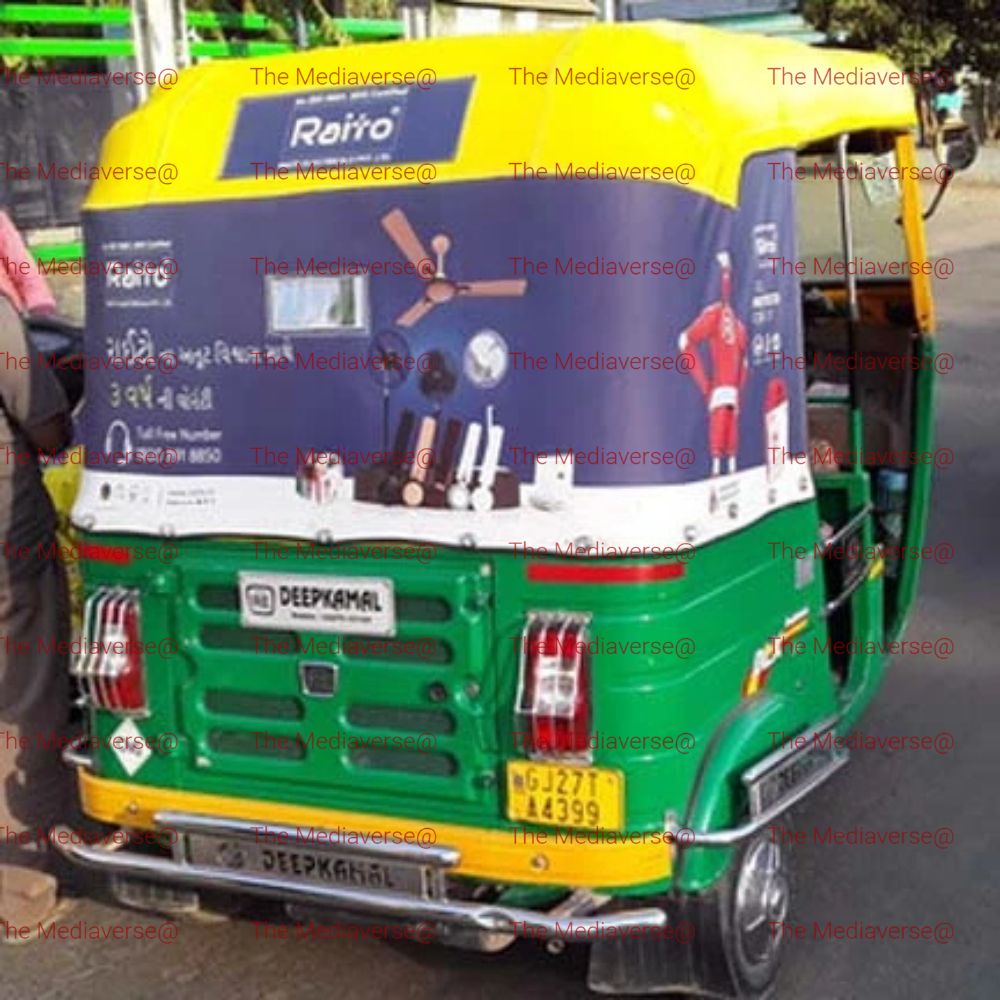
We will say it plainly: auto-rickshaw branding is the most underrated outdoor format in India, and most brands underweight it for the wrong reason. It is unglamorous. A small panel on a humble three-wheeler does not impress a marketing team the way a giant hoarding or a slick digital campaign does, so it gets overlooked in the plan. But we have run enough campaigns to know that the format is being judged on how it looks on one auto, not on what a fleet does across a city, and that is a costly mistake. Measured on what actually matters for a local business, reach per rupee, frequency, and last-mile coverage, a fleet of branded autos quietly outperforms much of what brands spend more on. Here is the honest operator's case for it, and an equally honest account of when it is not the right tool.
Why it is underrated, and why that is a mistake
The underrating comes from judging the format by the wrong unit. Look at one branded auto and it seems modest. Look at a fleet over a month and the picture changes: dozens or hundreds of vehicles moving through markets, colonies, and main roads all day, passing the same people repeatedly and reaching areas no fixed site touches, all at a low cost per contact. That combination, movement, density, frequency, and last-mile reach, is exactly what builds local familiarity, and familiarity is what turns a name into a choice. A hoarding reaches everyone who passes one spot; a fleet reaches many people across many spots, again and again. For a footfall-driven local business, that repeated, citywide presence usually does more for the same money than a single grand placement. The format is not weak; the way it is evaluated is.
Auto branding: myth vs reality
Most of the reasons brands skip auto branding are assumptions that do not survive contact with how the format actually works. Here are the common ones, and the reality.
Auto-rickshaw branding: myth vs reality
| The common assumption | The reality | |
|---|---|---|
| It is too small to be noticed | A panel that gets lost | The hood is high-visibility, seen by following traffic and at signals all day |
| It looks downmarket | Hurts a brand's image | Dense, repeated presence builds familiarity and trust; many strong brands use it |
| You cannot target it | Random coverage | Fleets can be allocated to chosen zones and routes for hyperlocal reach |
| You cannot measure it | No accountability | GPS or fleet logs plus coupon codes make coverage and response trackable |
| Hoardings or digital are simply better | Always the smarter spend | For local reach per rupee, a fleet of autos usually beats both |
An operator's view; the right format still depends on your goal. For prestige or a single landmark, other formats win.
When auto branding is not the answer
We are not arguing that auto branding is right for everything, and the honesty matters. If your goal is a premium, prestige statement, a large immersive creative, or owning a single high-value landmark, a hoarding or a few full-wrap hero vehicles will serve you better, because auto branding trades concentrated impact for broad reach. A purely online or delivery business with no local footfall may get more from digital. And if a campaign genuinely needs to look as big and bold as possible on each impression, the small auto panel is not the canvas for it. The case here is not that autos beat every format, but that they beat their reputation: for affordable, broad, repeated local reach, they are the strongest value in outdoor, and they deserve a place in far more plans than they get. Match the format to the goal, and you will find autos earning their spot more often than their image suggests.
Is auto-rickshaw branding too downmarket for a premium brand?
Not in our experience. The idea that auto branding hurts a premium image comes from looking at one auto rather than a well-designed fleet. A clean, consistent, well-branded fleet moving through the right areas builds familiarity and presence, which supports rather than harms a brand, and plenty of strong brands use transit and auto formats for exactly that reach. A premium brand can also use the format selectively, hood branding for broad presence plus a few full-wrap hero autos for a more striking look, or focus the fleet on the neighbourhoods that match its audience. The key is design and placement: a sharp creative on a fleet in the right areas reads as confident ubiquity, not as downmarket.
Can you target auto-rickshaw branding to specific areas?
Yes. While individual autos move around, fleets can be allocated to operate primarily in chosen zones, routes, or parts of a city, so a campaign can concentrate on the areas that matter to a business rather than spreading at random. That makes auto branding genuinely hyperlocal: a business can weight its fleet toward the neighbourhoods, markets, or corridors where its customers live and travel. Combined with the format's low cost, this targeting is part of why it is so efficient for local campaigns, you reach more of the right area for less. Discuss your target zones with your provider so the fleet is deployed where it will do the most good rather than evenly by default.
Can you measure the results of auto-rickshaw branding?
Yes, more than people assume. Coverage can be tracked through GPS or fleet logs that show where and how much the autos operated, and response can be measured by putting a trackable element on the branding or the wider campaign, a coupon code, a dedicated number, or a QR, and counting the responses it generates. Tying the auto campaign to a measurable offer turns it from a pure awareness play into something with a response rate you can judge. While auto branding is an awareness and reach format at heart, so some of its value is in familiarity rather than direct clicks, it is far from unmeasurable, and a disciplined approach to tracking lets you see what your fleet is delivering.
Tags
Quick Answers
Why is auto-rickshaw branding underrated?
Auto-rickshaw branding is underrated because it is unglamorous: a small moving panel on a humble vehicle does not feel as impressive as a giant hoarding or a slick digital campaign, so brands overlook it. But that perception hides the economics. A fleet of branded autos moves through dense and last-mile areas all day, building high frequency and familiarity at a low cost per contact, which delivers more local reach per rupee than most formats. The format is judged on how it looks on one auto rather than what a fleet does across a city, and that is the mistake. For affordable, broad, repeated local presence, it quietly outperforms flashier options, which is why we consider it the most underrated outdoor format in India.
Is auto-rickshaw branding effective for small businesses?
Yes, it is one of the most effective formats for small businesses, precisely because it is affordable and scalable. A small business can brand a modest fleet for a low monthly outlay and still achieve broad, repeated visibility across its city or chosen areas, something a single expensive hoarding cannot match for the same money. The autos move through the residential and market areas where local customers live and travel, building familiarity through repetition. For a footfall-driven local business that needs wide, affordable reach rather than a single prestige statement, auto branding usually delivers more value per rupee than any other outdoor format, which is why we often recommend it as the starting point for a local campaign.
Who should not use auto-rickshaw branding?
Auto branding is not the right tool for every job, and we are honest about that. If your main goal is a premium, prestige statement, owning a single landmark, or a large, immersive creative, a hoarding or a few full-wrap hero vehicles will serve better, because auto branding's strength is broad, affordable reach rather than concentrated impact. A purely online or delivery-based business with no local footfall may also get more from digital. Auto branding shines for affordable local saturation and last-mile reach; where the goal is impact per impression or prestige rather than reach per rupee, other formats fit better. The point is to match the format to the goal, not to use autos for everything.
Looking for professional Auto Branding services?
The Mediaverse runs end-to-end auto branding campaigns across India with geo-tagged delivery and transparent, all-inclusive pricing.
Explore our Auto Branding solutionsSummarize this guide with AI
Open this article in your favourite AI assistant
Related Guides
Written by

The Mediaverse Team
India's Leading Outdoor Advertising Agency
The Mediaverse is a national-level outdoor advertising and integrated marketing organization that provides complete OOH, ATL, BTL, retail, and transit media solutions across India. With years of experience executing high-performance campaigns for brands in FMCG, Real Estate, E-commerce, EdTech, Automotive, Healthcare, and Retail, The Mediaverse combines creativity, data-driven media planning, and flawless on-ground execution. As a full-stack outdoor advertising provider, The Mediaverse offers Auto Branding, Mobile Van Branding, Newspaper Insertion Advertising, Shop Name Board Branding, In-Store Branding, Hoardings, Transit Media, Kiosks, Mall Media, Activations, and all forms of Below-The-Line marketing. Known for its pan-India network, strategic route planning, premium print quality, and Cheqmate™ GPS-based verification, The Mediaverse ensures 100% transparent and result-oriented campaign delivery. The Mediaverse’s editorial team produces deeply researched, SEO-optimized, and generative-engine-friendly content to help businesses understand the power of outdoor advertising and make informed decisions that maximize brand visibility and ROI across urban, suburban, and rural markets.
Related Articles
Where Branded Autos Actually Stand Still: 35 Percent of the Working Day (2026)
A branded auto spends about a third of its working day parked, and that is when it does its best work. The published dwell averages per stop type, what the 300-auto minimum covers at five Bangalore hubs and three residential pockets, and where the minimum order actually buys dominance.
100-Micron Against 80-Micron: The Auto Branding Material Question to Ask Before You Book (2026)
The material line is the one nobody checks and the only one that decides whether the fleet is still readable in month seven. What our ten city pages publish about 100-micron against 80-micron, the per-city failure windows, and the arithmetic that turns any material quote into one comparable number.
Auto Back Panel Branding in 2026: The Cheapest Auto Campaign You Can Actually Book
The smallest auto order on our card is 500 back panel stickers at Rs.170 each, or Rs.85,000 before GST, which is Rs.1,10,000 below the hood floor. The slab math at 800 autos, the per-square-inch comparison of the two sticker sizes, and what the hood budget buys in panels.