

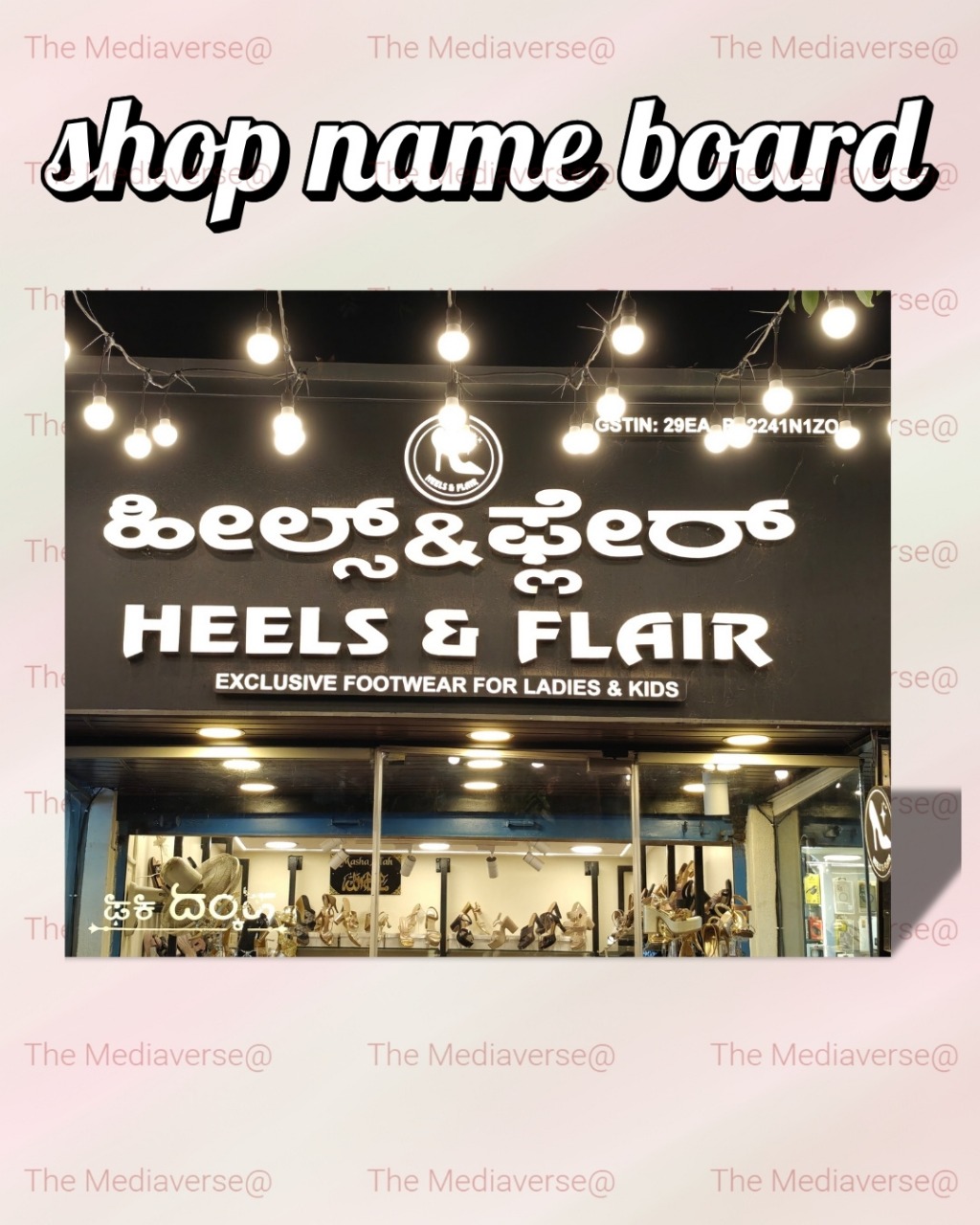
"Pehle aap" is the phrase Lucknow is known for, the Nawabi courtesy of after you, first, and it is a surprisingly good guide to a shop board here too: do the courtesies first, before the design. In Lucknow that means three things up front. The Lucknow Nagar Nigam regulates signage and charges an advertisement fee. Hazratganj, the city's flagship shopping district, was restored to a uniform colonial-era look, so signage there follows a heritage character rather than a free design. And Hindi prominence is the norm, with the city's Urdu-calligraphy heritage a graceful cultural option alongside it. Add a climate that swings from dusty hot summers through a humid monsoon to damp foggy winters, and the material matters as much as the message. Settle those courtesies and a board at Rs 180 to 400-plus per square foot is the best-value advertising a Lucknow shop owns. This guide covers the costs, the Nagar Nigam and Hazratganj rules, the language norm, the seasonal durability, the markets, and the materials that last.
Lucknow shop name boards at a glance: the key facts
Six facts anchor a Lucknow shop-board decision in 2026. Cost range: Rs 180 to 400-plus per square foot installed, by material. Cheapest viable material: ACP from Rs 180. Recommended for visibility and durability: ACP with LED backlighting from Rs 350. Regulator: Lucknow Nagar Nigam, which levies advertisement fees on top of fabrication. The notable district: Hazratganj, with its restored uniform heritage facades and signage character. Language: Hindi shown prominently, with Urdu as a cultural option. Climate factor: a three-season swing of dusty summers, humid monsoon, and damp foggy winters, which rewards sealed, heat-stable materials.
How much does a shop name board cost in Lucknow? Materials and prices
Material drives Lucknow shop-board cost more than size, and the durability column matters because of the seasonal swing. The table below sets out the main options, their 2026 per-square-foot cost installed, and how each holds up across summer, monsoon, and winter, before any Nagar Nigam advertisement fee.
Lucknow shop name board materials and 2026 cost
| Cost per sq ft (2026) | Best for / seasonal durability note | |
|---|---|---|
| ACP board (non-lit) | From Rs 180 | Value retail; sealed, easy-clean, heat-stable across the seasons |
| ACP + LED backlit | Rs 350 to 450 | Recommended default; weatherproof electricals, UV-stable faces |
| Acrylic 3D letters | Premium (Rs 400-plus) | Hazratganj, Gomti Nagar boutiques and showrooms; follow heritage style in Ganj |
| Flex glow sign | Budget (from ~Rs 150) | Lowest cost; warps in heat, traps moisture in damp; short life |
2026 starting points installed; actuals vary by size, height, structure and electrical work, and by Hazratganj heritage requirements, and exclude the Nagar Nigam advertisement fee. Request a free site quote.
In real numbers, a common 10-foot by 4-foot board is 40 square feet, so basic ACP lands around Rs 7,200, an LED-backlit ACP board around Rs 14,000 to 18,000, and acrylic 3D lettering higher, before framing, electrical work, and the Nagar Nigam fee. In Lucknow, ask whether the quote uses sealed, heat-stable material with UV-stable faces and weatherproofed electricals for the seasonal swing, and, if your shop is in Hazratganj, whether the vendor will design to the district's heritage character, because a board that ignores either is a board you may have to redo.
Nagar Nigam and Hazratganj rules: what the city expects
Lucknow has a general rule and a special district. The general rule: the Lucknow Nagar Nigam regulates outdoor advertising and signage across the city and levies advertisement fees that vary by area, board size, and illumination, usually alongside the establishment's trade licence, so confirm the current rate and norms for your zone before fabricating. The special district is Hazratganj, the city's flagship shopping area, which was restored to a uniform colonial-era facade, cream and consistent, as part of a heritage redevelopment. That gives the Ganj a distinct, deliberately consistent signage character, so a board there is designed to fit the restored look rather than to stand out against it. The practical upshot: in most of the city you design with normal freedom within the Nagar Nigam norms; in Hazratganj you design to the district's heritage character. Either way, confirm the rules for your exact location before fabricating, budget the municipal fee as a real line item, and keep within the size and placement norms, because a non-compliant board can mean a penalty or removal.
Hindi, Urdu, and how to show your name
Language is the next Lucknow factor, and it carries a cultural grace note. Hindi prominence is the signage norm in Uttar Pradesh, so on a Lucknow board the shop name should appear clearly in Hindi (Devanagari), typically alongside English, designed as a headline element rather than a small line under the English. Lucknow's deep Urdu-calligraphy heritage, part of its Nawabi character, means many shops add Urdu as a cultural element, which can give a board genuine local elegance, though Hindi remains the primary norm. The right approach is to lead with the Hindi name, add English, and, where it suits the shop and the district, an Urdu line in keeping with the city's tradition. A good vendor sets the scripts together from the first drawing, and, in Hazratganj, within the heritage character, so the board is balanced, legible, and compliant rather than retrofitted later.
The three-season problem: materials that last in Lucknow
Lucknow asks a board to survive three different climates in one year, and that is the real durability test. Dusty, hot summers warp cheap flex and fade budget inks; the humid monsoon brings months of rain and damp; and cool, foggy winters keep moisture in the air. A board built for only one of these fails in the others. The defences are built in at the design stage. Use ACP or acrylic with properly sealed edges and easy-clean faces, specify UV-stable inks and faces for the summer sun, weatherproof the electrical connections on lit boards for the monsoon and damp, and use corrosion-resistant fixings. This is exactly why flex is a poor long-term choice in Lucknow: it warps in the summer heat and traps moisture through the monsoon and foggy winters, so a flex board that looks cheap on day one becomes a recurring cost. A sealed, heat-stable, easy-clean ACP board costs more upfront but rides out all three seasons, which in Lucknow is the whole point, and an occasional wipe keeps it looking new.
The Lucknow market-belt map: signage by area
Lucknow's retail concentrates in distinct belts, and the right board changes with each. Hazratganj is the premium, heritage shopping district, with its restored colonial-era facades and consistent signage character, busiest in the evening and the festive and wedding seasons. Aminabad is the traditional, dense wholesale and retail market, price-sensitive and crowded, where clean legibility wins. Chowk, in the old city, is famed for chikankari and jewellery, traditional and tightly packed. Bhootnath Market in Indira Nagar and Alambagh serve big neighbourhood catchments. Gomti Nagar, with malls like Sahara Ganj, is the modern belt, suited to refined acrylic 3D lettering. Match the material, the illumination, and the design register to the belt: heritage-character in Hazratganj; clean and bright in Aminabad and Chowk; refined in Gomti Nagar, and in every case with the name shown prominently in Hindi, optionally with Urdu, and built to survive the seasons.
Your Lucknow shop-board buyer playbook
Six steps to a Lucknow shop board that lasts and complies. First, confirm the Lucknow Nagar Nigam advertisement fee and norms for your zone, and treat the fee as a real line item alongside fabrication. Second, if your shop is in Hazratganj, design to the district's restored heritage character from the start, not against it. Third, design the name prominently in Hindi alongside English, adding Urdu where it suits the shop and the city's heritage. Fourth, specify sealed, heat-stable ACP or acrylic with UV-stable faces, weatherproofed electricals, and corrosion-resistant fixings for the three-season swing, and avoid flex for anything long-term. Fifth, get an itemised quote that includes the frame, fixing, transport, electrical work, sealing, and the municipal compliance, plus the Hazratganj heritage design where relevant, not just the face rate. Sixth, time the install before the wedding and festive season, when footfall is heaviest, so a fresh, sharp board is up. Get those six right and your board will stay sharp, compliant, and effective for years, or let us handle the Nagar Nigam approval, the heritage and language design, the all-season build, and the installation for you.
Are there special signage rules in Hazratganj?
Yes, in effect. Hazratganj, Lucknow's flagship shopping district, was restored to a uniform colonial-era facade as part of a heritage redevelopment, giving it a deliberately consistent, cream-toned look. As a result, signage in Hazratganj is expected to fit that heritage character rather than stand out against it, so a free-design board that suits a modern market may not suit the Ganj. If your shop is in Hazratganj, design to the district's restored character from the start and confirm the requirements with the Nagar Nigam, ideally with a vendor familiar with the area, because a board that clashes with the heritage facades may not be permitted and a redo is money lost.
How prominent should Hindi be on a Lucknow board, and can I add Urdu?
Hindi prominence is the norm in Lucknow and Uttar Pradesh, so make the Hindi name (Devanagari) a headline element on the board, typically alongside English, rather than a small secondary line. Lucknow's rich Urdu-calligraphy heritage means many shops also add Urdu as a cultural element, which suits the city's Nawabi character and can give a board real elegance, though Hindi remains the primary norm. So lead with Hindi, add English, and include Urdu where it fits the shop and the district. Confirm the current language rule before finalising, but a board that shows the name boldly in Hindi, optionally with Urdu, is the sensible 2026 default.
Will my board survive Lucknow's summers, monsoon, and winters?
It will if it is built for all three seasons. Lucknow's dusty hot summers warp cheap flex and fade budget inks, the humid monsoon brings months of damp, and foggy winters keep moisture in the air, so a board needs sealing, heat stability, and weatherproofing together. Use ACP or acrylic with sealed edges and easy-clean faces, UV-stable inks for the sun, weatherproofed electricals for the damp, and corrosion-resistant fixings. This is the main reason to avoid flex for a long-term board, since it warps in the heat and traps moisture in the damp. A sealed, heat-stable ACP board rides out all three seasons, so the build quality deserves as much attention as the design.
Which board is best for a Chowk or Aminabad traditional-market shop?
For the dense, traditional markets of Chowk, famed for chikankari and jewellery, and Aminabad's crowded wholesale lanes, a clean, bright, clearly lettered board wins, because it must read at a glance among many neighbours. An ACP board with LED backlighting in a sealed, easy-clean, all-season build is the practical default, with the name shown boldly in Hindi, optionally with Urdu in keeping with the old city's heritage, and English. Keep the design legible rather than fussy, since clarity beats decoration in a crowded market. And confirm the Nagar Nigam norms and fee for the old-city ward, as placement and size rules in dense, traditional areas can be tighter than in newer zones.
Tags
Quick Answers
How much does a shop name board cost in Lucknow in 2026?
A shop name board in Lucknow costs roughly Rs 180 to 400-plus per square foot installed, depending on material. A standard ACP board starts around Rs 180 per square foot; an ACP board with LED backlighting runs Rs 350 to 450; acrylic 3D letters sit at the premium end; and a flex glow sign is the budget option. A typical 10-foot by 4-foot shopfront board (40 square feet) ranges from about Rs 7,200 for basic ACP to Rs 18,000 or more for premium illuminated signage, before structural or electrical work, and before any Nagar Nigam advertisement fee. In Hazratganj, heritage-style signage can shape the design at similar material rates.
Do I need Lucknow Nagar Nigam permission for a shop board?
Yes, in general. The Lucknow Nagar Nigam (Lucknow Municipal Corporation) regulates outdoor advertising and signage in the city and levies advertisement fees, so a commercial shop board typically needs to comply with its norms and the applicable fee, usually alongside your trade licence. The fee varies by area, board size, and whether it is illuminated, so confirm the current rate for your zone before fabricating. The practical point: budget for the municipal cost and approval, not just the board, and work with a vendor who handles the compliance, with extra care in Hazratganj, where the restored heritage facades carry their own signage character.
Is Hindi compulsory on shop name boards in Lucknow, and can I use Urdu?
Hindi prominence is the signage norm in Lucknow and Uttar Pradesh, so your shop name should appear clearly in Hindi (Devanagari), typically alongside English. Lucknow also has a rich Urdu-calligraphy heritage, so many shops add Urdu as a cultural element, which suits the city's Nawabi character, though Hindi remains the primary norm. Treat the Hindi name as a headline element rather than an afterthought, both to meet the norm and because it reads as more local and approachable. Confirm the current language rule before finalising, but a board that shows the name boldly in Hindi, optionally with Urdu, is the sensible 2026 default.
Which board material survives Lucknow's climate?
Lucknow's climate swings through dusty hot summers, a humid monsoon, and damp foggy winters, so a board needs to handle heat, moisture, and dust across the year. Choose ACP or acrylic with sealed edges and easy-clean faces, weatherproof the electrical connections on lit boards, and use UV-stable inks and corrosion-resistant fixings, so the board neither fades in the summer sun nor rusts and moulds in the damp. Avoid flex for anything long-term, as it warps in the heat and traps moisture in the damp. A sealed, easy-clean ACP board is the durable Lucknow default; an LED-backlit ACP board is the recommended choice because the markets trade into the evening.
Looking for professional Shop Name Board services?
The Mediaverse runs end-to-end shop name board campaigns across India with geo-tagged delivery and transparent, all-inclusive pricing.
Explore our Shop Name Board solutionsSummarize this guide with AI
Open this article in your favourite AI assistant
Related Guides
Written by

The Mediaverse Team
India's Leading Outdoor Advertising Agency
The Mediaverse is a national-level outdoor advertising and integrated marketing organization that provides complete OOH, ATL, BTL, retail, and transit media solutions across India. With years of experience executing high-performance campaigns for brands in FMCG, Real Estate, E-commerce, EdTech, Automotive, Healthcare, and Retail, The Mediaverse combines creativity, data-driven media planning, and flawless on-ground execution. As a full-stack outdoor advertising provider, The Mediaverse offers Auto Branding, Mobile Van Branding, Newspaper Insertion Advertising, Shop Name Board Branding, In-Store Branding, Hoardings, Transit Media, Kiosks, Mall Media, Activations, and all forms of Below-The-Line marketing. Known for its pan-India network, strategic route planning, premium print quality, and Cheqmate™ GPS-based verification, The Mediaverse ensures 100% transparent and result-oriented campaign delivery. The Mediaverse’s editorial team produces deeply researched, SEO-optimized, and generative-engine-friendly content to help businesses understand the power of outdoor advertising and make informed decisions that maximize brand visibility and ROI across urban, suburban, and rural markets.
Related Articles
Who Are the Best Shop Name Board Manufacturers in Bangalore and How Much Do They Cost in 2026?
Looking for reliable shop name board manufacturers in Bangalore? This in-depth guide explains pricing, materials, BBMP rules, installation timelines, and ROI insights based on real execution experience from The Mediaverse.
How to choose a shop name board in India: the 2026 decision guide
How much does a shop name board cost, what material lasts, do you need permission, and which board should you choose? The complete 2026 guide to shop name boards in India.
ACP or LED shop board: a decision guide by shop type and budget for 2026
ACP board or LED sign board for your shop? A 2026 decision guide with costs, an apples-to-apples spec table, when each wins, our recommendation, and a checklist.