

Forget the rule of thumb that says spend a fixed percentage of revenue on advertising; for outdoor in India it is the wrong starting point. The right outdoor budget is not a number you pick and then divide, it is the cost of doing a specific job, reaching a specific catchment, with the right mix of formats. Two businesses with the same revenue can need wildly different budgets: one needs only a fleet of autos and a targeted insert to own its neighbourhood, the other wants a prestige hoarding that costs more by itself than the first spends in a year. So the question is never just how much, but for what goal, over what area, with which formats, and in what mix. This guide gives you the cost models, an allocation framework, budgets by business size and goal, a step-by-step process, the common mistakes, and how to measure, so you can plan an outdoor budget that works rather than one that merely spends.
How much should you spend on outdoor advertising?
Start from the job, not a number. Define what you want the campaign to achieve, awareness, footfall, a launch, a festive push, and the area you need to cover, then price the formats that achieve it, and the budget is the total. This goal-and-coverage method beats a percentage rule because it scales to your actual need: a single-location shop covering one catchment needs far less than a multi-area brand, even at the same revenue. As a practical anchor, a small local business can run a meaningful outdoor presence, a fleet of autos plus a targeted insert, for a modest monthly figure, and add a one-time shop board, while a prestige hoarding or a multi-format festive campaign costs considerably more. Set the budget to the job, start with the most cost-efficient format for your catchment, and scale up only as the return justifies it. That keeps the spend tied to results rather than to an arbitrary share of revenue.
Outdoor format cost comparison: how each is priced
Outdoor formats charge in different ways, which is the key to allocating a budget well. The table sets out the cost model and the best use for each, so you can see which formats stretch a budget for reach and which concentrate it for impact or permanence.
Outdoor format cost models (2026)
| Cost model and entry | Best budget role | |
|---|---|---|
| Auto-rickshaw branding | Low per fleet, low entry, monthly | Broad local reach and saturation |
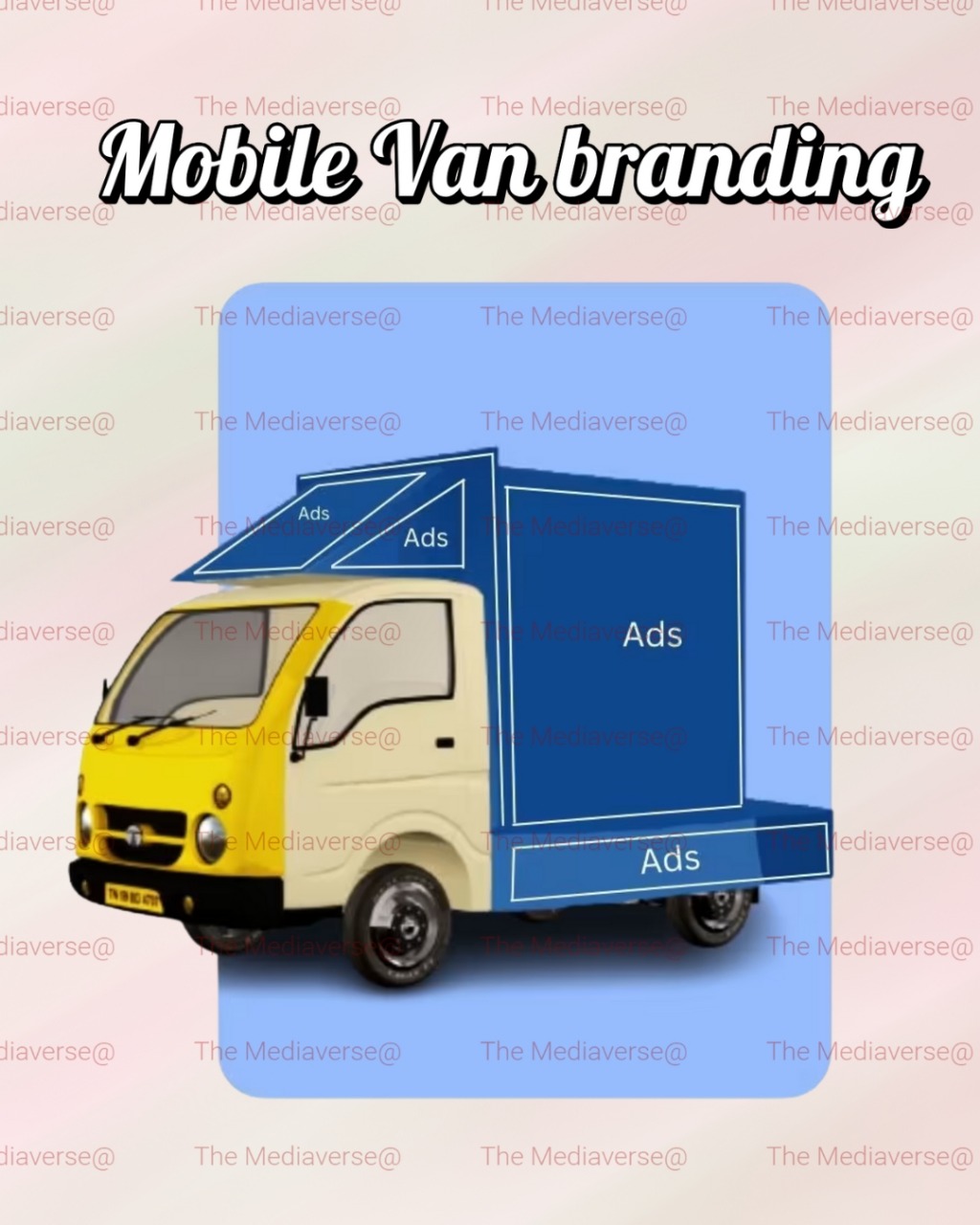
| Mobile van branding | Mid, per van per day or campaign | Targeted mobile showcase, events, areas |
| Newspaper insertion | ~Rs 1 to 2.50 per home, one-time | Pincode-targeted offers and coupons |
| Shop name board | Rs 180 to 450 per sq ft, one-time | Permanent storefront presence |
| Hoarding (billboard) | High monthly site rental | Prestige and landmark presence |
2026 framing; cost models, not flat prices. Auto and inserts stretch a budget for reach; hoardings concentrate it for prestige; a shop board is a one-time, multi-year investment. Request a tailored plan.
How to split your budget: the allocation framework
Split the budget by goal, not in equal shares. The framework is simple: decide what proportion of your goal is reach, impact, and permanence, and fund the formats that deliver each. Reach and saturation, the bulk of most local budgets, go to auto branding and pincode-targeted inserts, because they cover the most ground per rupee. Impact and prestige, where needed, go to a hoarding or a few full-wrap hero vehicles. Permanence, the storefront itself, goes to a one-time shop name board that works for years. A practical default for a local business is to lead with autos and inserts for reach, fund a quality shop board as a foundation, and add prestige formats only if the goal and budget justify them. Layer the formats so they reinforce each other, the insert carries the offer, the autos and vans carry it through the streets, the shop board converts the footfall, rather than treating each as a separate spend.
Budgets by business size
Business size shapes both the budget and the mix. A small, single-location business should concentrate on its immediate catchment with the most efficient formats: a modest fleet of hood-branded autos, a pincode-targeted insert for offers, and a good shop name board, all affordable and high-return locally. A mid-sized business covering several areas can widen the auto fleet, add mobile van branding to take the brand to specific zones or events, and consider a focused hoarding if prestige matters. A larger brand can run all of this at scale across a city or multiple cities, layering hoardings and full-wrap hero vehicles for stature on top of a broad auto and insert base. The principle holds at every size: lead with reach-efficient formats for the catchment, then add impact and scale as the budget grows, rather than starting with the most expensive placement. If your ceiling is around Rs.50,000, see the worked math on what Rs.50,000 actually books across boards, inserts and auto hoods.
Budgets by goal
Different goals call for different mixes. For broad awareness, weight the budget toward auto branding and inserts for wide, repeated coverage. For footfall to a store, combine a strong shop name board with autos and inserts that carry an offer into the catchment. For a launch, layer a fleet for reach, a few full-wrap or hoarding placements for a bold statement, and an insert with a launch offer. For a festive push, concentrate the budget on the highest-return festivals, book early, and run inserts, vans and autos, and a fresh illuminated board together before the peak. For a premium brand-building goal, give more weight to hoardings and full wraps for stature. Matching the mix to the goal is what makes a given budget work harder, and it is why defining the goal before the number is the single most important budgeting step.
The reach vs impact trade-off
Most outdoor budgeting comes down to one trade-off: reach versus impact. Reach formats, autos and inserts, spread your message widely and repeatedly across a catchment at a low cost per contact, building familiarity. Impact formats, hoardings and full wraps, concentrate spend into fewer, larger, more prestigious placements that make a strong impression on each viewing. Neither is universally better; they buy different things, and the right balance depends on your goal. A footfall-driven local business usually wants more reach; a premium brand-building campaign wants more impact. Most effective plans are not all of one or the other, but a base of reach with a layer of impact on top, sized to the goal. Knowing which side your goal leans toward tells you where the bulk of the budget should sit, and prevents the common error of overspending on a single grand placement while under-covering the catchment, or vice versa.
How to set your outdoor budget: step by step
The process below turns the principles into a budget you can act on. Work through it in order.
Define the goal and the catchment
Start by writing down exactly what the campaign should achieve, awareness, footfall, a launch, or a festive push, and the precise area you need to cover. The goal and the catchment together determine which formats you need and how much of each, so this step shapes everything. A clear goal also gives you something to measure the budget against later.
Choose the formats that achieve it
Pick the formats that match the goal: reach and saturation lean on auto branding and inserts; prestige uses hoardings or full wraps; permanent presence uses a shop name board; targeted mobile reach uses van branding. Most plans combine a reach base with a permanence anchor and, where needed, an impact layer, rather than relying on a single format.
Price each format for your catchment
Get costs for the formats you have chosen, sized to your catchment: the fleet size for autos, the home count for inserts, the square footage for a shop board, the site and term for a hoarding. Pricing the actual scope, rather than guessing, turns the plan into a real budget and reveals where the money goes.
Allocate by goal, leading with reach efficiency
Allocate the budget across the formats by goal, not evenly, leading with the highest reach-per-rupee format for your catchment and adding impact or permanence formats as the budget allows. Avoid sinking most of the budget into a single prestige placement unless prestige is the primary goal, since that usually under-covers the catchment.
Reserve a slice for measurement
Set aside a small part of the budget and effort for measurement: coupon codes, QR, dedicated numbers on the creative, and GPS or fleet logs for moving formats. This lets you attribute response to formats and areas and compute a cost per response, which is what turns the budget into something you can improve rather than repeat blindly.
Review, reallocate, and time to your season
After the campaign, review what each format and area returned, and reallocate the next budget toward what converted. Time bigger spends to your peak season, especially the festive window, and book early to secure inventory. Treat the budget as a rolling, improving plan rather than a one-off, and it will deliver more each cycle.
Common budgeting mistakes to avoid
A few mistakes quietly waste outdoor budgets. The first is picking a spend figure before defining the goal, which leads to money chasing formats rather than outcomes. The second is splitting the budget evenly across formats instead of by goal, which under-funds the formats that would do the most. The third is over-investing in a single prestige placement, a grand hoarding, at the expense of covering the catchment, so the brand is impressive in one spot and invisible everywhere else. The fourth is ignoring permanence, skimping on the shop name board that works for years to fund a short campaign that does not. And the fifth, the most common, is not measuring, so the next budget repeats the same guesses. Avoid these, define the goal first, allocate by goal, balance reach and impact, fund permanence, and measure, and a modest budget will outperform a larger one spent carelessly.
Measuring so the budget improves
The budgets that improve year on year are the ones that are measured. Attach a trackable element to the campaign, a coupon code, QR, or dedicated number, ideally varied by format or area, and track coverage on moving formats through GPS or fleet logs. Count responses against spend to get a cost per response for each format and area, then move the next budget toward what converted and away from what did not. Over a few cycles, this turns a static budget into a managed portfolio: you learn your best formats, your best areas, and your real cost per result, and you compound the return. Measurement does not need to be elaborate; a disciplined coupon-and-count habit, applied consistently, is enough to make every rupee of the budget work harder than the last.
What percentage of revenue should I spend on outdoor advertising?
There is no single correct percentage, and starting from one usually leads to the wrong budget. The better method is to define your goal and catchment, price the formats that achieve them, and let that set the budget, which scales to your actual need rather than an arbitrary share of revenue. Two businesses with the same revenue can rightly spend very differently depending on how much area they must cover and what they want to achieve. Use revenue as a sanity check on affordability if you like, but build the budget from the job, not the percentage, and start with the most cost-efficient format for your catchment, scaling as the return justifies it.
What is the best outdoor format for a small budget?
For a small budget, auto-rickshaw branding and pincode-targeted newspaper inserts usually stretch the furthest, because both deliver broad, repeated local reach at a low cost, autos per fleet and inserts at roughly Rs 1 to Rs 2.50 per home. A non-lit shop name board, from around Rs 180 per square foot, is also a high-value one-time investment that works for years. Avoid sinking a small budget into a single expensive hoarding, which would cover one spot while leaving the rest of your catchment untouched. The efficient small-budget plan is a fleet of autos and a targeted insert for reach, plus a good shop board for the storefront, with measurement attached so you can scale what works.
Should I put my whole budget into one format?
Usually not. Different formats do different jobs, reach, impact, and permanence, so a single format rarely covers all of a campaign's needs. A more effective approach is to layer a reach base (autos and inserts), a permanence anchor (a shop board), and, where prestige matters, an impact layer (a hoarding or wraps), sized to the goal. Concentrating the whole budget in one format makes sense only when the goal is narrow, for example a pure prestige play that justifies a single landmark hoarding, or a tight-budget local push that can only afford a fleet of autos. For most businesses, a considered mix returns more than all-in on one format.
How much extra should I budget for the festive season?
Budget more and earlier for the festive season, and concentrate it on the festivals that drive your sales rather than spreading it across all of them. Festive demand pushes up competition for premium inventory and sells out the best sites, fleets, and drop dates weeks ahead, so booking early both secures availability and avoids last-minute pressure. A festive plan typically layers a pincode-targeted insert with an offer, auto and van branding for reach, and a fresh illuminated shop board, all live before the peak. There is no fixed multiplier, size the festive budget to the opportunity in your key windows, usually Diwali for retail and the wedding season for jewellery and apparel, and keep measuring so each year's festive spend is better aimed than the last.
How do I know if my outdoor budget is working?
Measure it. Attach a trackable element to the campaign, a coupon code, QR, or dedicated number, ideally varied by format or area, and track coverage on moving formats through GPS or fleet logs, then count responses against what you spent to get a cost per response. That tells you which formats and areas are working and which are not, so you can reallocate the next budget accordingly. Awareness formats also build value that is not all captured in direct response, so consider footfall and enquiry trends alongside coupon redemptions. The key is to measure consistently with the same method each cycle, so you can compare and improve, rather than judging the budget by impression alone.
Should a one-time shop name board come out of the advertising budget?
Yes, and it is one of the best line items in it, because a shop name board is advertising, the most cost-effective kind, working continuously for years from a single outlay. Treat it as a foundational, one-time investment rather than a recurring campaign cost: fund a quality, durable, climate-appropriate board first, then build your reach and impact campaigns around it. Skimping on the board to fund a short campaign is a false economy, since the board converts the very footfall your other formats drive to the door. In budgeting terms, the shop board is the permanence layer that the reach and impact layers feed into, so it deserves a secure place in the plan.
Tags
Quick Answers
How much should a business spend on outdoor advertising in India?
There is no fixed percentage that fits every business; the right outdoor advertising budget is set from your goal, the size of your catchment, and what each format costs to do the job, not from a rule of thumb. A small local shop might spend a few thousand rupees a month on a fleet of branded autos and a targeted newspaper insert and reach its whole neighbourhood, while a brand wanting a prestige hoarding at a landmark will spend far more for that single placement. The practical method is to define the goal and the area you need to cover, price the formats that achieve it, and set the budget to that, rather than picking a number first. Start with the most cost-efficient format for your catchment and scale up as the return justifies it.
How should you split an outdoor advertising budget across formats?
Split the budget by goal, not evenly. For broad local reach and saturation, weight the budget toward auto-rickshaw branding and pincode-targeted newspaper inserts, which deliver the most coverage per rupee. For prestige or a landmark statement, allocate to a hoarding or a few full-wrap hero vehicles. For permanent storefront presence, fund a quality shop name board as a one-time investment. A common, effective split for a local business is to lead with autos and inserts for reach, add a shop board for the storefront, and layer in a hoarding or wraps only if prestige is a goal and the budget allows. Always keep a small slice for measurement, so you can move money toward whatever converts best.
What is the cheapest outdoor advertising format?
Auto-rickshaw branding is generally the cheapest outdoor format for broad local reach, because a fleet can be started for a low monthly outlay and each auto moves all day, giving a low cost per contact. Newspaper insertion is also very cost-efficient for targeted local reach, at roughly Rs 1 to Rs 2.50 per home one-time, because you pay only for the homes you choose. A non-lit shop name board, from around Rs 180 per square foot, is a cheap one-time investment that works for years. Hoardings are the most expensive per placement because of the high site rental. So for a tight budget, auto branding and newspaper inserts usually stretch the furthest, while a hoarding concentrates more spend into one prestige placement.
How should you budget for the festive season?
Budget more, and earlier, for the festive season, because demand is high and premium inventory, prime hoarding sites, the best van fleets, and newspaper drop dates, sells out weeks ahead. Concentrate the festive budget on the windows that drive your sales, usually Diwali for retail and the wedding season for jewellery and apparel, rather than spreading it thinly across every festival. A typical festive plan layers a pincode-targeted insert for the offer, auto and van branding for movement and reach, and a fresh, illuminated shop board for the storefront, all live before the peak. Set the festive budget per festival, book early to secure inventory, and keep a slice for measurement so you can learn which festivals and formats returned the most for next year.
Looking for professional Transit Advertising services?
The Mediaverse runs end-to-end transit advertising campaigns across India with geo-tagged delivery and transparent, all-inclusive pricing.
Explore our Transit Advertising solutionsSummarize this guide with AI
Open this article in your favourite AI assistant
Related Guides
Written by

The Mediaverse Team
India's Leading Outdoor Advertising Agency
The Mediaverse is a national-level outdoor advertising and integrated marketing organization that provides complete OOH, ATL, BTL, retail, and transit media solutions across India. With years of experience executing high-performance campaigns for brands in FMCG, Real Estate, E-commerce, EdTech, Automotive, Healthcare, and Retail, The Mediaverse combines creativity, data-driven media planning, and flawless on-ground execution. As a full-stack outdoor advertising provider, The Mediaverse offers Auto Branding, Mobile Van Branding, Newspaper Insertion Advertising, Shop Name Board Branding, In-Store Branding, Hoardings, Transit Media, Kiosks, Mall Media, Activations, and all forms of Below-The-Line marketing. Known for its pan-India network, strategic route planning, premium print quality, and Cheqmate™ GPS-based verification, The Mediaverse ensures 100% transparent and result-oriented campaign delivery. The Mediaverse’s editorial team produces deeply researched, SEO-optimized, and generative-engine-friendly content to help businesses understand the power of outdoor advertising and make informed decisions that maximize brand visibility and ROI across urban, suburban, and rural markets.
Related Articles
Which Outdoor Formats Charge a Festival Premium, and Which Hold Flat All Year (2026)
We checked every published rate card for seasonal pricing. There is one surcharge on the whole site, and it is smaller than the rush fee most buyers pay without noticing. What rises, what holds flat, and how to plan an October campaign backwards from the published lead times.
Do Our Outdoor Rates Differ by City? The Auto and Van Cards Side by Side (2026)
We read all ten published city pages side by side. Auto branding is one national price everywhere. Mobile vans and shop name boards are the city-priced formats, the LED rate varies by 36 percent, and the fabrication line moves a short booking more than the day rate does.
What Outdoor Advertising Costs After GST: Landed Totals for 2026
Every outdoor rate card on this site is quoted before tax. Landed 18% GST totals for all five formats, the entry ticket ladder from Rs.1,003 to Rs.2,30,100, what a tax-inclusive budget really buys, and when you get the tax back.