

Chennai publishes three mobile van day rates for the same route and the same hours: Rs.2,500 for a T-Shape centre board van, Rs.3,000 for an L-Shape box van and Rs.8,000 for an LED display truck. All three carry an identical published specification of 40 km of daily coverage and a 6 hour active window. The LED truck is 3.2 times the T-Shape and costs Rs.5,500 more every day it runs, and nothing on the card explains what that Rs.5,500 buys.
So this post works it out, from the published Chennai specification and from two Chennai campaigns the service page itself prices. The short version is that you are not buying more road. You are buying a screen instead of a printed panel, which changes what the creative can be and where the vehicle is worth parking. That is a narrow benefit, and for most Chennai briefs it is the wrong Rs.5,500.
What is the real difference between a Chennai LED truck and a T-Shape van?
Two things, and only two, on the published Chennai card: the vehicle and the display. The T-Shape is a centre mounted board that rises above the city’s dense auto rickshaw traffic, built for the Anna Nagar, Velachery and Adyar residential runs and for bilingual Tamil and English creative. The LED truck is P6 panels on an Eicher chassis rated at 5,500 nits or more, weather sealed for cyclone season, carrying video and audio with Tamil subtitle and voiceover. Route length, active hours, permits, GPS tracking and the daily photo report are identical.
The three Chennai mobile van formats as published, with our per km and per hour arithmetic
| T-Shape centre board | L-Shape box van | LED display truck | |
|---|---|---|---|
| Published day rate, before 18 percent GST | Rs.2,500 | Rs.3,000 | Rs.8,000 |
| Daily route and active window | 40 km, 6 hrs | 40 km, 6 hrs | 40 km, 6 hrs |
| Cost per km of published route (our arithmetic) | Rs.62.50 | Rs.75 | Rs.200 |
| Cost per active hour (our arithmetic) | About Rs.417 | Rs.500 | About Rs.1,333 |
| What the display is | Elevated printed centre board | Full wrap printed box, 360 degree | P6 LED panels, 5,500 nits or more |
| What the creative can carry | One static layout | One static layout across three faces | Video, audio, Tamil subtitle and voiceover |
| Build | Board elevated above auto traffic | Tata 407, marine grade vinyl lamination | Eicher chassis, cyclone rated sealed enclosure |
| Use the card names for it | Neighbourhood awareness, FMCG distribution support | OMR IT corridor and Anna Salai brand campaigns | Auto expos, film launches, premium B2B events |
The per km and per hour lines are ours, run over the published card rather than quoted from it, and they are the cleanest way to see the premium. Bought as route, the LED truck costs Rs.200 a kilometre against Rs.62.50 for a T-Shape. Bought as a display, it is the only one of the three that has a screen at all. The question is never which format is better. It is which of those two things your campaign is actually short of.
What does the extra Rs.5,500 a day actually buy?
Four published capabilities, and no extra coverage. It is worth setting them out as a list of what is and is not different, because the parts of the card that stay the same are the parts most quotes imply have changed.
What the Chennai LED premium includes, and what it does not
| What the Chennai card publishes | Does the printed T-Shape have it? | |
|---|---|---|
| Moving picture with sound | Video and audio capable | No. A printed panel carries one static layout |
| Tamil subtitle and voiceover | Published as a Chennai LED feature | Tamil creative yes, voiceover no |
| Brightness in direct sun | 5,500 nits or more, for Chennai’s bright tropical sunlight | Not applicable. Ink on vinyl is read by reflected light |
| Monsoon safe electronics | Cyclone rated sealed enclosure, and from October to December LED trucks run only with one | No electronics to seal. Marine grade vinyl and a salt air coating instead |
| Extra road | 40 km a day, the same as both printed formats | Same 40 km |
| Extra hours | 6 hour active window, the same as both printed formats | Same 6 hours |
| Permits, GPS and reporting | Corporation permits, GPS tracking and a daily Tamil and English photo report, inside the day rate | Identical, inside the day rate |
One more difference is structural rather than published: a screen plays a file, so the loop can be changed without reprinting anything, while a new printed panel means a reprint and a refit. The Chennai card does not publish a mid campaign creative swap as a service, so if you are planning to change the message on day four, agree it in writing before you book rather than assuming the screen makes it free.
When does the 3.2x premium pay?
Three cases on the published Chennai evidence, and they share one shape: the audience is standing still and the message needs to move.
The first is expo weeks. The card names Chennai Trade Centre and the August to September auto component exhibitions around Nandambakkam and Guindy, and it describes LED trucks stationed outside the venue rather than looping a corridor. A stationary vehicle in front of a queue is the one situation where 40 km of route is irrelevant and the entire 6 hour window is spent in front of a waiting audience. That is where a moving picture has something a printed panel structurally cannot match, and it is the use the service page itself names.
The second is a creative that already exists as video. The card’s other two named uses are film launches and premium B2B events, and both usually arrive with a trailer, a product demo or a founder piece to camera already made. A printed van has to throw that away and redraw it as a poster. Paying Rs.5,500 a day to run the film you already paid to produce is a different calculation from paying it for a moving logo.
The third is a short dated window. Three expo days of one LED truck is Rs.24,000 in Chennai, or Rs.28,320 landed once 18 percent GST is added, which is a line item most launch budgets carry without argument. Run the same premium across a 21 day residential campaign and it is Rs.1,15,500 of pure difference, at which point it stops being a creative decision and becomes a media plan you should be able to defend line by line.
When is the T-Shape van the better buy?
Whenever what you are short of is coverage rather than motion. Chennai prices the T-Shape at Rs.2,500 for the same 40 km, so Rs.8,000 buys either one screen on one corridor or three printed vans on three for Rs.7,500. Three vans covering OMR, Anna Salai and the Anna Nagar to Velachery residential grid put your creative in front of three different commuter populations on the same day. One LED truck covers one.
The second case is repetition. The Chennai page’s own explanation of why vans work in this city is that traffic moves along a small number of well defined corridors on fairly predictable timings, so a van keeps meeting the same commuters at the same points. That value comes from running the same route on many days, not from the display technology. Stretching a budget across more days is what buys the repetition, and at Rs.2,500 a day a budget stretches 3.2 times further.
The third is the message itself. The card treats the T-Shape as the format for Tamil led residential creative across T. Nagar, Mylapore and the suburbs, while the LED truck’s published language feature is Tamil subtitle and voiceover, which is a video capability. If your message is a price, an offer, a date or a phone number, a static Tamil panel says it in one glance and costs a third as much.
What do the two published Chennai campaigns tell you about fleet size?
The Chennai page prices two campaigns and publishes their durations, so dividing the total by the published day rate gives the fleet size. Both work out to ten vehicles on our arithmetic, which is a far more useful planning number than either headline total.
Fleet size derived from the two Chennai campaigns the service page prices
| As published on the page | Published day rate applied | Vehicles, on our arithmetic | |
|---|---|---|---|
| T. Nagar gold jewellery chain, Pongal window | 21 days, Rs.5,25,000, T-Shape fleet across T. Nagar, Mylapore, Adyar and Velachery | Rs.2,500 per van per day | Rs.5,25,000 over 21 days is Rs.25,000 a day, which is 10 vans |
| OMR SaaS app launch | 14 days, Rs.11,20,000, LED trucks from Tidel Park to Siruseri | Rs.8,000 per truck per day | Rs.11,20,000 over 14 days is Rs.80,000 a day, which is 10 trucks |
Read side by side, the two campaigns say the quiet part out loud. Ten LED trucks for two weeks cost more than twice what ten printed vans cost for three weeks. A brand with Rs.5,25,000 and an OMR launch has a genuine choice in front of it: ten LED trucks for six days, or ten T-Shape vans for twenty one. Neither is wrong. They are different campaigns, and a rate card will never tell you which one you are actually running.
Why does the national page quote LED at Rs.9,000 to Rs.12,000 when Chennai says Rs.8,000?
Because they describe different things, and only one of them is a bookable Chennai rate. The national mobile van branding page prices an LED Van at Rs.9,000 a day plus a Rs.20,000 one time setup, and one of its FAQs separately lists an LED Canter at Rs.9,000 a day and an LED Display Truck at Rs.12,000. The Chennai card publishes a single LED line at Rs.8,000 a day, with fabrication, Corporation permits, GPS tracking and the daily photo report already inside it.
The rule we apply is the one from our city by city reading of the van cards: the city card is the quotable rate and the national page is a pan-India band. On a single day the gap is not Rs.1,000, it is Rs.21,000, because the national spec adds a one time Rs.20,000 setup that Chennai does not charge at all. Ask which line a quote is built from before you compare two agencies on LED, because one of them may be pricing the setup separately and one may not.
What is not published, and what we will not claim
Three gaps, stated plainly. First, there is no separate impression or recall figure for the LED truck. The Chennai page publishes one estimate for a van, 75,000 to 1,40,000 impressions a day at roughly Rs.10 to Rs.20 CPM, and it does not break that out by format. We are not going to invent a higher number for the screen, and nobody quoting you should either.
Second, night running is not a published specification. The card gives all three Chennai formats the same 6 hour active window, and the national page describes vinyl canter vans as daytime route coverage without publishing an evening or night shift for the LED truck. A self lit screen is legible after dark in a way a printed panel is not, which is a property of screens rather than a service on the rate card. If your event runs after sunset, get the hours written into the booking.
Third, the monsoon. Chennai publishes a protocol here rather than a price: from October to December LED trucks run only with sealed cyclone rated enclosures, low lying stretches around Velachery and parts of Old Mahabalipuram Road are swapped on the day when they hold water, and route hours shift earlier because evening downpours thin out road audiences. No seasonal surcharge appears on the Chennai card. The only seasonal premium published anywhere on our cards is Kolkata’s 25 percent on Durga Puja routes.
Which one should you book?
Book the LED truck when the creative is a video you already have and the audience is standing still: an expo gate, a film launch, a premium B2B event on named dates. Book the T-Shape at Rs.2,500 for everything else, and put the Rs.5,500 a day you save into more days or more corridors. That is a verdict rather than a hedge. Across a typical Chennai brief the printed van is the better buy more often than not, and the LED truck is decisively the better buy on the minority of briefs where it is right at all.
Five questions settle it before you ask anyone for a quote.
1. Does your creative move? If the best asset you have is a film, a demo loop or an animation, the screen buys you something a printed panel cannot carry. If it is a price and a phone number, it does not.
2. Will the vehicle be parked or driving? A stationary truck in front of a queue spends its whole 6 hour window on a waiting audience. A truck looping 40 km of OMR is paying screen rates for road.
3. How many days, and are they dated? Three expo days at Rs.24,000 is a launch line item. Twenty one residential days at Rs.1,68,000 is a media plan that has to beat 3.2 times as much printed coverage.
4. Do you need one corridor or three? Rs.8,000 is one LED truck on one route or three T-Shape vans on three. OMR, Anna Salai and the Anna Nagar to Velachery grid are not the same audience on the same day.
5. Is the quote a city rate or a national one? Chennai publishes Rs.8,000 all in. The national page publishes Rs.9,000 plus a Rs.20,000 one time setup. On a short booking that difference is larger than the entire premium you are debating.
If you are still deciding, the honest starting point is the Chennai rate card itself. It publishes all three day rates, states what each one includes, and gives a 48 hour deployment window from artwork approval, so you can price both versions of your campaign before you call anyone.
Frequently asked questions
Can you book an LED advertising truck in Chennai for a single day?
Yes. The published minimum booking on our mobile van cards is one day per van, and the Chennai LED display truck is Rs.8,000 for that day, or Rs.9,440 once 18 percent GST is added. Nothing else on the Chennai card changes for a short booking: there is no separate fabrication charge and no minimum number of days, and deployment is published at 48 hours from artwork approval.
Does an LED advertising truck run at night?
No night shift is published on any of our van cards. All three Chennai formats publish the same 6 hour active window, and the national page describes vinyl canter vans as daytime route coverage without stating evening hours for the LED truck. A self lit screen is legible after dark in a way a printed panel is not, but that is a property of the display rather than a service on the rate card, so ask for your hours in writing before booking an evening event.
How many LED trucks does an expo week actually need?
The one LED campaign we publish used ten. The Chennai page prices an OMR app launch at Rs.11,20,000 over 14 days, which at the published Rs.8,000 day rate is Rs.80,000 a day, or ten trucks. For a single venue rather than a 40 km corridor the usual shape is one or two stationed vehicles, because a parked truck covers a gate and not a city. Price both before you decide: three days of one truck is Rs.24,000.
Is the LED truck cheaper in any other Indian city?
Yes, on the published cards. Kolkata prices an LED display truck at Rs.7,000 a day, Chennai at Rs.8,000, Bangalore at Rs.9,000 and Delhi at Rs.9,500. City cards differ because fabrication, permits and route economics differ, and several cities publish a separate one time fabrication charge where Chennai publishes none. Compare the landed total for your actual dates rather than the headline day rate.
Does the Chennai LED rate cover the permits and the fabrication?
Yes, and that is worth checking in any competing quote. The Chennai page states the day rate already includes creative design, Corporation of Chennai permits, marine grade fabrication, GPS tracked execution and a daily Tamil and English photo report, with no separate setup line. The national van page prices an LED van at Rs.9,000 a day plus a Rs.20,000 one time setup, so a single day booked on national terms lands at Rs.29,000 against Chennai’s Rs.8,000.
Tags
Quick Answers
How much more does an LED truck cost than a T-Shape van in Chennai?
Rs.5,500 a day more, which is 3.2 times the price. The Chennai mobile van card publishes a T-Shape centre board van at Rs.2,500 a day, an L-Shape box van at Rs.3,000 and an LED display truck at Rs.8,000, all before 18 percent GST. All three publish the same 40 km of daily coverage and the same 6 hour active window, so the premium buys a display technology rather than extra road or extra hours.
What does the LED premium actually include on the Chennai card?
Four published things: P6 LED panels rated at 5,500 nits or more, video with audio, Tamil subtitle and voiceover, and a cyclone rated sealed enclosure that keeps the truck running through the October to December northeast monsoon. Route length, active hours, Corporation permits, GPS tracking and the daily bilingual photo report are identical to the printed formats, and the Rs.8,000 already includes fabrication with no separate setup charge.
When is an LED truck worth 3.2 times a printed van?
When the creative moves and the audience does not. The Chennai card names auto expos, film launches and premium B2B events, and describes LED trucks stationed outside Chennai Trade Centre during expo weeks rather than looping a corridor. Three expo days cost Rs.24,000, or Rs.28,320 with GST, which most launch budgets carry. Across a 21 day residential campaign the same premium is Rs.1,15,500, and coverage usually beats motion at that length.
What do you give up by choosing the LED truck?
Corridors. At Chennai rates Rs.8,000 is one LED truck on one 40 km route, or three T-Shape vans at Rs.2,500 on three routes for Rs.7,500, covering three different commuter populations on the same day. Per kilometre of published route the LED truck costs Rs.200 against Rs.62.50 for a T-Shape, and per active hour about Rs.1,333 against Rs.417. Repetition across days and corridors is the cheaper of the two things.
Looking for professional Mobile Van Branding services?
The Mediaverse runs end-to-end mobile van branding campaigns across India with geo-tagged delivery and transparent, all-inclusive pricing.
Explore our Mobile Van Branding solutionsSummarize this guide with AI
Open this article in your favourite AI assistant
Related Guides
- the Chennai mobile van rate card
- the national mobile van branding page
- our city by city reading of the van rate cards
- the one day minimum on mobile van bookings
- landed costs after 18 percent GST
- the only seasonal premium we publish
- the Kolkata van rate card at Rs.7,000 for LED
- the Bangalore van rate card at Rs.9,000 for LED
Written by

The Mediaverse Team
India's Leading Outdoor Advertising Agency
The Mediaverse is a national-level outdoor advertising and integrated marketing organization that provides complete OOH, ATL, BTL, retail, and transit media solutions across India. With years of experience executing high-performance campaigns for brands in FMCG, Real Estate, E-commerce, EdTech, Automotive, Healthcare, and Retail, The Mediaverse combines creativity, data-driven media planning, and flawless on-ground execution. As a full-stack outdoor advertising provider, The Mediaverse offers Auto Branding, Mobile Van Branding, Newspaper Insertion Advertising, Shop Name Board Branding, In-Store Branding, Hoardings, Transit Media, Kiosks, Mall Media, Activations, and all forms of Below-The-Line marketing. Known for its pan-India network, strategic route planning, premium print quality, and Cheqmate™ GPS-based verification, The Mediaverse ensures 100% transparent and result-oriented campaign delivery. The Mediaverse’s editorial team produces deeply researched, SEO-optimized, and generative-engine-friendly content to help businesses understand the power of outdoor advertising and make informed decisions that maximize brand visibility and ROI across urban, suburban, and rural markets.
Related Articles
The One-Day Campaign: Mobile Van Is the Only Outdoor Format You Can Book for a Single Day (2026)
Auto hoods start at 300 autos, no-parking boards at 1,000 and newspaper inserts at 50,000 copies. The mobile van is the only outdoor format The Mediaverse publishes with a minimum measured in days rather than units, and one day starts at Rs.2,200.
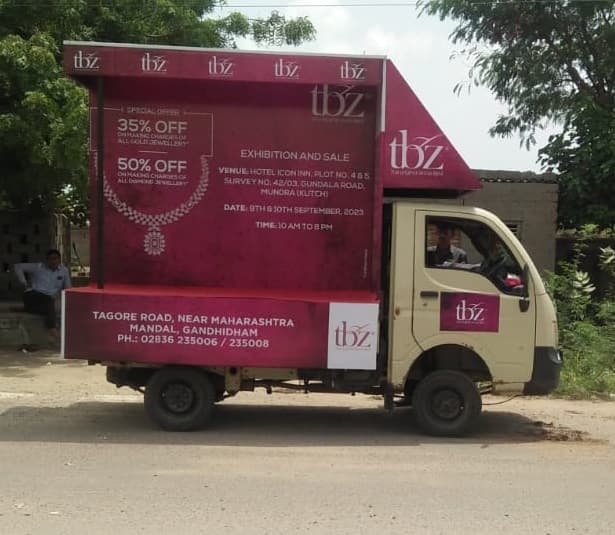
Mobile van branding in India: the complete 2026 guide to cost, formats, and campaigns
What does mobile van branding cost, which van type should you choose, and when does it beat other formats? The complete 2026 guide to planning a mobile van advertising campaign in India.
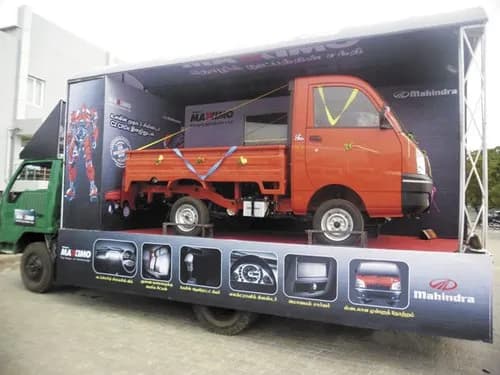
Festive season 2026 advertising booking calendar: when to book each format before the rush
When should you book festive advertising for 2026? A booking calendar with format lead times, a step-by-step process, and the timing rules to lock inventory before the Ganesh-to-Diwali rush.