

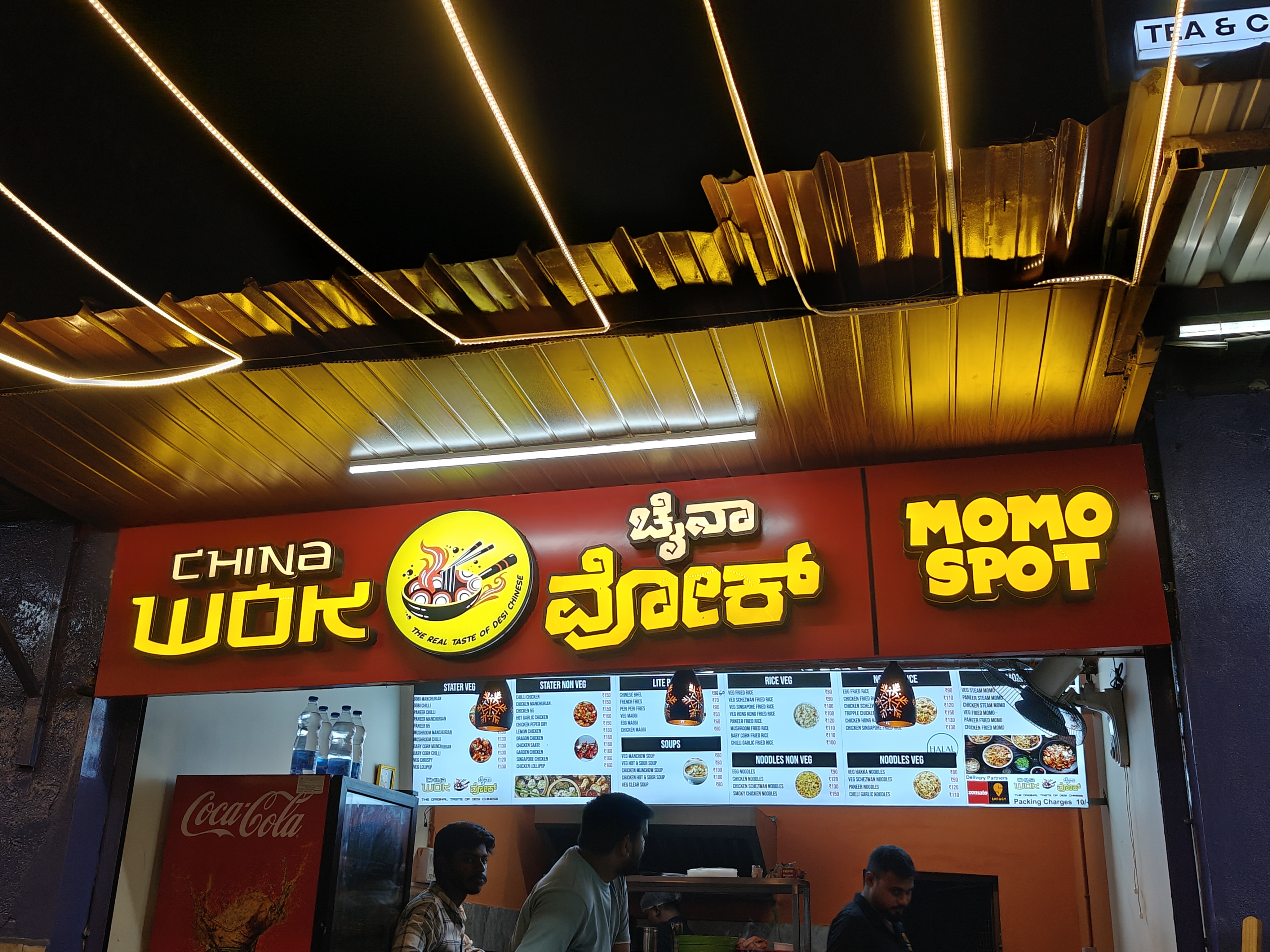
Walk the lanes of Burrabazar, one of Asia's largest wholesale markets, and you see what a Kolkata shop board is up against. Hundreds of shopfronts stacked along narrow heritage streets, names crowding for the eye, and over all of it the damp: Kolkata's air is hot and heavy with moisture for most of the year, and the monsoon adds months of hard rain on top. A cheap board here greys over, grows mould at the edges, and its fittings rust within a season, while a well-sealed one stays bright for years. So in Kolkata the brief begins with three questions: which material survives the humidity, how do we show the name prominently in Bengali as the state expects, and what will the Kolkata Municipal Corporation charge. Settle those and a board at Rs 180 to 400-plus per square foot is the best-value advertising the shop owns. This guide covers the costs, the KMC rules, the Bengali requirement, the humidity durability, the markets, and the materials that last.
Kolkata shop name boards at a glance: the key facts
Six facts anchor a Kolkata shop-board decision in 2026. Cost range: Rs 180 to 400-plus per square foot installed, by material. Cheapest viable material: ACP from Rs 180. Recommended for visibility and durability: ACP with LED backlighting from Rs 350. Regulator: KMC, which levies advertisement charges on top of fabrication. Language: Bengali shown prominently, typically alongside English. Climate factors: high year-round humidity and a heavy monsoon, which favour sealed, mould-resistant, easy-clean materials. The thing owners underestimate: the damp, which rusts fittings and grows mould on anything not built for it.
How much does a shop name board cost in Kolkata? Materials and prices
Material drives Kolkata shop-board cost more than size, but in Kolkata the durability column matters because of the humidity. The table below sets out the main options, their 2026 per-square-foot cost installed, and how each holds up in the damp, before any KMC advertisement charge.
Kolkata shop name board materials and 2026 cost
| Cost per sq ft (2026) | Best for / humidity durability note | |
|---|---|---|
| ACP board (non-lit) | From Rs 180 | Value retail; sealed, easy-clean faces resist mould and grime |
| ACP + LED backlit | Rs 350 to 450 | Recommended default; weatherproof electricals against the damp |
| Acrylic 3D letters | Premium (Rs 400-plus) | Park Street, Salt Lake, New Town boutiques; seal and fix well |
| Flex glow sign | Budget (from ~Rs 150) | Lowest cost; traps moisture, discolours and grows mould; short life |
2026 starting points installed; actuals vary by size, height, structure and electrical work, and exclude the KMC advertisement charge. Request a free site quote.
In real numbers, a common 10-foot by 4-foot board is 40 square feet, so basic ACP lands around Rs 7,200, an LED-backlit ACP board around Rs 14,000 to 18,000, and acrylic 3D lettering higher, before framing, electrical work, and the KMC charge. In Kolkata, ask specifically whether the quote uses sealed edges, easy-clean faces, weatherproofed electricals, and corrosion-resistant fixings, because in a city this humid those are the difference between a board that stays bright and one that greys and rusts within a year.
KMC rules and charges: what the city levies
The Kolkata Municipal Corporation regulates outdoor advertising and signage across the city and levies advertisement charges, so a commercial shop board is a municipal cost as well as a fabrication one. The charge generally varies by area, by the size of the board, and by whether it is illuminated, and it usually sits alongside the establishment's trade licence. Because KMC sets and updates the schedule, confirm the current rate for your specific zone before fabricating rather than after the board is up. This matters especially in the dense central and north Kolkata wards, where heritage buildings and narrow, crowded streets can mean tighter placement and size norms than in newer areas. The simplest route is to work with a signage vendor who handles KMC compliance as part of the job, so the approval and charge are built into the plan. Budget the municipal cost from the start and keep the board within the norms for your location, because a non-compliant board can mean a penalty or removal, which turns a one-time cost into a repeat one.
The Bengali requirement: how to show your name
Language is the second Kolkata-specific factor. West Bengal expects commercial establishments to display the shop name prominently in Bengali, so on a Kolkata board Bengali should be a primary design element, shown boldly and clearly, typically alongside English. The right way to think about it is not to bolt a small Bengali line under an English name, but to design the board so the Bengali reads as a headline in its own right. This serves two ends at once: it meets the state expectation, and it makes the shop more legible and welcoming to the large share of customers who read Bengali first. Because the exact requirement on prominence can be revised, confirm the current rule before finalising, but designing with bold Bengali is the safe and sensible 2026 default. A good vendor sets the Bengali and English together from the first drawing so the board is balanced, legible, and compliant rather than retrofitted later.
The humidity problem: materials and sealing that last
Kolkata's damp is a slower, more constant test than a dry city's dust or a coast's salt, and it punishes the wrong material in three ways. Constant high humidity rusts cheap fittings and works behind unsealed faces; mould and grime build on porous or textured surfaces and dull a board; and the heavy monsoon adds months of direct rain. The defences are built in at the design stage. Use ACP or acrylic with properly sealed edges and smooth, easy-clean faces that wipe free of grime, weatherproof the electrical connections on lit boards, and specify corrosion-resistant fixings and mounting. This is exactly why flex is a poor long-term choice in Kolkata: it traps moisture, discolours, and grows mould faster than a rigid sealed face, so a flex board that looks cheap on day one becomes a recurring cost. A well-sealed, easy-clean ACP board costs more upfront but stays bright through the damp, which in Kolkata is the whole point, and an occasional wipe keeps it looking new.
The Kolkata market-belt map: signage by area
Kolkata's retail concentrates in distinct belts, and the right board changes with each. Burrabazar, one of Asia's largest wholesale markets, is extremely dense and price-sensitive, set in narrow heritage lanes where clean legibility beats flourish and placement rules are tight. Gariahat is the saree and fashion belt, busy and competitive, where a bright, bold board peaks in the wedding and Durga Puja seasons. New Market and Esplanade are established central shopping, and College Street is the historic book market. Park Street is premium dining, suited to refined acrylic 3D lettering and design-led signage, as are Salt Lake and New Town in the modern east. Hatibagan and Shyambazar serve the north. Match the material, the illumination, and the design register to the belt: clean and bright in the dense wholesale and saree markets, refined in the premium and modern areas, and in every case with the name shown prominently in Bengali and built to survive the humidity.
Your Kolkata shop-board buyer playbook
Six steps to a Kolkata shop board that lasts and complies. First, confirm the KMC advertisement charge and approval for your zone, and treat it as a real line item alongside fabrication, allowing for tighter rules in the dense heritage wards. Second, design the board to show the name prominently in Bengali alongside English, as a headline element rather than an afterthought. Third, specify ACP or acrylic with sealed edges, easy-clean faces, weatherproofed electricals, and corrosion-resistant fixings, because the humidity and monsoon demand it. Fourth, avoid flex for anything long-term, since it traps moisture and grows mould in the damp. Fifth, get an itemised quote that includes the frame, fixing, transport, electrical work, sealing, and the KMC compliance, not just the face rate. Sixth, time the install before the Durga Puja and festive season, when evening footfall is heaviest, so a fresh, bright, sealed board is up. Get those six right and your board will stay bright, compliant, and effective for years, or let us handle the KMC approval, the Bengali design, the humidity-grade build, and the installation for you.
What does KMC charge for a shop name board?
KMC levies advertisement charges on outdoor signage, and the amount varies by area, board size, and whether the board is illuminated, so there is no single flat figure. The charge typically sits alongside your trade licence as part of running a commercial establishment. Because KMC sets and revises the schedule, the reliable step is to confirm the current rate for your specific zone before fabricating, or to use a vendor who handles KMC compliance and folds the charge and approval into the plan. This is especially important in the dense central and heritage wards, where placement and size norms can be tighter, and where a non-compliant board risks a penalty or removal.
How prominent does Bengali have to be on a Kolkata shop board?
The safe approach is to make Bengali a headline element on the board, shown boldly and clearly, typically alongside English, rather than a small line underneath. West Bengal expects commercial establishments to display the shop name prominently in Bengali, so designing the Bengali to read as a primary name keeps you on the right side of the expectation and serves the many customers who read Bengali first. Because the precise rule on size or proportion can be updated, confirm the current requirement before finalising, but a board that shows the name boldly in Bengali is the sensible 2026 default and avoids a costly redesign later.
Why does flex signage fail in Kolkata?
Kolkata's high year-round humidity and heavy monsoon punish flex faster than most cities. Flex traps moisture, discolours, and grows mould and grime, while the damp also rusts cheap fittings, so a flex board greys and sags within a season or two. ACP and acrylic, with sealed edges and smooth, easy-clean faces, resist mould and wipe clean, lasting far longer in the damp. Flex glow signs are still the cheapest option and fine for short-term use, but for a multi-year board they are a false economy in Kolkata's climate. If budget is tight, a sealed plain ACP board is a more durable choice than flex at a similar entry level.
Which board is best for a Burrabazar or dense-market shop?
For the extremely dense, price-sensitive wholesale lanes of Burrabazar, and similarly crowded belts like Gariahat, a clean, bright, clearly lettered board wins, because it must read at a glance among hundreds of neighbours in narrow heritage streets. An ACP board with LED backlighting in a sealed, easy-clean, humidity-ready build is the practical default, with the name shown boldly in Bengali and English. Keep the design legible rather than fussy, since clarity beats decoration in a crowded market. And confirm the KMC norms and charge for the ward, as placement and size rules in dense, heritage areas are often tighter than in newer zones.
Tags
Quick Answers
How much does a shop name board cost in Kolkata in 2026?
A shop name board in Kolkata costs roughly Rs 180 to 400-plus per square foot installed, depending on material. A standard ACP board starts around Rs 180 per square foot; an ACP board with LED backlighting runs Rs 350 to 450; acrylic 3D letters sit at the premium end; and a flex glow sign is the budget option. A typical 10-foot by 4-foot shopfront board (40 square feet) ranges from about Rs 7,200 for basic ACP to Rs 18,000 or more for premium illuminated signage, before structural or electrical work, and before any KMC advertisement charge. As elsewhere, the material choice drives the cost more than the size.
Do I need KMC permission for a shop name board in Kolkata?
Yes, in general. The Kolkata Municipal Corporation (KMC) regulates outdoor advertising and signage in the city and levies advertisement charges, so a commercial shop board typically needs to comply with KMC norms and the applicable charge, usually alongside your trade licence. The charge varies by area, board size, and whether it is illuminated, and the schedule is set by KMC, so confirm the current rate for your zone before fabricating. The practical point: budget for the municipal cost and approval, not just the board itself, and work with a vendor who handles KMC compliance as part of the job, especially in the dense, heritage-rich central wards.
Is Bengali compulsory on shop name boards in Kolkata?
West Bengal expects commercial establishments to display the shop name prominently in Bengali, so for a Kolkata shop you should design the board with Bengali shown clearly, typically alongside English. Treat Bengali as a primary design element rather than a small add-on, both to meet the state's expectation and because Bengali reads as more local and approachable to everyday Kolkata customers. Because the exact requirement on prominence can be updated, confirm the current rule, but the safe 2026 default is a board that shows the name boldly in Bengali. A good signage vendor builds Bengali prominence in from the first design.
Which board material survives Kolkata's humidity?
Kolkata is hot and very humid year-round with a heavy monsoon, so sealing and mould resistance matter as much as rain protection. Choose ACP or acrylic with sealed edges and easy-clean faces, weatherproof the electrical connections on lit boards, and use corrosion-resistant fixings, because constant humidity rusts cheap fittings and lets mould and grime build on porous surfaces. Avoid flex for anything long-term, as it traps moisture, discolours, and degrades fast in the damp. A well-sealed, easy-clean ACP board is the durable Kolkata default; an LED-backlit ACP board is the recommended choice because the city's markets trade late and an illuminated board cuts through humid, grey evenings.
Looking for professional Shop Name Board services?
The Mediaverse runs end-to-end shop name board campaigns across India with geo-tagged delivery and transparent, all-inclusive pricing.
Explore our Shop Name Board solutionsSummarize this guide with AI
Open this article in your favourite AI assistant
Related Guides
Written by

The Mediaverse Team
India's Leading Outdoor Advertising Agency
The Mediaverse is a national-level outdoor advertising and integrated marketing organization that provides complete OOH, ATL, BTL, retail, and transit media solutions across India. With years of experience executing high-performance campaigns for brands in FMCG, Real Estate, E-commerce, EdTech, Automotive, Healthcare, and Retail, The Mediaverse combines creativity, data-driven media planning, and flawless on-ground execution. As a full-stack outdoor advertising provider, The Mediaverse offers Auto Branding, Mobile Van Branding, Newspaper Insertion Advertising, Shop Name Board Branding, In-Store Branding, Hoardings, Transit Media, Kiosks, Mall Media, Activations, and all forms of Below-The-Line marketing. Known for its pan-India network, strategic route planning, premium print quality, and Cheqmate™ GPS-based verification, The Mediaverse ensures 100% transparent and result-oriented campaign delivery. The Mediaverse’s editorial team produces deeply researched, SEO-optimized, and generative-engine-friendly content to help businesses understand the power of outdoor advertising and make informed decisions that maximize brand visibility and ROI across urban, suburban, and rural markets.
Related Articles
Shop Name Boards in Delhi Street by Street: Chandni Chowk, Karol Bagh and Lajpat Nagar at Rs.80 to Rs.1,150 per sq ft, Five Authorities (2026)
Chandni Chowk, Karol Bagh and Lajpat Nagar worked against the Delhi shop board card: one set of rates, three frontages, two authorities with different size caps and annual fees, the page's own installed jobs reconciled, and the calendar windows it publishes.
Shop Name Board Cost in Bangalore by Frontage: 6, 10, 15, 20 and 30 ft Priced on the Card, Rs.1,530 to Rs.1,08,000 (2026)
Five Bangalore shopfront widths, 6 to 30 ft, priced in every material on the live card at a 3 ft board height, with the Kannada rule costed, the 48-hour lane priced and the page's own examples reconciled.
Shop Name Boards Street by Street in Pune: FC Road to Hinjewadi (2026)
One Pune card, eight streets, eight different boards. What FC Road, Koregaon Park, Laxmi Road, Camp, Kothrud, the coaching belt and the IT parks each reward, priced on the card, plus the Marathi rule and the page's own jobs checked.