

Most restaurant and cloud kitchen launches spend their first marketing rupee on a format built for citywide reach, when the only geography that matters on day one is the 3 to 5 kilometre radius a delivery rider or a walk-in customer will actually cross. A billboard on the ring road or a citywide sticker run reaches people who will never place an order, because they live and work outside the zone the kitchen can actually deliver to. Auto branding is the one outdoor format priced and deployed by zone rather than by city, which makes it the format that can be pointed at exactly that radius instead of scattered across a metro area. The Mediaverse's published hood branding rate is Rs.650 per auto for 300 to 499 autos, dropping to Rs.630 per auto at 500 or more, with a minimum order of 300 autos, and the network is mapped to real Bangalore localities rather than sold as a citywide blanket. This is the arithmetic and the process for pointing that network at a launch window instead of wasting it on strangers who are not in delivery range.
What does zone targeting for a delivery radius actually mean?
Auto branding is not bought city-wide, and that distinction is the entire reason it fits a restaurant launch better than most outdoor formats. Operators are assigned to autos that primarily run in a set of chosen localities rather than wherever they happen to be that day, so the fleet a restaurant books is genuinely concentrated in the streets its delivery riders and walk-in customers actually cover. The Mediaverse's own Bangalore network is the working example: 2,000 or more branded autos across Koramangala, Indiranagar, Whitefield, Electronic City, Jayanagar, HSR Layout and Marathahalli, out of roughly 80,000 autos that are active daily across the city's approximately 1,10,000 registered fleet. That is a small, targeted slice of a much larger pool, chosen by locality rather than by chance.
For a launch, the useful move is to stop thinking in terms of the city name and start thinking in terms of the kitchen's own delivery radius or walk-in catchment. A cloud kitchen serving a 3 kilometre delivery zone around HSR Layout does not need autos circulating in Whitefield; it needs the fleet concentrated in the localities its own delivery app already draws a boundary around. Draw that boundary first, on an actual map, before calling anyone about branding. The zone mapping is what turns a generic auto branding order into a launch tool instead of a diffuse impression buy.
A worked example makes the boundary concrete. A cloud kitchen in HSR Layout with a 4 kilometre delivery radius typically pulls in parts of Koramangala and Indiranagar as well, three localities that all sit inside The Mediaverse's mapped Bangalore network. Booking the 300-auto hood minimum against just those three localities, rather than the wider seven-locality network, keeps every branded auto genuinely inside the delivery boundary instead of thinning coverage across zones the kitchen cannot serve. A restaurant with a single storefront in one of those localities can draw a tighter radius still, since walk-in reach rarely needs to extend as far as delivery reach does.
What does auto branding cost for a restaurant or cloud kitchen launch?
The published rate card is one-time and quoted before GST, with the price per auto falling once an order crosses the volume threshold. The landed column below adds 18% GST, because that is the number that actually leaves the account when the campaign is billed.
Auto branding for a restaurant or cloud kitchen launch: published rates, 2026
Hood branding, 300-499 autos
The minimum bookable hood order and the entry ticket for a launch campaign. 300 autos is Rs.1,95,000 before tax, Rs.2,30,100 landed with 18% GST. GST is extra and some areas add an auto-union fee, billed separately.
Hood branding, 500+ autos
The volume rate once an order reaches 500 autos. 500 autos is Rs.3,15,000 before tax, Rs.3,71,700 landed with 18% GST, useful for a launch covering more than one delivery radius or a multi-outlet opening.
Back panel sticker, 24x6 inch
The cheaper entry point, rear-facing to bumper-to-bumper traffic. Minimum order 500 autos: Rs.85,000 before tax, Rs.1,00,300 landed with 18% GST.
Back panel sticker, 24x18 inch
The larger back panel size at the same 500-auto minimum. 500 autos is Rs.1,35,000 before tax, Rs.1,59,300 landed with 18% GST.
Those landed totals are the numbers to plan a launch budget against, not the before-tax figures a quote might lead with. A 300-auto hood campaign at Rs.2,30,100 landed is the realistic entry cost for a single-radius launch; a 500-auto back panel run at Rs.1,00,300 landed is the realistic entry cost for a wider but lower-visibility spread. Neither figure includes the auto-union fee some localities add on top, which The Mediaverse bills separately and a launch budget should hold room for.
Should a launch use hood branding or back panel stickers first?
Hood branding versus back panel stickers for a restaurant launch
| Hood branding | Back panel sticker | |
|---|---|---|
| Published rate | Rs.650/auto (Rs.630 at 500+) | Rs.170/auto (24x6) or Rs.270/auto (24x18) |
| Minimum order | 300 autos | 500 autos |
| Entry ticket, landed (18% GST) | Rs.2,30,100 | Rs.1,00,300 (24x6) or Rs.1,59,300 (24x18) |
| Visibility | Full-wrap, seen from the front and sides | Rear-facing only, seen from behind |
| Best fit for a launch | A single storefront or flagship opening wanting maximum recall | A cloud kitchen with no storefront, budget-first, wider spread |
Rates are The Mediaverse's published one-time rate card, GST extra. A launch with a walk-in storefront usually gets more from the higher-visibility hood; a delivery-only cloud kitchen with a tighter budget can start with back panel stickers instead.
What is the five-step zone mapping process for a launch?
The process is the same one The Mediaverse runs for any zone-targeted campaign, adapted here for a launch window rather than an ongoing brand run. Each step has a common mistake attached, because the mistakes are what turn a zone-mapped campaign back into an expensive citywide guess.
Define the radius, not the city
Draw the actual delivery radius or walk-in catchment on a map before calling anyone about branding, using the same boundary the kitchen's own delivery app already enforces. Why it matters: a campaign briefed on a city name gets spread across zones the kitchen cannot serve, wasting impressions on people who will never see an order confirmation screen. Common mistake: buying a citywide package because it sounds bigger, then finding half the fleet never crosses the kitchen's own delivery boundary.
Pick hood or back panel by budget and launch date
Match the format to what the launch can spend and how much visual weight it needs. Hood branding is Rs.650 per auto with a 300-auto minimum and higher visibility from the front and sides; back panel stickers are Rs.170 to Rs.270 per auto with a 500-auto minimum and lower visibility, seen only from behind in traffic. Why it matters: the two formats have different minimum orders and different entry tickets, so the choice sets the campaign's floor cost before a single zone is even confirmed. Common mistake: choosing hood branding for its visibility without checking whether the 300-auto minimum and Rs.2,30,100 landed cost actually fits the launch budget.
Confirm the zone has enough active autos to hit the minimum order
Check that the chosen localities can actually supply 300 autos for hood branding or 500 for back panel stickers, combining two or three adjoining neighbourhoods inside the delivery radius rather than relying on one thin corridor. Why it matters: a single narrow catchment, such as one market road, may not have enough zone-assigned autos on its own to clear the minimum order. Common mistake: mapping the radius correctly in step 1 but then picking only one small locality inside it, forcing either a citywide top-up or a delayed campaign start.
Approve creative for a moving, glancing read
Sign off on artwork that reads in the two to three seconds a pedestrian or a neighbouring vehicle actually has as the auto passes, not artwork designed to be studied like a poster. Why it matters: a launch campaign that cannot be read from 20 feet at moving speed loses most of its intended recall, regardless of how many autos carry it. Common mistake: reusing a storefront or menu design built for a stationary reader, dense with text that a passing glance cannot process.
Launch and hold for the opening window, not indefinitely
Run the campaign for the launch window itself, typically the first 4 to 8 weeks after opening, rather than treating it as a permanent fixture. Standard setup is 48 to 72 hours from approval to road, extending to 5 to 7 days for orders above 100 autos across multiple cities. Vinyl life runs 6 to 12 months, so a launch run is usually the freshest portion of that life. Why it matters: newness fades, and a launch campaign is meant to announce an opening, not to substitute for the ongoing signage a kitchen needs after the launch window closes. Common mistake: leaving the same launch creative running for months past the opening, so it stops reading as news and starts reading as wallpaper.
How fast can a launch campaign go live?
The Mediaverse's published timeline is 48 to 72 hours from approval to road for a standard campaign, covering route planning, auto selection, design approval, printing and installation. For large orders, above 100 autos and spread across multiple cities, that window extends to 5 to 7 days for optimal execution. For a single-city restaurant or cloud kitchen launch at the 300-auto hood minimum, the standard 48 to 72 hour window is the one to plan an opening date against. GST is extra on every rate above, and some localities add an auto-union fee that is billed separately rather than folded into the published per-auto price, so a launch budget should hold a small buffer for it.
Building a launch budget around that timeline also means sequencing the spend correctly. Creative approval should be locked before the auto order is placed, since the 48 to 72 hour clock starts running from approval and not from the first phone call. A launch aiming to coincide with an opening date should therefore confirm creative at least a week ahead, leaving the standard window as a buffer rather than the critical path, and leaving extra room if the order crosses 100 autos and the longer 5 to 7 day window applies instead.
Is auto branding the right format for a cloud kitchen with no walk-in customers?
Yes, and arguably more directly than for a restaurant with a storefront, because a cloud kitchen's only physical presence in the neighbourhood is the delivery rider carrying its bag past a household's gate. A zone-mapped auto fleet builds name recognition in that same delivery radius before an order is ever placed, so that when a household does open a delivery app, the kitchen's name is not appearing for the first time. It does the job a storefront sign would do for a restaurant, in a format that does not require a storefront.
What The Mediaverse does not publish
Stated plainly so nothing here reads as more than it is. There is no published data on incremental delivery-order lift from auto branding specifically for restaurants, and this post does not invent a recall or conversion statistic to fill that gap. Average delivery radius varies by cuisine, platform and city, so this post uses a 3 to 5 kilometre range as a common illustration rather than a universal number, and a reader should use their own kitchen's actual delivery boundary instead of an industry average nobody publishes. The auto-union fee some localities charge is real and billed extra, but The Mediaverse does not publish a fixed figure for it because it varies by locality, so budget a buffer rather than assuming zero.
Your final launch checklist
Six things to have settled before a campaign goes to print.
- Delivery radius or walk-in catchment mapped on an actual map, not guessed from the city name.
- Format picked, hood or back panel, and its minimum order quantity (300 or 500 autos) confirmed against budget.
- Zone locality list checked against The Mediaverse's network coverage to confirm the minimum order is reachable.
- Creative approved for a 20-foot, moving-speed read, not a stationary poster layout.
- Launch window set, typically the first 4 to 8 weeks of the vinyl's 6 to 12 month life.
- Shop name board signage budgeted separately for the storefront or kitchen gate, for the standing presence auto branding does not provide.
Can auto branding be targeted to just my delivery radius instead of a whole city?
Yes. The Mediaverse maps high-density localities and assigns autos that primarily operate in the areas a client chooses, rather than selling coverage by city. A restaurant or cloud kitchen can define its own delivery radius or walk-in catchment and have the campaign mapped to autos working those specific localities. In Bangalore that network covers 2,000 or more autos across Koramangala, Indiranagar, Whitefield, Electronic City, Jayanagar, HSR Layout and Marathahalli, a small slice of the roughly 80,000 autos active daily citywide.
What is the minimum order to launch an auto branding campaign for a single restaurant location?
300 autos for hood branding at Rs.650 per auto, which lands at Rs.2,30,100 including 18% GST. Back panel stickers have a higher minimum of 500 autos but a lower per-unit rate, Rs.170 for the 24x6 inch size or Rs.270 for the 24x18 inch size, landing at Rs.1,00,300 or Rs.1,59,300 respectively. There is no smaller bookable tier below these minimums on the published rate card.
Should a new restaurant use hood branding or back panel branding first?
A restaurant with a physical storefront wanting maximum recall for its opening generally gets more from hood branding, which is visible from the front and sides rather than only from behind. A delivery-only cloud kitchen working a tighter launch budget can reasonably start with back panel stickers instead, accepting lower visibility per auto in exchange for a lower entry ticket, since it has no storefront depending on street -level recall in the first place.
How long should a launch campaign for a new restaurant or cloud kitchen run?
Typically the first 4 to 8 weeks after opening, drawn from the vinyl's 6 to 12 month working life. Running the same launch creative well past the opening window stops reading as news about a new business and starts reading as background wallpaper, which is why a launch campaign is treated as a distinct, time-boxed booking rather than a standing arrangement.
Does auto branding work for a delivery-only cloud kitchen with no walk-in storefront?
Yes. A cloud kitchen's only regular physical contact with a household is the delivery rider passing its gate, so a zone-mapped auto fleet covering the same delivery radius builds name recognition before an order is ever placed. It functions as the storefront sign a cloud kitchen does not have, concentrated in exactly the streets its own delivery app already serves.
Tags
Quick Answers
How does zone targeting work for a restaurant's delivery radius?
Auto branding is not sold city-wide. Operators are assigned to autos that primarily run in the localities a client selects, so a restaurant or cloud kitchen can map a campaign to its own delivery radius or walk-in catchment instead of an entire city. The Mediaverse's Bangalore network covers 2,000 or more autos across seven named localities, a small mapped slice of the roughly 80,000 autos active daily citywide.
What does auto branding cost for a restaurant or cloud kitchen launch?
The minimum hood order is 300 autos at Rs.650 each, Rs.1,95,000 before tax and Rs.2,30,100 landed with 18% GST. Back panel stickers need a 500-auto minimum at Rs.170 or Rs.270 per auto, landing at Rs.1,00,300 or Rs.1,59,300. Volume rates apply above those minimums, dropping the hood rate to Rs.630 per auto at 500 or more.
How fast can a launch campaign go live?
The published timeline is 48 to 72 hours from approval to road for a standard order, covering route planning, auto selection, design approval, printing and installation. Orders above 100 autos spread across multiple cities extend to 5 to 7 days for optimal execution. A single-city 300-auto launch fits the standard 48 to 72 hour window.
Is auto branding the right format for a cloud kitchen with no walk-in customers?
Yes. A cloud kitchen's main physical contact with a household is its delivery rider, so a zone-mapped auto fleet covering the same delivery radius builds name recognition before an order is placed, functioning as the storefront sign a delivery-only kitchen does not have.
Looking for professional Auto Branding services?
The Mediaverse runs end-to-end auto branding campaigns across India with geo-tagged delivery and transparent, all-inclusive pricing.
Explore our Auto Branding solutionsSummarize this guide with AI
Open this article in your favourite AI assistant
Related Guides
Written by

The Mediaverse Team
India's Leading Outdoor Advertising Agency
The Mediaverse is a national-level outdoor advertising and integrated marketing organization that provides complete OOH, ATL, BTL, retail, and transit media solutions across India. With years of experience executing high-performance campaigns for brands in FMCG, Real Estate, E-commerce, EdTech, Automotive, Healthcare, and Retail, The Mediaverse combines creativity, data-driven media planning, and flawless on-ground execution. As a full-stack outdoor advertising provider, The Mediaverse offers Auto Branding, Mobile Van Branding, Newspaper Insertion Advertising, Shop Name Board Branding, In-Store Branding, Hoardings, Transit Media, Kiosks, Mall Media, Activations, and all forms of Below-The-Line marketing. Known for its pan-India network, strategic route planning, premium print quality, and Cheqmate™ GPS-based verification, The Mediaverse ensures 100% transparent and result-oriented campaign delivery. The Mediaverse’s editorial team produces deeply researched, SEO-optimized, and generative-engine-friendly content to help businesses understand the power of outdoor advertising and make informed decisions that maximize brand visibility and ROI across urban, suburban, and rural markets.
Related Articles
Auto Back Panel Branding in 10 Cities: The 500-Panel Minimum Priced City by City (2026)
All ten city pages publish one back panel card, so 500 panels cost Rs.85,000 everywhere. What the city route-premium notes, the Rs.140 headlines and the fleet sizes change, priced city by city.
Auto Branding in Lucknow (2026): What the 300-Hood Minimum Covers Across Autos, E-Rickshaws and the Colony Grid
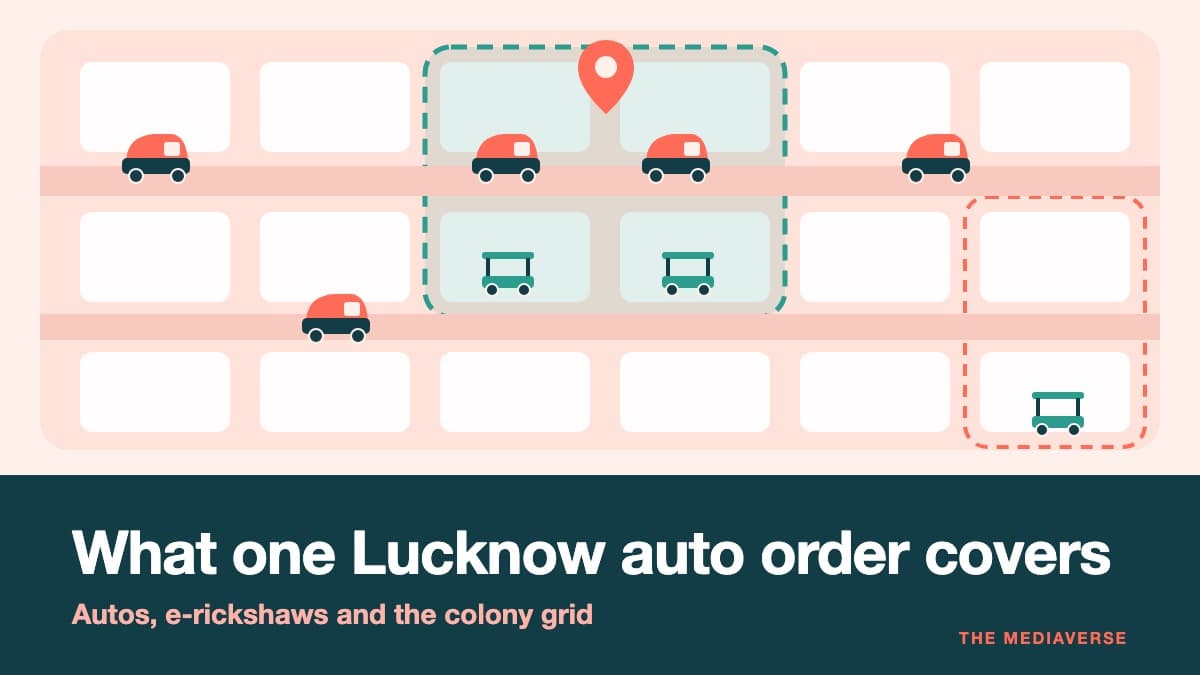
Lucknow prices autos and e-rickshaws on one national card, from Rs.85,000 for 500 panels. What one minimum order means in the page's own colony grids, how much of each zone it takes, and how the fog, monsoon and admission calendar shape the booking.
Auto Branding in Hyderabad (2026): What the 85,000-Auto Fleet and the Gate and Zone Map Actually Support
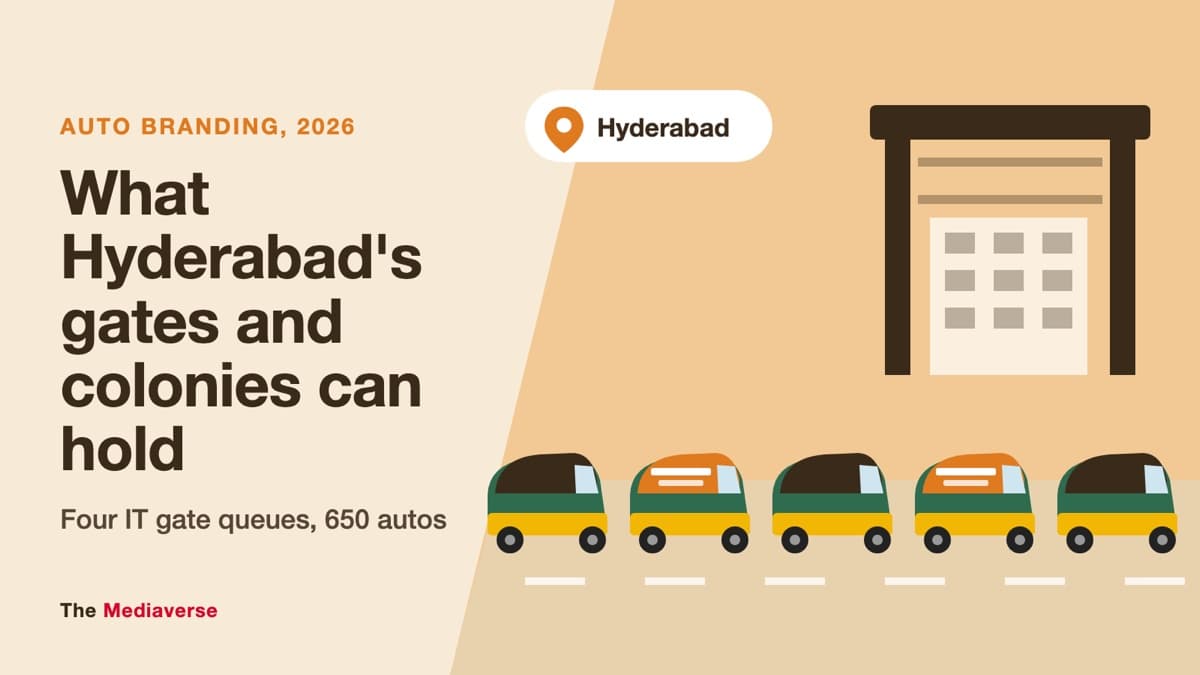
Four Hyderabad IT gate queues, 650 autos, and minimum orders of 300 hoods or 500 panels. What the published fleet and zone counts can actually carry, where the other 400 panels should run, and why 700 panels cost more than 800.