

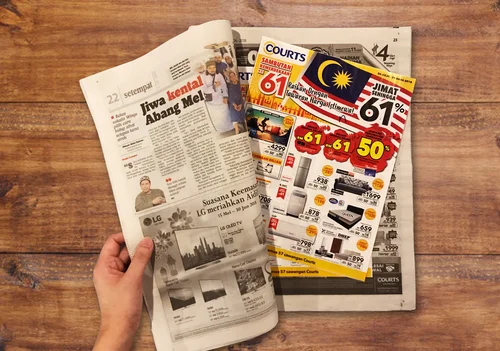
Everyone assumes digital has made newspaper inserts obsolete. The data on the ground says it depends, because the two do not actually compete for the same job. A digital ad finds people by interest, intent, and behaviour, but only if they are online and the platform serves them; a newspaper insert lands a physical, keepable flyer in the homes of chosen pincodes whether or not those households are online, and it cannot be blocked, skipped, or scrolled past. So the real question for a local business is not which format is better, but which audience and which job you are buying. This guide sets the two side by side, shows when each wins, explains how to combine them, and gives a checklist to decide, with the honest answer being that most local businesses are best served by using both.
Newspaper insertion vs digital ads: the spec comparison
The clearest way to see the difference is side by side, across how each targets, what the audience receives, who it reaches, how it charges, how you measure it, and how easily it can be avoided. The table makes the complementary nature obvious.
Newspaper insertion vs digital ads (2026)
| Newspaper insertion | Digital ads | |
|---|---|---|
| Targeting basis | Pincode, locality, dealer route | Interest, behaviour, search intent, geo-radius |
| What the audience gets | Physical, keepable flyer + coupon | On-screen ad, click-through |
| Audience skew | All households, incl. offline and older | Online and smartphone users |
| Cost model | One-time per home reached | Ongoing per click / impression (auction) |
| Measurement | Coupon / QR redemption | Clicks, conversions, pixel |
| Ad-avoidance | Hard to skip (physical) | Ad-blockers, scroll-past, skips |
| Best for | Local footfall, offers, trust | Intent capture, retargeting, scale |
2026 framing; insertion cost is a per-home estimate, digital cost is auction-based. The two cover the offline and online halves of a local catchment. Request a tailored plan.
The verdict
If you must pick one, match the channel to your audience. For an offline, neighbourhood, footfall-driven business, an older or family customer base, or a coupon-led offer, newspaper insertion wins because it reaches and persuades households digital under-serves and lands a keepable object with an offer. For an online, intent-driven, or delivery-based business, or when you want to test messages cheaply and retarget interested people, digital ads win. But for most local businesses the honest verdict is to use both, because they cover the two halves of the same catchment and reinforce each other. The rest of this guide shows exactly when each wins and how to combine them.
When newspaper insertion wins
Newspaper insertion wins in four situations. First, an offline or mixed audience: when a meaningful share of your customers are older, family households, or simply less active online, an insert reaches them where a digital ad never appears. Second, coupon-led offers: a physical flyer with a tear-off or show-this coupon is a keepable prompt that sits in the home until used, which suits discounts, openings, and seasonal sales. Third, neighbourhood blanket coverage: when you want to reach essentially every home in a defined catchment, insertion delivers completeness that interest-based digital targeting cannot. Fourth, trust and clutter-avoidance: a printed insert is hard to skip and carries the credibility of print, standing out precisely because it is not one more ad in a crowded feed. For a local shop, clinic, school, or restaurant, these are common and valuable.
When digital ads win
Digital ads win in four different situations. First, intent capture: when someone is actively searching for what you sell, a search or local ad meets that intent at the moment it appears, which print cannot do. Second, retargeting: digital can re-reach people who visited your site or showed interest, nudging them back, an option insertion does not have. Third, cheap testing: you can run several messages or offers for a small budget, see which performs, and scale the winner, making digital a low-cost laboratory. Fourth, scale and online audiences: for a delivery-based or online-leaning business, or to reach younger, smartphone-first customers, digital reaches further and faster. Where the goal is to capture demand that already exists online and to optimise continuously, digital is the stronger tool.
The best answer for most: combine both
Because they cover the offline and online halves of the same catchment, insertion and digital work best together. A practical combined play: drop a pincode-targeted insert with a clear offer and a coupon code to blanket the neighbourhood and reach offline households, and run a parallel digital campaign with the same offer to capture intent and retarget people who engaged. Use a shared or parallel coupon code, QR, or landing page so you can attribute each response to its channel, compare cost per response, and shift budget toward whichever converts better for your business. This turns a print-versus-digital debate into a measured mix, where the insert builds broad local awareness and a keepable prompt, and digital captures and recaptures the demand it stirs up. For a festive or launch push, running both at once usually beats either alone.
Decision checklist: which should you pick?
Run through these questions. Are a meaningful share of your customers older, family, or less-online households? If yes, lean toward insertion. Is your offer coupon-led or footfall-driven from a defined neighbourhood? If yes, insertion. Do customers actively search for what you sell, or do you want to retarget interested people? If yes, digital. Do you need to test several messages cheaply, or scale beyond your immediate area? If yes, digital. Is your business delivery-based or online-leaning? If yes, lean digital. If your answers fall on both sides, which is common, run both with a shared coupon code and let the response data set your budget split. And whichever you choose, give it a way to be measured, because the channel you can measure is the channel you can improve.
Does anyone actually read newspaper inserts anymore?
Yes, a substantial share of households still take a newspaper, particularly older and family homes, and a physical insert with a clear offer gets noticed because it falls out of the paper into the reader's hands rather than competing in a crowded digital feed. Readership has shifted over the years, which is exactly why targeting matters: by inserting only into the pincodes where your customers live and read, you reach the households that still engage with print and avoid paying for those that do not. For reaching the offline and less-online segment of a local catchment, a targeted insert remains effective, and pairing it with digital covers the online segment too.
Can I track newspaper insertion as well as I track digital ads?
Not as granularly, but well enough to manage. Digital gives clicks and conversions automatically; insertion is tracked through a coupon code, QR code, dedicated number, or show-this-flyer offer, and by counting redemptions against inserts delivered per area. If you use a different code per pincode, you can even see which localities converted. That gives you a response rate and a cost per response you can compare with digital. So while insertion measurement is more manual, a disciplined coupon-and-count habit makes it genuinely measurable, and using a shared code across both channels lets you compare them on the same offer.
Which works better for an older or family audience?
Newspaper insertion generally works better for older and family audiences, because those households are more likely to take a newspaper and less likely to be reached by interest-based digital targeting, and a physical, keepable flyer suits the way they prefer to receive an offer. Digital can still reach some of this group, but it misses the genuinely offline portion entirely. So for a business whose customers skew older or family, an insert is often the more complete and trusted channel, while digital is better aimed at younger, smartphone-first customers. If your audience is mixed, using both ensures neither segment is missed.
How should I split my budget between insertion and digital?
Start by matching spend to where your customers are: weight toward insertion if your audience is offline, neighbourhood, and footfall-driven, and toward digital if it is online and intent-driven. A common starting point for a local business is to run both on the same offer with a shared coupon code, then let the measured response set the split, putting more budget into whichever delivers a lower cost per response over a couple of campaigns. Avoid fixing the ratio in advance; the right split is the one your own results reveal. Reassess each season, since festive and launch periods may justify a heavier insertion push for broad local reach.
Tags
Quick Answers
Is newspaper insertion still worth it versus digital ads in 2026?
Yes, for the right job. Newspaper insertion remains worth it in 2026 because it does things digital cannot: it puts a physical, keepable flyer and coupon into the homes of specific pincodes, reaches households that are older or less active online, and cannot be skipped, blocked, or scrolled past the way a digital ad can. It is not a replacement for digital, which excels at intent and retargeting, but a complement that captures the offline and neighbourhood audience. For a local shop, clinic, school, or restaurant wanting footfall from its own catchment, a targeted insert is still one of the most cost-effective offline formats, especially when paired with digital.
Which is cheaper, newspaper insertion or digital ads?
They charge differently, so cheaper depends on the goal. Newspaper insertion is a one-time cost of roughly Rs 1 to Rs 2.50 per home reached in 2026, including a basic flyer, with no ongoing bidding. Digital ads charge on an auction, per click or per thousand impressions, so the cost varies with competition and can be started for very little but runs continuously while live. For a single, defined neighbourhood push, an insert can be cheaper per household actually reached; for cheap testing of messages or for paying only when someone clicks, digital can be cheaper per action. The honest answer is that they are priced for different jobs, and many local businesses use both.
Which reaches a local audience better, newspaper insertion or digital?
Newspaper insertion reaches a defined local audience more completely, because it delivers into the homes of chosen pincodes regardless of whether those households are online, including older and family households that spend less time on digital. Digital geo-targeting reaches local people too, but only those who are online and match the platform's targeting, and it can miss offline households entirely. So for blanket coverage of a neighbourhood, insertion is more complete; for reaching local people by interest or search intent, digital is sharper. Using both covers the online and offline halves of the same catchment, which is why they work well together for local marketing.
Should a local business use newspaper insertion, digital, or both?
For most local businesses, both. Use newspaper insertion for tangible, hard-to-skip neighbourhood reach, coupon-led offers, and the households that are less online; use digital ads for intent capture, retargeting people who showed interest, cheap message testing, and scale. Tie them together with a shared coupon code or offer so you can see which channel drove each response, and weight the budget toward whichever converts better for your business over time. If you must choose one, pick the channel that matches your audience: insertion for an offline, neighbourhood, footfall-driven business; digital for an online, intent-driven, or delivery-based one.
Looking for professional Newspaper Insertion services?
The Mediaverse runs end-to-end newspaper insertion campaigns across India with geo-tagged delivery and transparent, all-inclusive pricing.
Explore our Newspaper Insertion solutionsSummarize this guide with AI
Open this article in your favourite AI assistant
Related Guides
Written by

The Mediaverse Team
India's Leading Outdoor Advertising Agency
The Mediaverse is a national-level outdoor advertising and integrated marketing organization that provides complete OOH, ATL, BTL, retail, and transit media solutions across India. With years of experience executing high-performance campaigns for brands in FMCG, Real Estate, E-commerce, EdTech, Automotive, Healthcare, and Retail, The Mediaverse combines creativity, data-driven media planning, and flawless on-ground execution. As a full-stack outdoor advertising provider, The Mediaverse offers Auto Branding, Mobile Van Branding, Newspaper Insertion Advertising, Shop Name Board Branding, In-Store Branding, Hoardings, Transit Media, Kiosks, Mall Media, Activations, and all forms of Below-The-Line marketing. Known for its pan-India network, strategic route planning, premium print quality, and Cheqmate™ GPS-based verification, The Mediaverse ensures 100% transparent and result-oriented campaign delivery. The Mediaverse’s editorial team produces deeply researched, SEO-optimized, and generative-engine-friendly content to help businesses understand the power of outdoor advertising and make informed decisions that maximize brand visibility and ROI across urban, suburban, and rural markets.
Related Articles
Newspaper Inserts vs WhatsApp and SMS Blasts for Local Reach (2026)
The two channels are not competing for the same rupee. Published insert rates at Rs.1.25, Rs.1.70 and Rs.2.20 per copy, the Rs.1,475 per thousand benchmark, the per-message price where a blast wins, and the reach ceiling that decides it for most businesses.
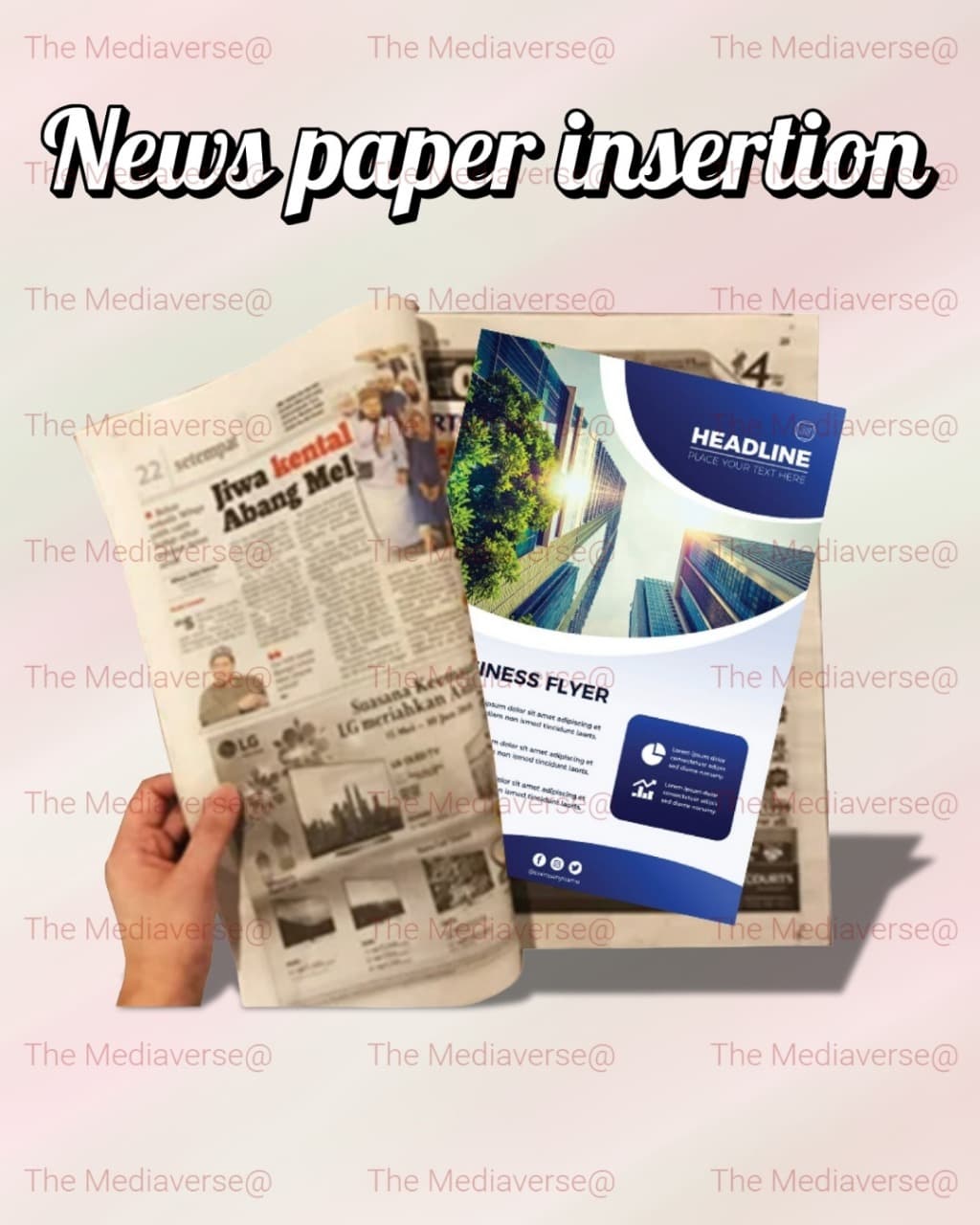
How to plan a newspaper insertion campaign in India: the 2026 step-by-step guide
What does newspaper insertion cost, how precise is the targeting, and how do you run a campaign? The complete 2026 guide to newspaper insertion in India, from pincode targeting to measurement.
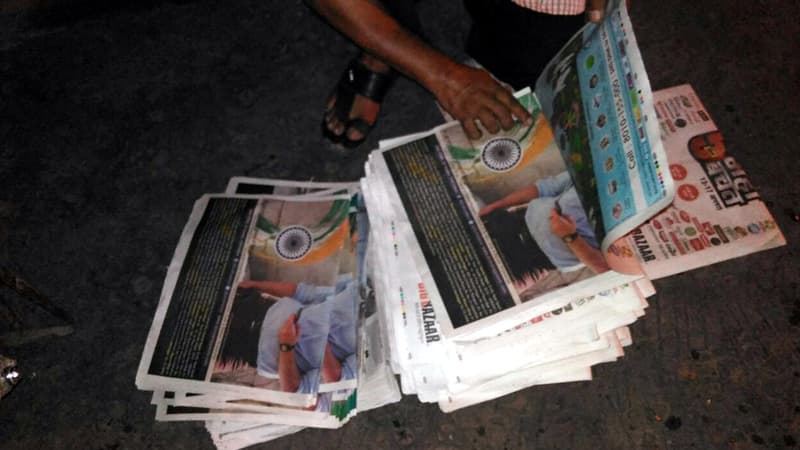
Pincode targeting for newspaper insertion across India: the 2026 multi-city playbook
How do you put your flyer into just the right neighbourhoods? A 2026 playbook for pincode-targeted newspaper insertion: costs, a targeting-levels table, a 7-step method, and how to measure response.