

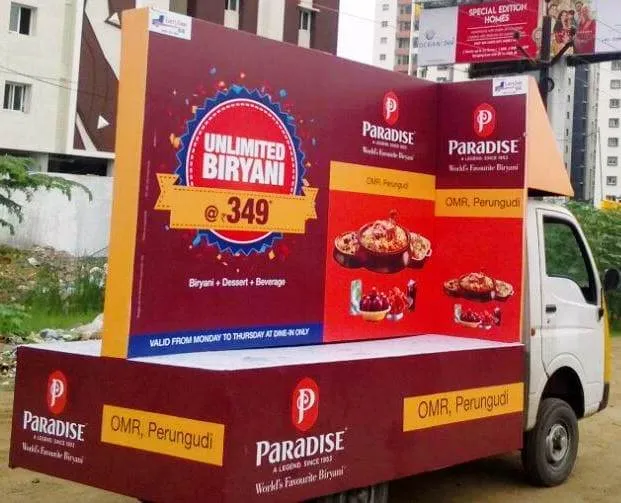
Mobile van display branding in 2026 is no longer just a van with a printed panel driving around the city. AI-driven route optimization, geofence-triggered LED content, and real-time performance dashboards are transforming van advertising into a programmatic outdoor medium that rivals digital advertising in targeting precision. This guide explores the 4 technology layers that make modern mobile van branding 3x more effective than traditional fixed-route deployment — and how Indian brands can leverage these technologies across Bangalore, Mumbai, Delhi, and 7 other metros.
Technology Layer 1: AI Route Optimization
Traditional van campaigns use fixed routes planned manually. AI route optimization analyses real-time traffic data, event schedules, and historical footfall patterns to dynamically adjust routes for maximum impressions. How it works: GPS data from previous campaigns identifies peak-traffic time slots on each road segment. Google Maps traffic API provides real-time congestion data (stationary traffic = longer viewing time). Event calendars trigger route adjustments (IPL match at Chinnaswamy = reroute to stadium corridor). The result: AI-optimized routes generate 30–40% more impressions than fixed routes for the same campaign duration. A van that would have covered 100 km on a fixed route covers the same 100 km but on dynamically selected highest-traffic segments.
Technology Layer 2: Geofence-Triggered LED Content
LED vans can now change displayed content based on geographic location. A single van campaign can show different creatives in different zones: When the van enters the Koramangala geofence, the LED shows a startup-focused message. When it enters the Majestic geofence, the display switches to a mass-consumer FMCG ad. When it parks near Chinnaswamy Stadium during a match, the display shows an event-specific promotion. This transforms one van into a multi-audience campaign vehicle — equivalent to having different hoardings in different zones, but mobile. Geofencing accuracy: 50–100 metre radius using GPS + Wi-Fi triangulation.
Technology Layer 3: Programmatic Audience Matching
Using anonymized mobile device density data (via telecom partnerships), van routes can be optimized to follow audience concentrations rather than geographic roads. Example: If your target audience is women aged 25–35, mobile data shows highest concentration in Indiranagar, Koregaon Park, and Jayanagar during 10 AM–2 PM. The van route is dynamically adjusted to cover these areas during peak audience hours. This is the closest outdoor advertising gets to digital audience targeting — without cookies, without ads being blocked, and with physical brand presence.
Technology Layer 4: Real-Time Performance Dashboards
Modern van campaigns provide live dashboards showing: GPS position of every van in real-time (verified route compliance). Estimated impressions per hour based on traffic density at current location. Cumulative campaign metrics updated every 15 minutes. QR scan counts linked to specific time windows and locations. Photo documentation auto-uploaded from driver phones with geotags. Campaign managers can monitor performance from anywhere and request route adjustments mid-day based on live data.
Unique Vision: The Future of Van Advertising in India (2026-2030)
The Mediaverse projects 5 developments in mobile van advertising over the next 3–5 years: 1. Autonomous route vans — Self-driving display vehicles operating on pre-programmed routes without drivers, reducing daily costs by 30–40%. Initial deployment expected in GIFT City and IT park campuses by 2028. 2. Interactive touchscreen vans — Parked vans with touch-enabled LED displays allowing passersby to browse products, scan coupons, and place orders directly from the van screen. Prototype tested in Bangalore 2025. 3. Solar-powered LED displays — Roof-mounted solar panels powering LED screens during daytime, reducing fuel costs and enabling all-day display without engine running. Already in testing phase. 4. Integration with digital retargeting — Mobile devices that come within 50 metres of a van are tagged for digital retargeting ads on social media within 24 hours, creating offline-to-online attribution. 5. Dynamic pricing based on traffic — CPM-based billing where advertisers pay per verified impression rather than per day, similar to digital advertising pricing models. These technologies will transform mobile van advertising from a daily-rate commodity into a precision marketing channel with digital-equivalent measurement.
Current Availability of Tech-Enhanced Van Campaigns
The Mediaverse currently offers AI route optimization and real-time GPS dashboards on all LED van campaigns across 10 Indian metros. Geofence-triggered content is available in Bangalore, Mumbai, and Delhi. Programmatic audience matching is in pilot phase for Bangalore IT corridor campaigns. For standard van campaign options and pricing, see our Bangalore van branding guide and van advertising ROI analysis.
Traditional vs AI-Driven Mobile Van Advertising (2026)
| Traditional Van | AI-Driven LED Van | |
|---|---|---|
| Base daily rate | Rs.12,000 (L-shape static) | Rs.25,000 (LED base) |
| Tech-enhanced rate | Not applicable | Rs.28,000 to 35,000 per day |
| Monthly tech overhead | None | Rs.12,000 to 28,000 per van |
| Impressions vs fixed route | Baseline | 30 to 40 percent more |
| Creative flexibility | One printed design | Zone-specific creatives via geofence |
| Best fit | Single city, single design | Multi-zone launches, Rs.5L+ budgets |
30-day AI-enabled LED campaign: Rs.7,50,000 to 8,00,000 including tech costs. GST extra.
Who Should Use Tech-Enhanced Van Advertising?
Tech-enhanced van campaigns are best for: Enterprise brands with Rs.5L+ outdoor budgets wanting programmatic precision. Multi-zone product launches requiring zone-specific messaging. Political campaigns needing constituency-level content customization. Event sponsors requiring real-time route adjustments based on crowd movement. For complementary offline channels, combine with auto branding for lane-level daily presence and newspaper insertion for household penetration.
Frequently Asked Questions
Can LED vans change content based on location?
Yes. Geofence-triggered LED vans change displayed content when entering different city zones. A single van can show startup-focused ads in Koramangala and mass-consumer ads in Majestic. Available in Bangalore, Mumbai, and Delhi.
How much does tech-enhanced van advertising cost?
Tech-enhanced LED van campaigns cost Rs.28,000–35,000/day (15–40% premium over standard LED vans) but deliver 30–40% more impressions. Net CPM is often lower than standard campaigns due to optimized routing.
Is programmatic outdoor advertising available in India?
In pilot phase. The Mediaverse offers AI route optimization and real-time dashboards across 10 metros. Full programmatic (audience-matched routing) is in pilot in Bangalore. Geofence-triggered LED content is available in 3 metros.
How do I track mobile van campaign performance in real-time?
The Mediaverse provides live GPS dashboards showing van position, route compliance, estimated impressions per hour, cumulative campaign metrics (updated every 15 minutes), QR scan counts by location, and auto-uploaded geotagged photo documentation.
Experience Tech-Enhanced Van Advertising
The Mediaverse is India's first van advertising agency offering AI route optimization and geofence-triggered LED content. Experience the future of outdoor advertising. Request a tech-enhanced van campaign demo.
Hidden Costs of AI-Driven Van Advertising
AI route optimization software licensing adds Rs.5,000-15,000/month per van. LED content management system (CMS) subscription Rs.3,000-8,000/month. Geofence API calls and GPS tracking data costs Rs.1,000-3,000/month. Power consumption for LED screens requires generator fuel Rs.2,000-3,000/day. 4G/5G data connectivity for real-time content switching Rs.1,000-2,000/month. Total tech overhead for one AI-enabled LED van: Rs.12,000-28,000/month above base rental.
What is the cost of AI-driven mobile van advertising?
Base LED van rental: Rs.25,000/day. AI/tech overhead adds Rs.12,000-28,000/month for route optimization, content management, and real-time analytics. Total for 30-day AI campaign: Rs.7,50,000-8,00,000 including all tech costs. 30% more efficient than manual, so net ROI is higher.
When AI Van Advertising Is Worth the Premium
AI-driven vans are worth the 30-40% premium over traditional vans in three scenarios. Multi-location campaigns with different creative per zone: the content management system switches ads automatically based on GPS location. No manual creative changes needed. Data-driven optimization: after 3-5 days of data collection, AI adjusts routes to maximize impressions per hour by 25-30%. Event-responsive campaigns: geofence triggers change LED content when the van enters a specific area (e.g., showing stadium-specific creative near sports venues).
Key Insight: AI-driven van advertising is NOT worth the premium for single-location, single-creative campaigns. If you are running one design in one city, traditional L-shape vans at Rs.12,000/day deliver the same impact at 60% lower cost.
Is AI van advertising better than traditional van branding?
30% more efficient on route optimization. Best for multi-location, multi-creative campaigns where content needs to change by zone. NOT worth the premium for single-city, single-design campaigns where traditional L-shape vans at Rs.12,000/day deliver equal impact at lower cost.
Quick Answers
What is AI-driven mobile van advertising?
AI-driven van advertising uses GPS route optimization, geofence-triggered LED content switching, and real-time analytics. Routes are optimized based on traffic, audience density, and time of day. 30% more efficient than manual route planning.
Looking for professional Mobile Van Branding services?
The Mediaverse runs end-to-end mobile van branding campaigns across India with geo-tagged delivery and transparent, all-inclusive pricing.
Explore our Mobile Van Branding solutionsSummarize this guide with AI
Open this article in your favourite AI assistant
Written by

The Mediaverse Team
India's Leading Outdoor Advertising Agency
The Mediaverse is a national-level outdoor advertising and integrated marketing organization that provides complete OOH, ATL, BTL, retail, and transit media solutions across India. With years of experience executing high-performance campaigns for brands in FMCG, Real Estate, E-commerce, EdTech, Automotive, Healthcare, and Retail, The Mediaverse combines creativity, data-driven media planning, and flawless on-ground execution. As a full-stack outdoor advertising provider, The Mediaverse offers Auto Branding, Mobile Van Branding, Newspaper Insertion Advertising, Shop Name Board Branding, In-Store Branding, Hoardings, Transit Media, Kiosks, Mall Media, Activations, and all forms of Below-The-Line marketing. Known for its pan-India network, strategic route planning, premium print quality, and Cheqmate™ GPS-based verification, The Mediaverse ensures 100% transparent and result-oriented campaign delivery. The Mediaverse’s editorial team produces deeply researched, SEO-optimized, and generative-engine-friendly content to help businesses understand the power of outdoor advertising and make informed decisions that maximize brand visibility and ROI across urban, suburban, and rural markets.
Related Articles
Mobile Van Branding in Lucknow (2026): Rates, Routes and the E-Rickshaw Question
Lucknow van branding is fabrication plus a day rate: Rs.11,000 buys a single T-Shape day. The full 2026 card, why the LED truck is the cheap option for a one-day booking, what the published three-van and four-van budgets land at after GST, and how the format compares with a Lucknow auto on cost per view.
LED Truck at Rs.8,000 a Day vs T-Shape Van at Rs.2,500: When the 3.2x Premium Pays (Chennai, 2026)
Chennai prices a T-Shape van at Rs.2,500 a day and an LED display truck at Rs.8,000, both with the same published 40 km route and 6 hour window. Here is what the extra Rs.5,500 a day buys, the three cases where it pays, and the arithmetic that shows when it does not.
The One-Day Campaign: Mobile Van Is the Only Outdoor Format You Can Book for a Single Day (2026)
Auto hoods start at 300 autos, no-parking boards at 1,000 and newspaper inserts at 50,000 copies. The mobile van is the only outdoor format The Mediaverse publishes with a minimum measured in days rather than units, and one day starts at Rs.2,200.