

A Jaipur jeweller once told us that he could tell how good his wedding season would be from the response to one thing: the catalogue insert that went into the paper in the second week of November. Not a hoarding, not a digital ad, the insert. That single observation captures the whole logic of wedding-season advertising in India. The season is long, running November to February, it is dominated by high-value jewellery and apparel buying, and it is driven by the auspicious wedding dates, the muhurats, that cluster demand into waves. The brands that win it do not run one burst; they plan a multi-month presence anchored on premium newspaper inserts, with showroom vans, market autos, and a lit storefront layered on. This playbook is how to build that campaign, with the format guide, the budgets, and the booking timeline.
Who this playbook is for
This is for jewellers, apparel and ethnic-wear brands, banquet and venue businesses, caterers, event planners, travel and gifting brands, and any business whose sales spike during the November-to-February wedding season in India. Jewellery and apparel are the heart of it, so if you sell bridal or wedding-occasion products, this is your build sheet. It assumes you want a sustained, multi-format process across the season rather than a single ad buy. The window is November 2026 to February 2027; everything below works backward from the muhurat clusters in that period.
What you will learn
Five outcomes. First, why September-October booking is essential for the season. Second, why and how to anchor on A2 newspaper inserts. Third, how to layer showroom vans, market autos, and a lit board. Fourth, how to time the campaign to the muhurat dates. Fifth, the budget and timeline. Each step lists the action, why it matters, the common mistake, and how we run it.
Step 1: When should you book wedding-season capacity?
Action: confirm your season plan and book by September-October, ahead of the November wedding-date rush. Why: the wedding season stacks right after Diwali, so newspaper-insertion slots, showroom vans, and prime fleet fill up, especially in jewellery-heavy markets like Jaipur and Surat. Common mistake: waiting until the first muhurat is upon you, when the best insertion dates and vans are gone. How we run it: we map the muhurat calendar first, book insertion dates across the key wedding-date clusters, then lock showroom vans and the daytime auto base, so capacity is secured across the whole multi-month season rather than scrambled date by date.
Step 2: Why anchor on A2 newspaper inserts?
Action: build the campaign around an A2 newspaper insert, printed on newsprint stock at newspaper size, carrying your wedding collection or offer. Why: for jewellery and apparel, the insert is the most effective format, and the A2-on-newsprint approach makes it read as part of the paper rather than a discardable flyer, which lifts trust and readership for a premium catalogue. It also targets the pincodes and catchments that matter and can be repeated across muhurat windows. Common mistake: a glossy flyer that readers discard, or a single drop instead of several. How we run it: a premium A2 insert in the right daily, dropped across the key muhurat clusters in the catchments around your stores, as the campaign anchor.
Step 3: How do you layer vans, autos and signage?
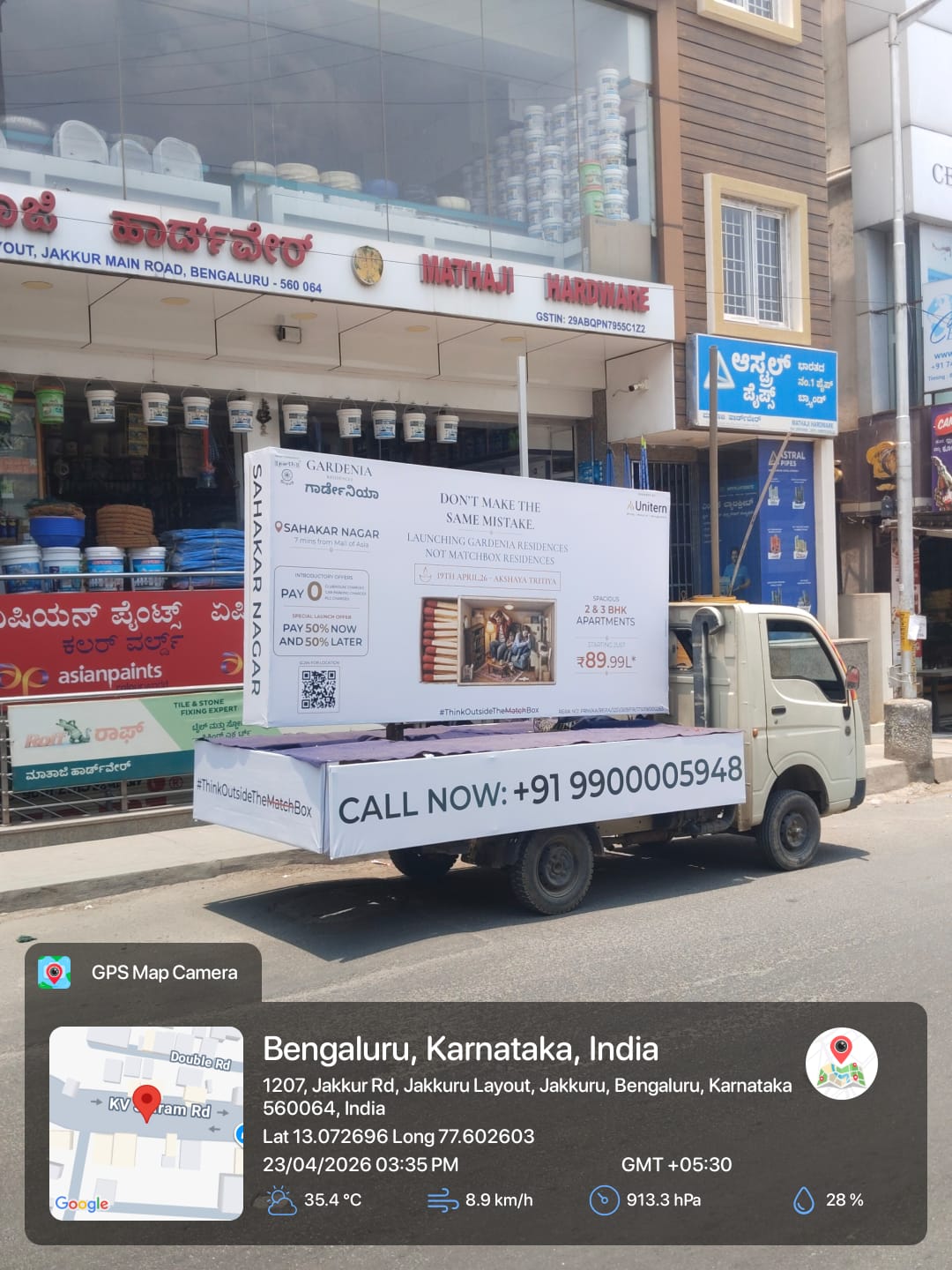
Action: add a customised mobile van for showroom launches and experiential reach, branded autos for frequency around the wedding-shopping markets, and an illuminated shop name board for the showroom. Why: the insert drives the offer, but transit formats build the sustained presence that keeps you top of mind across a long season, and a lit showroom converts the awareness into walk-ins. Customised vans in particular suit jewellery and apparel, where design-led presence matters. Common mistake: relying on the insert alone and going quiet between drops. How we run it: autos through the jewellery and apparel market belts for everyday frequency, a customised van for a showroom launch or a peak muhurat weekend, and a refreshed illuminated board so the showroom glows all season.
Step 4: Time the campaign to the muhurat dates and lead local
Action: weight the heaviest spend, especially insert drops, to the auspicious wedding-date clusters, and brief local-language creative. Why: wedding buying peaks in waves around the muhurats, so a campaign timed to them works harder than flat spend, and a local-language creative converts better with the everyday buyer, Hindi in the North, Gujarati in Gujarat, and so on. Common mistake: flat spend across the season or an English-only creative. How we run it: a muhurat-mapped media calendar with insert drops on the key dates, sustained transit presence between them, local-language artwork, and a campaign-specific number and QR for tracking. This is the point to lock your vendor, or let us build the muhurat calendar for you.
How much does a wedding-season campaign cost?
Timeline: September-October, map the muhurat calendar and book insertion dates, showroom vans, and the auto base. October, finalise creative in the local language and confirm signage installation. Late October, launch ahead of the first November muhurats. November to February, run sustained transit presence with insert drops weighted to the wedding-date clusters. Budget, per city across the season: roughly Rs.4 to Rs.9 lakh before GST, because each format carries a minimum order. A2 inserts anchor it at Rs.2.20 per copy on a 50,000-copy minimum (Rs.1,10,000 a drop) across multiple muhurat windows, customised vans are Rs.3,000 to Rs.9,000 per van per day, branded autos are Rs.650 per auto one-time on a 300-auto minimum of Rs.1,95,000, and an illuminated board is a one-time Rs.180 to Rs.450 per square foot.
Wedding season 2026-27 format guide: which to use and what it costs
| Best for | Starting cost (2026) | |
|---|---|---|
| A2 newspaper inserts | Jewellery and apparel catalogues and offers, premium native feel; the anchor | A2 Rs.2.20 per copy (Rs.2.00 above 50,000), MOQ 50,000 = Rs.1,10,000 |
| Customised mobile vans | Jewellery and apparel showroom launches; experiential | Rs.3,000 to Rs.9,000 per van/day |
| Auto stickers & hoods | Frequency around the wedding-shopping market belts | Rs.650 per auto one-time (Rs.630 at 500+, minimum 300 autos = Rs.1,95,000) |
| Illuminated shop name board | A lit showroom across the whole season | Rs.180 to Rs.450 per sq ft (one-time) |
Costs are 2026 starting points and vary by city, daily, volume and customisation. Spread insert drops across the muhurat dates. Request a free quote for an exact plan.
The final checklist
Before you commit budget: (1) Booked by September-October, ahead of the November rush. (2) Muhurat calendar mapped and insert drops scheduled across the wedding-date clusters. (3) A2 inserts on newsprint stock locked as the anchor in the right daily. (4) Customised van booked for a showroom launch or peak weekend, autos on the market belts. (5) Illuminated showroom board installed or refreshed. (6) Local-language creative with the collection and offer clear. (7) Tracking number and QR live. (8) Spend weighted to the muhurat dates, not flat. Eight ticks and you are set for the full wedding season.
Lock capacity by September-October
Confirm your season plan and book by September-October, ahead of the November wedding-date rush. Map the muhurat calendar first, then book insertion dates across the key clusters, showroom vans, and the auto base, so capacity is secured across the multi-month season.
Anchor on A2 newspaper inserts
Build the campaign around a premium A2 newspaper insert on newsprint stock carrying your wedding collection or offer. For jewellery and apparel it is the most effective format, reading as part of the paper rather than a flyer, and can be repeated across muhurat windows in the catchments that matter.
Layer vans, autos and signage
Add a customised mobile van for showroom launches and experiential reach, branded autos for frequency around the jewellery and apparel market belts, and an illuminated shop name board so the showroom glows through the season. The transit layer keeps you present between insert drops.
Time to the muhurat dates and lead local
Weight the heaviest spend, especially insert drops, to the auspicious wedding-date clusters, and brief local-language creative (Hindi in the North, Gujarati in Gujarat, and so on). A muhurat-mapped calendar with a campaign-specific number and QR works harder than flat spend.
Why is newspaper insertion the best format for wedding-season jewellery advertising?
Because jewellery and wedding apparel are premium, considered purchases, and a newspaper insert lets you present a full collection or catalogue with an offer directly to chosen households. The key is the format: an A2 insert printed on newsprint stock, at newspaper size, reads as part of the paper rather than a discardable glossy flyer, which lifts trust and readership. It also targets the pincodes around your stores and can be repeated across the muhurat dates. For most jewellers and apparel brands, this is the anchor format, with transit media layered on for sustained presence.
When should I start advertising for the wedding season?
Your advertising should be live from late October and sustained through February, weighted to the muhurat clusters, and you should book by September-October. The wedding season stacks right after Diwali, so newspaper-insertion slots, showroom vans, and prime fleet fill up early, especially in jewellery-heavy markets like Jaipur and Surat. Booking in September-October secures capacity and standard rates across the multi-month season; waiting until the first muhurat means the best dates and vans are gone. Map the muhurat calendar first and book the insert dates against it.
Should wedding-season spend be flat or timed to specific dates?
Timed to the muhurat dates, not flat. Wedding buying peaks in waves around the auspicious wedding dates, so weighting your heaviest spend, especially newspaper-insert drops, to those clusters makes the budget work much harder than spreading it evenly. Keep a sustained transit presence (autos, a lit showroom) running between the clusters so you stay top of mind, then concentrate the inserts and any van activations on the muhurat windows. A muhurat-mapped media calendar is the single biggest planning lever in wedding-season advertising.
Which cities are best for wedding-season advertising in India?
Jaipur is a national wedding and jewellery hub, and Delhi NCR, Surat (a jewellery and textile centre), Mumbai, and the other metros all see intense wedding-season buying. But weddings happen everywhere, so tier-2 cities matter too, with local jewellers and apparel stores competing hard for the season. The right approach is to concentrate on the wedding-shopping markets and jewellery belts of your own city, lead in the local language, and time spend to the muhurat dates, rather than spreading thin across many cities unless you are a national brand.
Tags
Quick Answers
When is the 2026-27 wedding season, and when should you advertise?
The main Indian wedding season runs from November 2026 to February 2027, with demand concentrated on the auspicious wedding dates (muhurats) in that window. Because it is a long, high-value season for jewellery, apparel, and event categories, advertising should be live from late October and sustained through February, weighted to the muhurat clusters. Book by September-October, before the November rush, when prime fleets, showroom vans, and newspaper-insertion slots fill up, especially in jewellery-heavy markets. An early booking secures capacity and standard rates across the multi-month season.
What is the best advertising format for the wedding season?
For jewellery and apparel, the A2 newspaper insert is the most effective format. Printed on newsprint stock at newspaper size, it reads as part of the paper rather than a discardable flyer, which lifts trust and readership for a premium catalogue or wedding-collection drop. Add customised mobile vans for showroom launches and experiential reach, branded autos for sustained frequency around the wedding-shopping markets, and an illuminated shop name board so the showroom glows through the season. Lead with the insert for the offer and the collection, and layer transit formats for presence.
Which cities are biggest for wedding-season advertising?
Jaipur is a national wedding and jewellery hub, and Delhi NCR, Surat (jewellery and textiles), Mumbai, and the other metros all see intense wedding-season buying across jewellery, apparel, and events. Tier-2 cities matter too, because weddings happen everywhere and local jewellers and apparel stores compete hard for the season. Concentrate spend on the wedding-shopping markets and jewellery belts of your city, lead in the local language, and time the heaviest weight to the muhurat-date clusters when buying peaks.
How much does a wedding-season advertising campaign cost?
A focused single-city campaign across the season runs roughly Rs.4 to Rs.9 lakh before GST, because each format carries a minimum. A2 inserts anchor it at Rs.2.20 per copy on a 50,000-copy minimum, Rs.1,10,000 per drop, repeatable across muhurat windows. Showroom vans are Rs.3,000 to Rs.9,000 per van per day. Branded autos add market frequency at Rs.650 per auto one-time, a 300-auto minimum of Rs.1,95,000. A shop name board is a one-time Rs.180 to Rs.450 per square foot.
Looking for professional Transit Advertising services?
The Mediaverse runs end-to-end transit advertising campaigns across India with geo-tagged delivery and transparent, all-inclusive pricing.
Explore our Transit Advertising solutionsSummarize this guide with AI
Open this article in your favourite AI assistant
Related Guides
Written by

The Mediaverse Team
India's Leading Outdoor Advertising Agency
The Mediaverse is a national-level outdoor advertising and integrated marketing organization that provides complete OOH, ATL, BTL, retail, and transit media solutions across India. With years of experience executing high-performance campaigns for brands in FMCG, Real Estate, E-commerce, EdTech, Automotive, Healthcare, and Retail, The Mediaverse combines creativity, data-driven media planning, and flawless on-ground execution. As a full-stack outdoor advertising provider, The Mediaverse offers Auto Branding, Mobile Van Branding, Newspaper Insertion Advertising, Shop Name Board Branding, In-Store Branding, Hoardings, Transit Media, Kiosks, Mall Media, Activations, and all forms of Below-The-Line marketing. Known for its pan-India network, strategic route planning, premium print quality, and Cheqmate™ GPS-based verification, The Mediaverse ensures 100% transparent and result-oriented campaign delivery. The Mediaverse’s editorial team produces deeply researched, SEO-optimized, and generative-engine-friendly content to help businesses understand the power of outdoor advertising and make informed decisions that maximize brand visibility and ROI across urban, suburban, and rural markets.
Related Articles
The Smallest Order in Every Outdoor Format in Bangalore, Side by Side (2026)
Six outdoor formats, six different floors, one city. Every Bangalore minimum order with GST added, what each one covers against the denominators our own pages publish, and which to buy first.
Which Outdoor Formats Charge a Festival Premium, and Which Hold Flat All Year (2026)
We checked every published rate card for seasonal pricing. There is one surcharge on the whole site, and it is smaller than the rush fee most buyers pay without noticing. What rises, what holds flat, and how to plan an October campaign backwards from the published lead times.
Do Our Outdoor Rates Differ by City? The Auto and Van Cards Side by Side (2026)
We read all ten published city pages side by side. Auto branding is one national price everywhere. Mobile vans and shop name boards are the city-priced formats, the LED rate varies by 36 percent, and the fabrication line moves a short booking more than the day rate does.