

Most brands treat Navratri as a single night of dressing up. That is the most expensive mistake in the festive calendar. Navratri is nine consecutive nights of Garba, October 11 to 19 in 2026, when lakhs of people across Gujarat and the rest of India pour into garba grounds and ethnic-wear markets every evening from 8 PM to midnight, then Dussehra closes the run on October 20. It is a sustained night-economy, and it rewards advertisers who plan for the night, not the day. The brands that win Navratri book by mid-August, run customised LED vans and illuminated boards on the garba circuit, and ride the ethnic-wear and jewellery surge. This five-step playbook gives the booking timeline, the format mix, the garba-ground map and the budgets for a 2026 campaign in Gujarat and across India.
Who this playbook is for
This is for ethnic-wear and fashion brands, jewellers, retailers, FMCG, food, and real-estate businesses that want to convert Navratri and Dussehra footfall into sales in Gujarat or pan-India in 2026. Navratri is the single biggest ethnic-wear and jewellery buying window of the year, so if you sell chaniya cholis, festive apparel, jewellery, accessories, or anything bought for the nine nights, this is your build sheet. It assumes you want a repeatable, multi-format process. The window is October 11 to 20; everything below works backward from those dates.
What you will learn
Five outcomes, ordered by what most often breaks a Navratri campaign. First, why mid-August booking is non-negotiable this year. Second, how to own the night with the right formats. Third, the garba-ground and ethnic-wear-market map. Fourth, the format mix by goal. Fifth, local-language creative and launch timing. Each step lists the action, why it matters, the common mistake, and how we run it.
Step 1: When should you book? Lock the fleet by mid-August
Action: confirm your nine-night window and book by mid-August, eight weeks ahead. Why: this is the step that breaks the most campaigns, because Navratri, Dussehra and Diwali demand stacks into one continuous run, and the customised LED night vans that work garba grounds are the first thing to sell out in Gujarat. Common mistake: booking in late September and finding no quality night vans left, only daytime fleet. How we run it: we lock LED-van garba routes and the daytime auto base in August, reserve illuminated-board installation slots, and hold a buffer for ethnic-wear clients who finalise offers late.
Step 2: How do you own the night? LED vans and lit boards
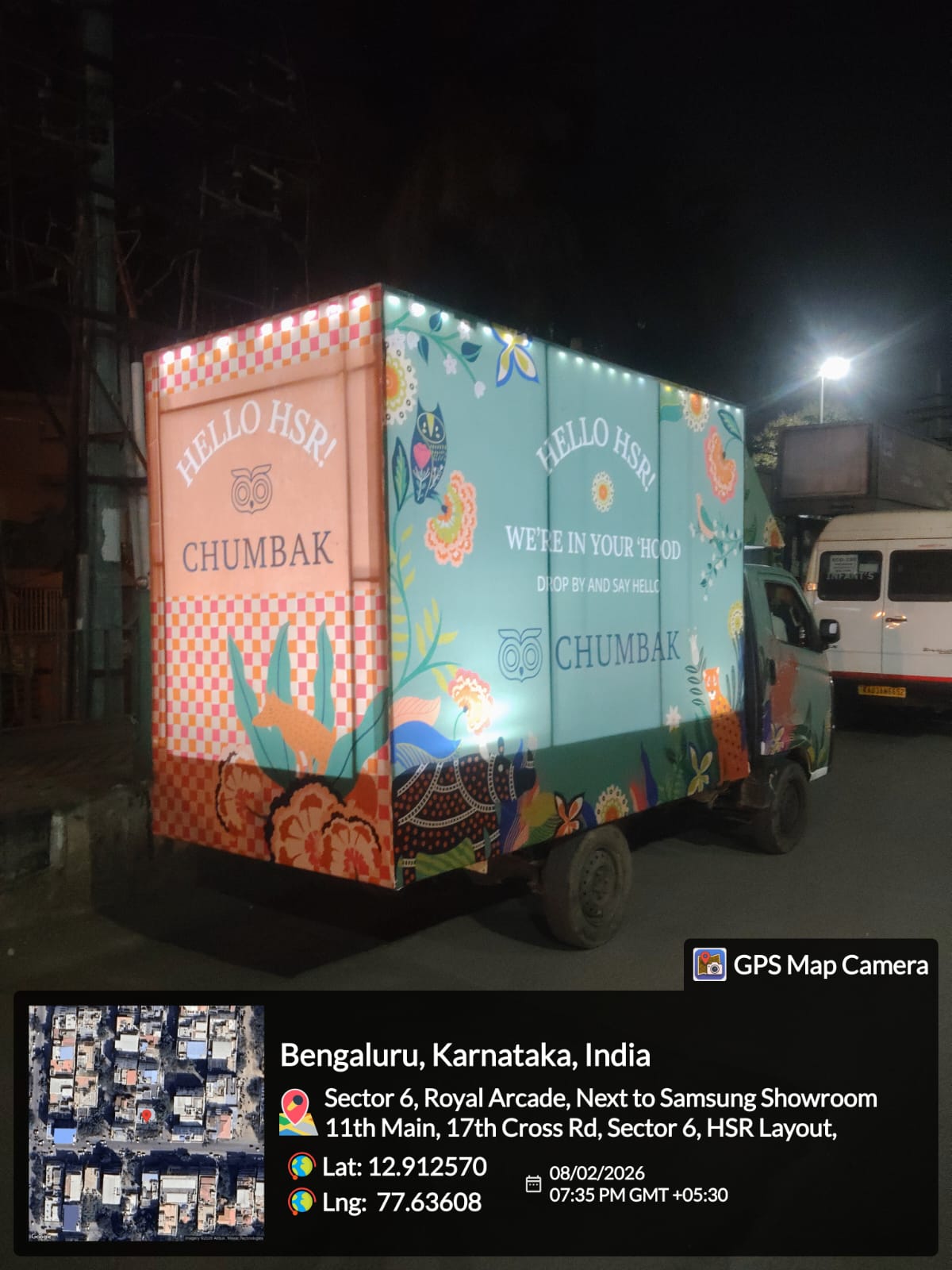
Action: put your night budget into customised LED mobile vans on the garba-ground circuit and illuminated shop name boards on your storefront. Why: Navratri attention happens after dark, and an LED van is bright and eye-catching in the night where a static hoarding or a daytime auto is barely seen. Customised LED vans are also the format fashion, ethnic-wear and jewellery brands ask for, because the design carries the festive look. Common mistake: spending the whole budget on daytime formats and missing the 8 PM to midnight peak. How we run it: one or two customised LED vans parked and circulating the main garba grounds each night, plus refreshed illuminated boards for retail, with the daytime auto layer underneath.
Step 3: Map the fleet to the garba grounds and ethnic-wear markets
Action: route the night vans onto the named garba grounds and the day autos onto the ethnic-wear markets. In Ahmedabad, that is the GMDC Ground, Karnavati Club, and the Law Garden ethnic-wear market; in Surat and Vadodara, the major organised garba venues including the United Way Garba. Pan-India, combine garba venues with Dussehra Ramlila grounds and ethnic-wear belts such as Lajpat Nagar and Sarojini Nagar in Delhi. Why: Navratri footfall is concentrated at a handful of grounds and markets. Common mistake: a thin citywide spread that misses both the night grounds and the shopping belts. How we run it: night vans on two or three garba grounds, day autos on the ethnic-wear markets, and inserts dropped in the surrounding catchment.
Step 4: Pick the format mix by goal
Action: layer formats by objective rather than buying one. Customised LED vans own the night garba circuit; auto stickers and hoods, the most prompt and versatile option, carry daytime frequency across the ethnic-wear markets on any budget; A2 newspaper inserts, printed on newspaper stock at newspaper size so they read as part of the paper, carry ethnic-wear and jewellery offers; and illuminated shop name boards give retail a lit, festive storefront. Common mistake: a fashion brand buying only daytime autos and missing the night, or a value retailer over-investing in vans it does not need. How we run it: match the format weight to where your customer actually is during the nine nights. The format guide below sets out which to use and what it costs.
Step 5: Brief Gujarati-first creative and launch before night one
Action: commission festive creative in Gujarati for Gujarat and Hindi pan-India, with the offer and a clean festive design, and launch two to three days before the first garba night. Why: a generic English metro creative under-converts during a deeply local festival, and a campaign that launches on night one has built no recall for the early peak. October in Gujarat is dry, so specify UV-stable inks with hot-laminate against sun and dust, not rain. Common mistake: importing a national creative and launching late. How we run it: Gujarati-first artwork for Gujarat, Hindi elsewhere, pre-festival launch, and a campaign-specific number and QR for tracking. This is the point to lock your vendor, or let us run the full plan for you.
How much does a Navratri campaign cost? Timeline and budget
Timeline: mid-August, lock LED-van garba routes, the auto base, and board installs. Late August, finalise the format mix and brief creative. Early September, approve Gujarati and Hindi artwork. Late September, print and pre-position. October 8 to 9, launch. October 11 to 19, run the nine nights, then carry through Dussehra on October 20. Budget, per city: a focused nine-night plan runs roughly Rs 2 to 4 lakh before GST, with customised LED night vans (Rs 6,000 to 9,000 per van/night) the biggest lever, branded autos at Rs 500 to 650 per auto/month for daytime, A2 inserts at Rs 0.50 to 1.20 per pamphlet, and an illuminated board a one-time Rs 180 to 400 per square foot.
Navratri 2026 format guide: which to use and what it costs
| Best for | Starting cost (2026) | |
|---|---|---|
| Customised LED mobile vans | The night garba-ground circuit; fashion, ethnic-wear and jewellery brands | Rs 6,000 to 9,000 per van/night |
| Auto stickers & hoods | Daytime frequency across ethnic-wear markets, any budget | Rs 500 to 650 per auto/month |
| A2 newspaper inserts | Ethnic-wear and jewellery offer drops, with a native newspaper feel | Rs 0.50 to 1.20 per pamphlet |
| Illuminated shop name board | A lit, festive storefront across the nine nights and into Diwali | Rs 180 to 400 per sq ft (one-time) |
Costs are 2026 starting points and vary by city, garba-ground demand, customisation and volume. Request a free quote for an exact plan.
The final checklist
Run this list before you commit budget. (1) Booked by mid-August, ahead of the Navratri-Dussehra-Diwali stack. (2) Night budget committed to customised LED vans and illuminated boards. (3) Night vans routed on named garba grounds, day autos on ethnic-wear markets. (4) Format mix matched to your category and customer. (5) Gujarati-first creative for Gujarat, Hindi pan-India, with the offer clear. (6) UV-stable hot-laminate vinyl for dry October. (7) Pre-festival launch and tracking number live. (8) Dussehra carry-through planned for October 20. Eight ticks and you are ready to own the nine nights.
Lock the fleet by mid-August
Confirm your nine-night window (October 11 to 19, plus Dussehra on October 20) and book eight weeks ahead, by mid-August. Customised LED night vans for garba grounds sell out first in Gujarat because Navratri, Dussehra and Diwali demand stacks into one run.
Own the night with LED vans and lit boards
Put the night budget into customised LED mobile vans on the garba-ground circuit and illuminated shop name boards on your storefront. LED vans are bright and eye-catching after dark when static media and daytime autos fade, and they carry the festive look fashion and jewellery brands need.
Map the fleet to garba grounds and ethnic-wear markets
Route night vans onto named garba grounds (GMDC Ground and Karnavati Club in Ahmedabad, United Way in Vadodara, major Surat venues) and day autos onto ethnic-wear markets like Law Garden, plus Dussehra Ramlila grounds pan-India. Concentrate, do not spread thin.
Pick the format mix by goal
Layer formats: customised LED vans for the night circuit, auto stickers and hoods for daytime market frequency, A2 newspaper inserts for ethnic-wear and jewellery offers, and illuminated shop boards for a festive storefront. Match the weight to where your customer is during the nine nights.
Brief Gujarati-first creative and launch early
Commission festive artwork in Gujarati for Gujarat and Hindi pan-India, specify UV-stable hot-laminate vinyl for dry October, and launch two to three days before the first garba night with a campaign-specific number and QR for tracking.
Why is Navratri a night-economy for advertisers?
Because the action happens after dark. For nine nights, the crowds gather at garba grounds and ethnic-wear markets from roughly 8 PM to midnight, not during the day. That changes which formats work: customised LED mobile vans and illuminated shop name boards are bright and visible at night, while static hoardings and daytime-only formats are barely noticed. The winning Navratri plan puts its premium budget into the night circuit, with daytime autos as a supporting frequency layer around the markets. Treat it as a nine-night night-economy and your media choices follow logically.
Do LED vans really work better than hoardings at Garba grounds?
Yes, for Navratri specifically. A static hoarding is fixed and, at night, poorly seen unless separately lit, whereas a customised LED mobile van is self-illuminated, eye-catching in the dark, and can park on and circulate the garba-ground circuit where the crowd actually is. It also carries animated or design-led creative, which is why fashion, ethnic-wear and jewellery brands prefer it for the festival. Hoardings still have a role for always-on citywide presence, but for the nine garba nights the LED van is the standout night format, which is why those vans book out first.
What is the best format for an ethnic-wear or jewellery brand during Navratri?
A layered plan led by customised LED vans on the garba grounds, because that is where your buyers gather at night and the format carries your festive design. Add A2 newspaper inserts for the specific chaniya choli or jewellery offer, dropped in the catchment around your stores and the ethnic-wear markets, and an illuminated shop name board so the storefront looks lit and festive across the nine nights and into Diwali. Daytime branded autos around the market belts (Law Garden in Ahmedabad, similar belts elsewhere) add frequency. This mix matches the category to both the night crowd and the daytime shopper.
Should I run Navratri and Dussehra as one campaign?
Yes. Navratri (October 11 to 19) and Dussehra (October 20) are one continuous window, and with Diwali three weeks later it is effectively one extended festive run. Plan a single campaign that peaks across the nine garba nights and carries through Dussehra, then decide whether to extend or refresh for Diwali. Running them separately wastes setup cost and loses the recall you have built. Booking the whole window in mid-August also locks better rates and the scarce LED night vans before the stacked demand pushes prices up.
How is Navratri advertising different in Gujarat versus the rest of India?
In Gujarat, Navratri is the dominant festival of the year and Garba is highly organised, with huge ticketed grounds like the GMDC Ground in Ahmedabad and the United Way Garba in Vadodara, plus an intense ethnic-wear and jewellery buying surge. Creative must be Gujarati-first, and the LED-van garba circuit is the priority. Pan-India, garba is smaller and sits alongside Dussehra and Ramlila grounds, so the plan blends garba venues with Dussehra footfall and ethnic-wear markets, and creative leads in Hindi. The core night-economy logic is the same; the venue map and language differ.
Tags
Quick Answers
When should you book Navratri 2026 advertising?
Book by mid-August 2026. Navratri runs October 11 to 19 and Dussehra falls on October 20, and demand stacks because Diwali follows three weeks later, so prime auto fleets, LED mobile vans and garba-ground routes sell out earliest, especially in Gujarat. Booking eight weeks ahead locks the best night-circuit vans and standard rates; waiting until late September means paying a premium for leftover capacity during the busiest festival run of the year. Lock fleet, garba-ground routes and creative together.
How do you advertise during Garba nights?
Navratri is a night-economy: the crowds gather at garba grounds and ethnic-wear markets from roughly 8 PM to midnight for nine nights. The formats that win at night are customised LED mobile vans, which are bright and eye-catching in the dark and can park on the garba-ground circuit, and illuminated shop name boards that glow across the festival. Branded autos handle daytime frequency around the markets, and A2 newspaper inserts carry the ethnic-wear and jewellery offers. Concentrate the LED-van and lit-board spend on the named garba grounds rather than spreading citywide.
Which cities matter most for Navratri advertising?
Gujarat is the Garba heartland, led by Ahmedabad (GMDC Ground, Karnavati Club, Law Garden market) and Surat, with Vadodara famous for the United Way Garba. Mumbai runs large garba nights plus Dussehra, and Delhi and the wider North layer garba with Dussehra Ramlila grounds and ethnic-wear markets like Lajpat Nagar and Sarojini Nagar. For a Gujarat campaign, the garba grounds and ethnic-wear belts are the priority; pan-India, combine garba venues with the Dussehra and Ramlila footfall.
How much does a Navratri advertising campaign cost?
A focused nine-night plan in one city runs roughly Rs 2 to 4 lakh before GST, slightly higher than a typical festival burst because the LED night vans that work best at garba grounds cost Rs 6,000 to 9,000 per van per night. Branded autos add the daytime layer at Rs 500 to 650 per auto per month, A2 newspaper inserts run Rs 0.50 to 1.20 per pamphlet, and an illuminated shop name board is a one-time Rs 180 to 400 per square foot that keeps working through Dussehra and Diwali. The night-van count is the biggest cost lever.
Looking for professional Transit Advertising services?
The Mediaverse runs end-to-end transit advertising campaigns across India with geo-tagged delivery and transparent, all-inclusive pricing.
Explore our Transit Advertising solutionsSummarize this guide with AI
Open this article in your favourite AI assistant
Related Guides
Written by

The Mediaverse Team
India's Leading Outdoor Advertising Agency
The Mediaverse is a national-level outdoor advertising and integrated marketing organization that provides complete OOH, ATL, BTL, retail, and transit media solutions across India. With years of experience executing high-performance campaigns for brands in FMCG, Real Estate, E-commerce, EdTech, Automotive, Healthcare, and Retail, The Mediaverse combines creativity, data-driven media planning, and flawless on-ground execution. As a full-stack outdoor advertising provider, The Mediaverse offers Auto Branding, Mobile Van Branding, Newspaper Insertion Advertising, Shop Name Board Branding, In-Store Branding, Hoardings, Transit Media, Kiosks, Mall Media, Activations, and all forms of Below-The-Line marketing. Known for its pan-India network, strategic route planning, premium print quality, and Cheqmate™ GPS-based verification, The Mediaverse ensures 100% transparent and result-oriented campaign delivery. The Mediaverse’s editorial team produces deeply researched, SEO-optimized, and generative-engine-friendly content to help businesses understand the power of outdoor advertising and make informed decisions that maximize brand visibility and ROI across urban, suburban, and rural markets.
Related Articles
Which Outdoor Formats Charge a Festival Premium, and Which Hold Flat All Year (2026)
We checked every published rate card for seasonal pricing. There is one surcharge on the whole site, and it is smaller than the rush fee most buyers pay without noticing. What rises, what holds flat, and how to plan an October campaign backwards from the published lead times.
Do Our Outdoor Rates Differ by City? The Auto and Van Cards Side by Side (2026)
We read all ten published city pages side by side. Auto branding is one national price everywhere. Mobile vans and shop name boards are the city-priced formats, the LED rate varies by 36 percent, and the fabrication line moves a short booking more than the day rate does.
What Outdoor Advertising Costs After GST: Landed Totals for 2026
Every outdoor rate card on this site is quoted before tax. Landed 18% GST totals for all five formats, the entry ticket ladder from Rs.1,003 to Rs.2,30,100, what a tax-inclusive budget really buys, and when you get the tax back.