

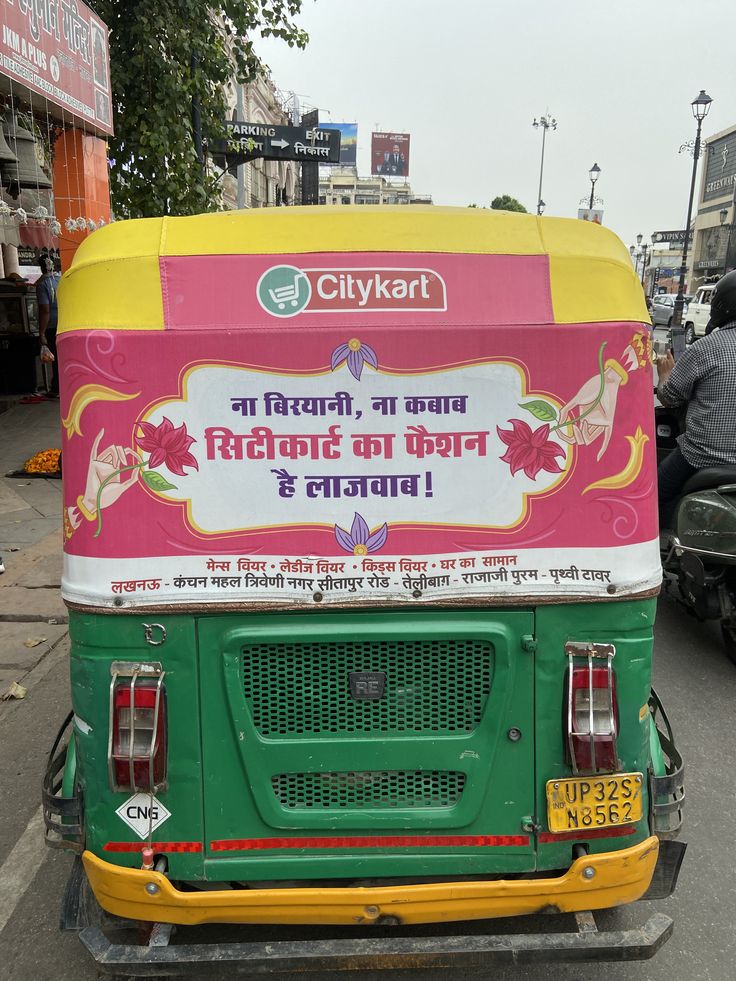
Day 1, 9 AM. Your founder approves the Bangalore launch. Budget envelope: ₹2.5 lakh. Goal: 200 auto-branded vehicles for one month, with a measurable recall lift at exit. You have 30 days. The playbook below is the day-by-day version of what we run for D2C founders in this exact scenario.
Which Bangalore D2C brands should run this playbook?
D2C brand founders or growth leads launching a new product or new Bangalore market with a 30-day auto branding campaign at scale. Budget envelope ₹1.5 to ₹3 lakh. Brand has creative ready or can produce inside 5 days. Brand has a clear KPI defined (aided recall, branded search lift, or coupon-driven conversions).
What you'll have at the end
- 200 auto hoods live across 5 zones in Bangalore by Day 6
- A weekly photo and route audit deliverable to verify campaign live status
- Replacement reserve activated for any mid-campaign vinyl damage
- An exit-week recall lift measurement against pre-campaign baseline
- A scale-up or pivot decision based on hard numbers
Prerequisites by Day 0
- Hood creative finalised in 3:1.5 ratio (matches Bangalore hood standard 3 ft x 1.5 ft)
- Brand wordmark in Kannada plus English (for street-level recognition)
- Optional: trackable coupon code or QR for direct-response measurement
- Pre-campaign baseline brand-recall survey scheduled (sample size 200-300, target zones)
- Budget approval at ₹2.5 lakh all-in (or stretch to ₹3 lakh if exit-week survey is in scope)
The 30-day timeline
Days 1 to 3: Fleet sourcing and zone allocation
Lock the zone-by-zone vehicle allocation: 50 Koramangala, 40 HSR, 40 Indiranagar, 40 Whitefield-Sarjapur, 30 South residential. Confirm vehicle availability with the union and depot relationships per zone. Flag any zone where availability falls short and re-allocate to the nearest substitutable zone (HSR for South residential or Marathahalli for Whitefield).
Common mistake: assuming uniform availability across zones. Whitefield and Indiranagar fleets fill faster on premium ratecards; book those first.
Days 2 to 4: Vinyl printing and pre-install QC
Print 200 hood vinyls in 4 mil cast vinyl with hot laminate (3M IJ180 or equivalent). Print 215 to be safe; the extra 15 covers install rejects, fitment errors, and the day-7 mid-campaign refresh starter pack. Run a sample print at full scale on day 2 for creative sign-off, lock the print run on day 3.
Common mistake: skipping the day-2 sample print and printing the full run before sign-off. Reprint cost on errors is ₹18,000-25,000 plus 2-day delay.
Days 4 to 6: Install across 5 zones
Install 200 hoods at 5 install bays (one per zone): Koramangala 5th Block bay, HSR Sector 4 bay, Indiranagar Domlur bay, Whitefield ITPL feeder bay, BTM Layout bay. Install 35 to 50 hoods per bay per day, completing the full fleet by Day 6 evening. Ops-team supervisor at each bay verifies hood placement and 4-photo set at install (front, hood close-up, side panel intact, registration plate visible). 4-photo set is the audit baseline.
Common mistake: trying to install at a single central bay to save logistics. Geographic spread of install matters because driver consent and vehicle rotation work zone by zone. A central install bay gets 60 percent of vehicles back to their respective zones inside 24 hours; the remaining 40 percent take 3-5 days to rotate, which loses you 5 days of campaign live time on 80 vehicles.
Days 7 to 14: Week 1 audit and replacement triggers
Run a Day-10 photo audit across a randomised sample of 30 vehicles (15 percent of the fleet). Audit checks: vinyl condition, hood positioning, vehicle on active route. Any vehicle showing tear, peel, or removal-by-driver gets flagged for replacement. Replacement reserve triggers at this point. Typical Week 1 replacement rate: 1-3 percent of fleet.
Common mistake: assuming Week 1 will not have any damage. Driver behaviour, depot incidents, and weather mean 2-5 vehicles in a 200-vehicle fleet need attention by Day 10. Build the buffer into the print run (the extra 15 we mentioned in Days 2-4).
Days 14 to 21: Week 2-3 audit cadence and route verification
Continue the photo audit weekly on a randomised 15 percent sample. Add a route verification step: ride along with one auto per zone for two hours to confirm the vehicle is actively running fares (not parked). Route verification is the highest-value check because the lazy vendor mistake is parking the vehicle and pretending it is running.
By end of Week 3, replacement rate typically settles at 4-8 percent cumulative, all replaced under reserve. Cumulative damage rate above 10 percent at this point means the vinyl SKU was wrong; check the original print spec.
Days 22 to 28: Exit-week recall measurement
Run the post-campaign aided-recall survey with the 200-300 respondent panel in target zones (same panel as the pre-campaign baseline). The recall lift number is the headline ROI metric. Pull branded-search lift from Google Search Console for the campaign window vs the prior 30 days. Pull coupon redemption rate if direct-response was in scope. Combine the three signals into a brief report.
Days 29 to 30: Decision and documentation
Decision pathway: aided recall lift above 10 percent typically justifies a 2-month extension at the same fleet size. Recall lift between 5 and 10 percent justifies a smaller fleet (100-130 vehicles) extension targeting only the zones that performed best. Recall lift below 5 percent means the creative or zone allocation was wrong; pause and rework before re-spending.
Document the campaign in a single dossier: install photos, weekly audit reports, recall survey results, search console export, coupon redemption breakdown, total spend, and the decision matrix. The dossier becomes the baseline for the next campaign and the proof point for the founder's next round investor deck.
The 30-day D2C launch timeline at a glance
| Days | Phase | Key action | |
|---|---|---|---|
| Days 1-3 | Fleet sourcing and zone allocation | Lock the 50/40/40/40/30 five-zone split; book Whitefield and Indiranagar first | |
| Days 2-4 | Vinyl printing and QC | Print 215 vinyls; sample print on Day 2 before locking the run | |
| Days 4-6 | Installation | 5 zone-specific bays, 35-50 hoods per bay per day, 4-photo audit set per vehicle | |
| Days 7-14 | Week 1 audit | Day-10 randomised 15 percent photo audit; replacement reserve triggers | |
| Days 14-21 | Audit cadence | Weekly 15 percent audits plus 2-hour route verification per zone | |
| Days 22-28 | Exit measurement | Post-campaign recall survey, branded-search lift, coupon redemption | |
| Days 29-30 | Decision and dossier | Extend, downsize, or rework based on recall lift thresholds |
Full playbook detail in the sections above; budget Rs.1.85 to Rs.2.65 lakh all-in.
Realistic budget
- Fleet (200 autos x ₹580 x 1 month, including reserve and premium vinyl): ₹1,16,000
- Creative production (static hood, in-house or freelance designer): ₹15,000 to ₹35,000
- Audit dossier photography across 30 days: ₹5,000 to ₹10,000
- Pre-and-post brand-recall survey panel: ₹45,000 to ₹1,20,000
- GST at 18 percent on agency invoice: ₹21,000 to ₹34,000
- Realistic all-in: ₹1.85 to ₹2.65 lakh for the full 30-day launch
The 7-step launch checklist
- Lock zone allocation by Day 1 (50/40/40/40/30 default)
- Print 215 vinyls (200 plus 15 buffer) by Day 4
- Install across 5 zone-specific bays by Day 6
- Day-10 randomised photo audit on 15 percent of fleet
- Weekly audit cadence with route verification on Days 17 and 24
- Exit-week recall survey on Days 25 to 28
- Decision and dossier on Days 29 to 30
If you want this 30-day playbook executed end-to-end without hand-holding the install logistics, send us your launch brief and we will reply with the zone-allocated quote and the same-format dossier delivery within two working days.
Lock zone allocation
Decide the 5-zone split for 200 autos. Default: Koramangala 50, HSR 40, Indiranagar 40, Whitefield-Sarjapur 40, South residential 30. Adjust by target demographic. Confirm union and depot availability per zone before committing.
Print 215 vinyls in 4 mil cast vinyl with hot laminate
Print 200 plus 15 buffer in 3M IJ180-equivalent 4 mil cast vinyl with hot laminate. Run sample print on Day 2 for sign-off before locking the full run on Day 3. Buffer covers install rejects and Week 1 replacement starter pack.
Install at 5 zone-specific bays by Day 6
Install at 5 zone-specific bays (Koramangala 5th Block, HSR Sector 4, Indiranagar Domlur, Whitefield ITPL feeder, BTM Layout). Capture 4-photo set per vehicle (front, hood, side, registration). Avoid central single-bay install.
Day 10 randomised photo audit on 15 percent of fleet
Pick 30 vehicles randomly across all 5 zones. Verify vinyl condition, hood placement, and active route status. Trigger replacement reserve for any flagged vehicles. Typical Week 1 replacement rate: 1-3 percent.
Weekly audit cadence with route verification
Repeat the 15-percent audit on Day 17 and Day 24. Add a route verification step (2-hour ride-along with one auto per zone) to confirm vehicles are actively running fares. Cumulative damage above 10 percent by Day 21 indicates a vinyl SKU problem.
Exit-week recall survey
Run the post-campaign aided-recall survey on Days 25 to 28 with the same 200-300 respondent panel as the pre-campaign baseline. Pull branded-search lift from Google Search Console. Pull coupon redemption if applicable. Combine all three into a brief.
Decision and dossier
Recall lift above 10 percent: extend at full fleet for 2 more months. 5 to 10 percent: extend at smaller fleet on best zones. Below 5 percent: pause and rework creative or zone allocation. Document everything in a single dossier for next-round investor evidence.
Can a 30-day Bangalore D2C launch work with fewer than 200 autos?
Yes for budget-tight launches, but with diminishing recall lift. Our audited recall lift data: 200 autos delivers 12-18 percent recall lift, 100 autos delivers 7-10 percent, 50 autos delivers 3-5 percent. Below 50 autos in a single Bangalore launch, the recall lift falls inside the survey margin of error and the campaign becomes unmeasurable. The 100-auto launch is the practical minimum for a measurable D2C launch.
Is GST included in the ₹580 per vehicle rate?
No. The ₹580 is the pre-tax distribution rate. GST at 18 percent is applied on the agency invoice on top of the per-vehicle rate. Confirm pre-tax versus post-tax framing in writing on every quote. ₹580 grossed up at 18 percent GST is ₹684.40 effective per vehicle.
What if my D2C brand has zero pre-launch recall in Bangalore?
Zero baseline is actually easier to measure against because any post-campaign recall is attributable to the auto campaign (controlling for parallel digital spend). Run the pre-campaign survey anyway because it documents the zero baseline formally and protects the recall-lift number against scrutiny. Brands launching from zero recall regularly see 8-15 percent post-campaign aided recall lift on a 200-auto Bangalore campaign.
How does this playbook change for a B2B SaaS launch instead of D2C?
Re-allocate the 200 autos to be tech-corridor-heavy: 100 Whitefield-Sarjapur, 40 HSR (tech overlap), 30 Marathahalli, 20 Bellandur, 10 ORR mixed. Replace the consumer-recall survey with a branded-search lift measurement and tracked demo signups. The vinyl spec and audit cadence stay the same. Total budget runs slightly higher because tech-corridor rates are ₹600-650, lifting the all-in to ₹1.95 to ₹2.85 lakh.
Tags
Quick Answers
How much does a 30-day, 200-auto Bangalore D2C launch cost?
At our ₹580 per vehicle rate including 4 mil hot-laminate vinyl and a 4 percent replacement reserve, 200 autos for 30 days costs ₹1.16 lakh excluding GST. Add creative production (₹15,000 to ₹35,000 for static hood creative), photography for the audit dossier (₹5,000 to ₹10,000), and a brand-recall survey at exit week (₹45,000 to ₹1.2 lakh). All-in launch budget lands at ₹1.85 to ₹2.65 lakh including GST.
How do I split 200 autos across Bangalore zones for a D2C launch?
Default allocation we recommend: 50 in Koramangala (premium D2C audience), 40 in HSR Layout (tech and D2C overlap), 40 in Indiranagar (premium retail audience), 40 in Whitefield-Sarjapur tech corridor (tech employee audience), 30 in South residential (Jayanagar plus BTM for family-oriented D2C). Adjust the split based on the brand's specific target demographic. For pure tech-employee D2C, shift to 80 vehicles on tech corridor and 30 in Koramangala.
How do I measure D2C launch impact from a 30-day Bangalore auto campaign?
Three measurement methods. (1) Pre-and-post aided-recall survey with 200-300 respondent panel in target zones (₹45,000-1.2 lakh). (2) Coupon code distributed via the hood creative with redemption tracking (cheapest method, ₹10,000 in tooling). (3) Branded-search lift on Google Search Console for the campaign window. Combine at least two: surveys are most reliable for recall, coupon redemption captures bottom-funnel intent, and Search Console captures mid-funnel discovery.
Looking for professional Auto Branding services?
The Mediaverse runs end-to-end auto branding campaigns across India with geo-tagged delivery and transparent, all-inclusive pricing.
Explore our Auto Branding solutionsSummarize this guide with AI
Open this article in your favourite AI assistant
Related Guides
- Bangalore auto branding zone rates
- auto rate variance ₹550 vs ₹580
- auto hood vs full-wrap vs back-panel
- auto branding ROI measurement
- complete Bangalore auto branding cost guide
- T-shape vs LED van vs canter at ₹75k
- newspaper insertion at ₹1.9 hidden costs
- auto branding for restaurant and cloud kitchen launches
Written by

The Mediaverse Team
India's Leading Outdoor Advertising Agency
The Mediaverse is a national-level outdoor advertising and integrated marketing organization that provides complete OOH, ATL, BTL, retail, and transit media solutions across India. With years of experience executing high-performance campaigns for brands in FMCG, Real Estate, E-commerce, EdTech, Automotive, Healthcare, and Retail, The Mediaverse combines creativity, data-driven media planning, and flawless on-ground execution. As a full-stack outdoor advertising provider, The Mediaverse offers Auto Branding, Mobile Van Branding, Newspaper Insertion Advertising, Shop Name Board Branding, In-Store Branding, Hoardings, Transit Media, Kiosks, Mall Media, Activations, and all forms of Below-The-Line marketing. Known for its pan-India network, strategic route planning, premium print quality, and Cheqmate™ GPS-based verification, The Mediaverse ensures 100% transparent and result-oriented campaign delivery. The Mediaverse’s editorial team produces deeply researched, SEO-optimized, and generative-engine-friendly content to help businesses understand the power of outdoor advertising and make informed decisions that maximize brand visibility and ROI across urban, suburban, and rural markets.
Related Articles
100-Micron Against 80-Micron: The Auto Branding Material Question to Ask Before You Book (2026)
The material line is the one nobody checks and the only one that decides whether the fleet is still readable in month seven. What our ten city pages publish about 100-micron against 80-micron, the per-city failure windows, and the arithmetic that turns any material quote into one comparable number.

Auto Back Panel Branding in 2026: The Cheapest Auto Campaign You Can Actually Book
The smallest auto order on our card is 500 back panel stickers at Rs.170 each, or Rs.85,000 before GST, which is Rs.1,10,000 below the hood floor. The slab math at 800 autos, the per-square-inch comparison of the two sticker sizes, and what the hood budget buys in panels.
Minimum Orders Are Per City, Not Per Campaign: What a 10-City Outdoor Rollout Really Floors At (2026)
Every city page publishes its own minimum: 300 autos for hood branding, 500 for back panel stickers, 1,000 no-parking boards, 50,000 insert copies. Multiply by ten cities and a national campaign floors between Rs.4,50,000 and Rs.19,50,000, which decides the shape of the plan before creative does.