

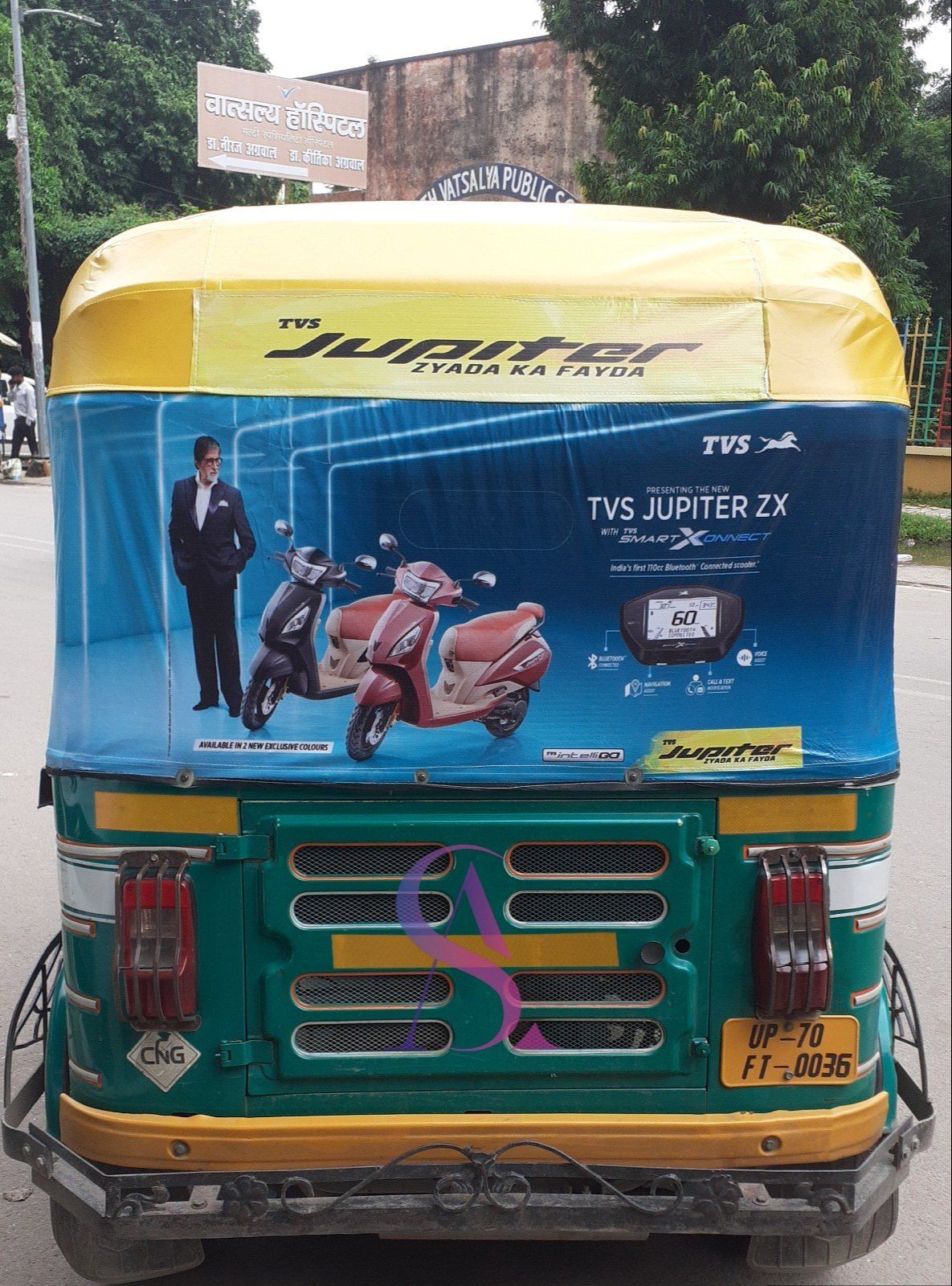
In 2025 we deliberately requested rate cards and proposals from 11 Bangalore auto branding agencies, ours included. The exercise was to map exactly which line items appeared on which proposals, and which were quietly omitted. The pattern was consistent enough to be worth publishing.
The finding
Bangalore auto branding headline rates of ₹550 to ₹580 per vehicle per month under-state landed campaign cost by 12 to 18 percent on average. The gap traces to four specific line items. None of the four are illegal, vendor-fraudulent, or new. All four are real costs the buyer eventually pays. The investigation is into why proposals routinely omit them at booking stage and what the buyer should demand in writing.
Why this matters for buyers and the industry
A 200-vehicle Bangalore auto campaign at ₹580 per vehicle per month bills as ₹1.16 lakh on the headline. The actual landed cost, with all four line items, runs ₹1.31 to ₹1.37 lakh including GST. The 13 to 18 percent gap shows up in three places. Brand finance teams treat the booking estimate as actual budget and overshoot. Comparison tools compare headline rates and pick the cheaper-on-paper vendor whose delivery is worse. And the industry as a whole develops a reputation for surprise invoicing that erodes buyer trust.
How we investigated
Between January 2025 and December 2025 we requested rate cards and full proposals from 11 Bangalore auto branding agencies via prospective-client briefs. We mapped the line-item structure of each proposal against a four-line baseline (GST, replacement reserve, RTO compliance, creative production). We also pulled finalised invoices from 6 of the 11 (where we had operational client relationships) to compare headline-to-landed gap.
The four hidden line items
1. GST at 18 percent
Indian advertising and OOH services attract 18 percent GST. The tax applies to the agency invoice, not the per-vehicle distribution rate. Across the 11 proposals we audited, 8 of 11 quoted the per-vehicle rate without explicitly noting the rate was pre-tax. Buyers reading these proposals at face value treated the headline rate as final cost. On a ₹1.16 lakh fleet, the GST adds ₹20,880, which is roughly 18 percent of the budget never spoken about at booking. The fix is simple: every proposal should label the per-vehicle rate as pre-GST and state the GST rate separately on the bill of materials.
2. Replacement reserve
The replacement reserve funds mid-campaign vinyl damage. Standard reserve sits at 4 to 6 percent of campaign value, held back at booking and either burned (if no damage) or paid out at trigger. Of the 11 proposals we audited, 4 explicitly named a reserve. 7 omitted it. Of the 7 that omitted it, 6 saw mid-campaign damage above the implicit reserve range and the buyer either escalated, walked, or paid extra for replacement. The fix is demanding a written reserve percentage and trigger condition before signing. Our standard ask is 4 to 6 percent, replaced within 72 hours of photo-confirmed damage. Without that, the reserve is a verbal promise.
3. RTO and Karnataka MV Department compliance
The Karnataka Motor Vehicles Department permits commercial advertising on auto rickshaws subject to driver consent and vehicle owner approval. Maintaining the consent register, photographing each vehicle's regulation yellow band visibility, and keeping the records available for traffic-police enforcement is real overhead. We estimate it adds ₹5 to ₹15 per vehicle to vendor cost. Most of the 11 proposals do not call this out as a line item; reputable vendors absorb it into the headline rate but cheap vendors skip the documentation entirely, exposing the campaign to traffic-police interception mid-month. The fix is asking the vendor to confirm in writing that consent register and yellow band documentation are maintained for every vehicle in the fleet.
4. Creative production
Hood creative needs a designed file at the right size and resolution before fabrication. Most agencies do not bundle creative production into the per-vehicle rate because creative needs are brand-specific. Brands either supply in-house or pay a designer separately (₹15,000 to ₹35,000 for a typical Bangalore D2C launch). On a 200-vehicle fleet, that amortises to ₹75 to ₹175 per vehicle. Of the 11 proposals, only 2 noted that creative production was buyer-side; 9 left it ambiguous. The fix is asking explicitly: who produces the creative, who owns the source files, and what is the cost.
The four hidden line items in Bangalore auto branding quotes
| Line item | Typical size | Disclosure in 11 audited proposals | |
|---|---|---|---|
| GST | 18 percent of the agency invoice | Only 3 of 11 flagged rates as pre-tax | |
| Replacement reserve | 4 to 6 percent of campaign value | Named in 4 of 11 proposals | |
| RTO and consent register | Rs.5 to Rs.15 per vehicle | Rarely itemised; absorbed or skipped | |
| Creative production | Rs.15,000 to Rs.35,000 per campaign | Noted as buyer-side in 2 of 11 |
Audit of 11 Bangalore agency proposals plus 6 finalised invoices, January to December 2025.
What the industry would say in response
Vendors who consistently win on cheaper-on-paper proposals have a structural reason to leave these line items off the headline. Adding GST, reserve, and creative as visible line items makes their proposals look 12 to 18 percent more expensive against a competitor's stripped-down rate card. The market punishes the visibly honest. Some vendors will argue that GST is well known and reserve is industry standard; therefore explicit calling out is unnecessary. We disagree. Buyers without industry context regularly miss these and end up over budget. Industry standards should be made visible to the buyer, not assumed.
What buyers should demand
- Per-vehicle rate explicitly labelled pre-GST, with 18 percent GST shown as a separate line
- Replacement reserve stated as a percentage of campaign value with a defined trigger and payout SLA
- Written confirmation that consent register and yellow band documentation are maintained per vehicle
- Creative production responsibility, source-file ownership, and cost noted separately
- Total all-in landed cost shown alongside the headline pre-tax rate so the comparison stage has both numbers
What should change at the industry level
We would like to see a Bangalore auto branding industry standard proposal template that mandates these five visibility items. Until that arrives, individual brands and procurement teams can ask for them on every proposal. Brands that ask consistently get cleaner proposals back; vendors that refuse to provide them tend to be the ones cutting one of the four corners.
Sources
- 11 Bangalore auto branding agency proposals collected January-December 2025 (vendor names redacted; proposal text retained for line-item analysis)
- 6 finalised campaign invoices from operational client relationships, comparing headline-to-landed gap
- Indian GST Council notification confirming 18 percent rate on advertising and OOH services
- Karnataka Motor Vehicles Department published rules on commercial advertising on auto rickshaws
Fact-check
This piece was reviewed by The Mediaverse internal editorial team prior to publication. Numerical claims (the 12-18 percent gap, 4-6 percent reserve range, 8-of-11 GST omission count) were cross-referenced against the 11 proposals and 6 invoices in the audit set. Vendor names are redacted because direct attribution was not consented to. We are open to publishing corrections or rebuttals from any Bangalore auto branding agency willing to share their full line-item proposal template publicly.
If you are evaluating Bangalore auto branding proposals and want a second-opinion line-item audit on a specific vendor quote, share the proposal and we will reply within two working days with the four-line-item audit applied to that quote.
Is the 12-18 percent gap unique to Bangalore or true across Indian metros?
The gap is broadly consistent across Indian metros where auto branding is sold. We have done lighter audits in Mumbai, Delhi, and Hyderabad and seen 10 to 16 percent gaps in those markets, slightly lower than Bangalore. The reason Bangalore runs higher is the additional Karnataka MV Department compliance overhead and consent register documentation, which adds ₹5 to ₹15 per vehicle that other states’ RTOs do not require to the same extent.
Can a brand reduce or avoid replacement reserve by accepting damage risk?
Yes, formally. Some vendors will compress the reserve to 2 to 3 percent if the brand signs a written acceptance that mid-campaign damage above the threshold is buyer responsibility. We do not recommend this for first-time Bangalore auto campaigns because brands without operational experience underestimate damage rates. For repeat campaigns where the brand has audited prior delivery and damage rate is known, accepting damage risk to lower the reserve can save 1.5 to 2 percent of campaign value.
How does the four-line-item gap change for full-wrap or back-panel auto formats?
GST stays at 18 percent regardless of format. Replacement reserve typically scales with format complexity: hood at 4-6 percent, full-wrap at 6-9 percent because of more vinyl exposure, back-panel at 3-5 percent because of less weather exposure. RTO compliance is roughly the same across formats. Creative production cost rises with format complexity (full-wrap creative needs four faces of design instead of one). Total landed-vs-headline gap is similar at 12-18 percent across formats.
Where do vendor margins fit into the four hidden line items?
Vendor margins are not one of the four hidden line items because margins are baked into the published rate and are legitimate. The four items are real costs that exist outside the per-vehicle distribution rate. Healthy Bangalore auto branding vendor margins run 12 to 22 percent on the per-vehicle rate. Below 8 percent margins, vendors typically cut corners on vinyl quality, audit cadence, or replacement reserve; above 30 percent margins, the brand is overpaying. Asking for margin transparency directly is rarely productive; asking for the four line items in writing achieves the same end-state.
Tags
Quick Answers
What is the difference between Bangalore auto branding headline rate and landed cost?
Headline rates of ₹550 to ₹580 per vehicle per month exclude four standard line items most brands eventually pay separately: 18 percent GST on the agency invoice (₹99 to ₹104 per vehicle), the replacement reserve at 4 to 6 percent of campaign value (₹22-35 per vehicle), RTO and consent register administration (₹5-15 per vehicle), and creative production (₹100-200 per vehicle amortised across the fleet). Landed cost typically lands 12 to 18 percent above headline.
Are GST, replacement reserve, and consent register costs negotiable?
GST is not negotiable; it is a statutory 18 percent on advertising services and applies regardless of vendor. Replacement reserve is partially negotiable; vendors can compress it from 6 to 4 percent in exchange for stricter vinyl-quality SLAs from the brand. RTO and consent register costs are usually small and fixed; do not negotiate, just confirm the vendor maintains documentation. Creative production cost is fully negotiable; brands can supply creative in-house and remove the line entirely.
What is the most under-represented line item in Bangalore auto branding quotes?
Replacement reserve. Across the 11 vendor proposals we audited in 2025, only 4 of 11 explicitly mentioned a replacement reserve as a separate line item. The other 7 either bundled it into a vague “maintenance” note or omitted it entirely. The omission becomes visible at week 6 when 8 to 24 percent of fleet vinyl needs replacement and the vendor disclaims responsibility because the reserve was never funded. The fix is demanding a written reserve percentage and trigger condition before signing.
Looking for professional Auto Branding services?
The Mediaverse runs end-to-end auto branding campaigns across India with geo-tagged delivery and transparent, all-inclusive pricing.
Explore our Auto Branding solutionsSummarize this guide with AI
Open this article in your favourite AI assistant
Related Guides
Written by

The Mediaverse Team
India's Leading Outdoor Advertising Agency
The Mediaverse is a national-level outdoor advertising and integrated marketing organization that provides complete OOH, ATL, BTL, retail, and transit media solutions across India. With years of experience executing high-performance campaigns for brands in FMCG, Real Estate, E-commerce, EdTech, Automotive, Healthcare, and Retail, The Mediaverse combines creativity, data-driven media planning, and flawless on-ground execution. As a full-stack outdoor advertising provider, The Mediaverse offers Auto Branding, Mobile Van Branding, Newspaper Insertion Advertising, Shop Name Board Branding, In-Store Branding, Hoardings, Transit Media, Kiosks, Mall Media, Activations, and all forms of Below-The-Line marketing. Known for its pan-India network, strategic route planning, premium print quality, and Cheqmate™ GPS-based verification, The Mediaverse ensures 100% transparent and result-oriented campaign delivery. The Mediaverse’s editorial team produces deeply researched, SEO-optimized, and generative-engine-friendly content to help businesses understand the power of outdoor advertising and make informed decisions that maximize brand visibility and ROI across urban, suburban, and rural markets.
Related Articles
100-Micron Against 80-Micron: The Auto Branding Material Question to Ask Before You Book (2026)
The material line is the one nobody checks and the only one that decides whether the fleet is still readable in month seven. What our ten city pages publish about 100-micron against 80-micron, the per-city failure windows, and the arithmetic that turns any material quote into one comparable number.
Auto Back Panel Branding in 2026: The Cheapest Auto Campaign You Can Actually Book
The smallest auto order on our card is 500 back panel stickers at Rs.170 each, or Rs.85,000 before GST, which is Rs.1,10,000 below the hood floor. The slab math at 800 autos, the per-square-inch comparison of the two sticker sizes, and what the hood budget buys in panels.
Minimum Orders Are Per City, Not Per Campaign: What a 10-City Outdoor Rollout Really Floors At (2026)
Every city page publishes its own minimum: 300 autos for hood branding, 500 for back panel stickers, 1,000 no-parking boards, 50,000 insert copies. Multiply by ten cities and a national campaign floors between Rs.4,50,000 and Rs.19,50,000, which decides the shape of the plan before creative does.