

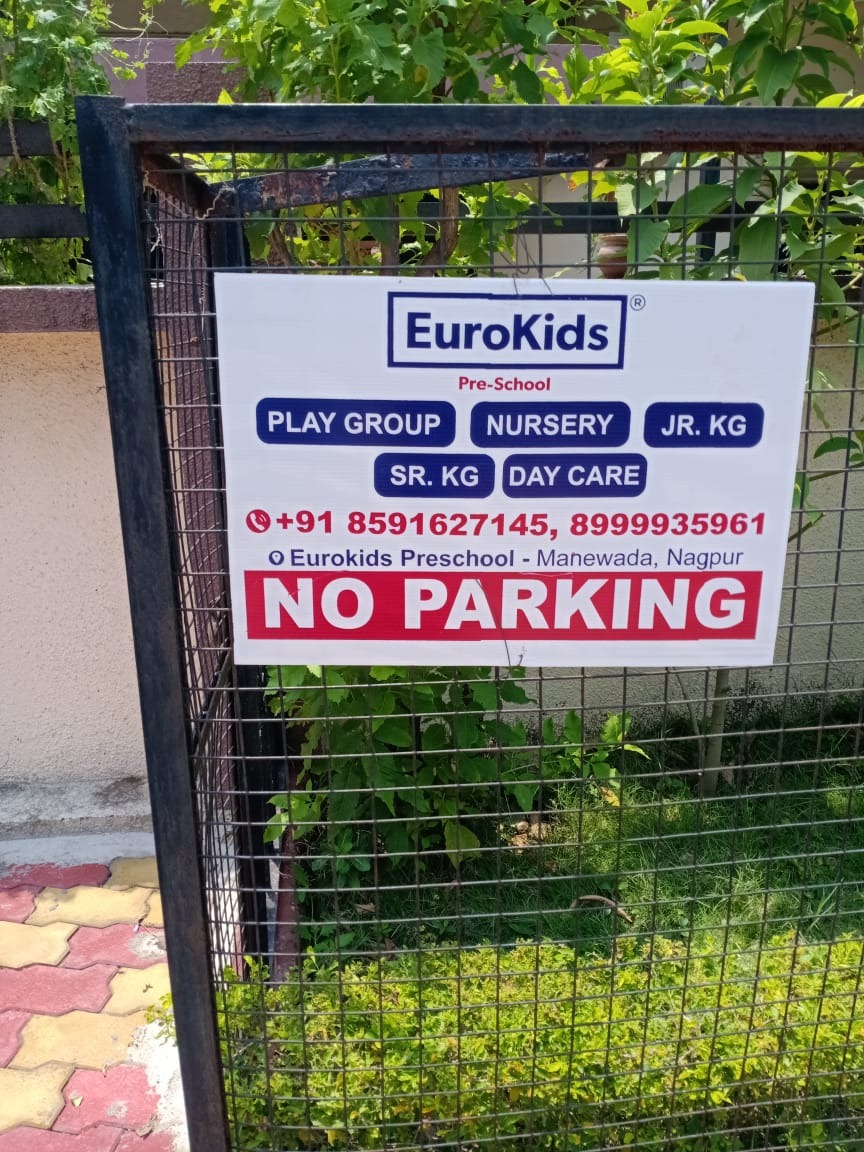
"For a clinic, proximity is the deciding factor. People don't choose where to get a scan or see a doctor by who shouts loudest — they choose who is closest and easiest to reach. Own the gates around the facility and you own the catchment." — our healthcare-category team
Most hospital and clinic marketing is aimed too wide. A hoarding on the ring road, a full-page newspaper ad, a radio spot — all of them spend money reaching people who will never travel to that facility for care. Healthcare almost never works that way. Families pick the doctor, lab or hospital that is nearest and most reachable, especially for routine visits and in an emergency. The audience that actually matters for a single facility is small, dense and local: the few thousand households inside its drive-time. This playbook is about reaching exactly those households — on the gates of their own homes — using no parking board advertising, a format built for owning a residential pocket rather than a city.
What exactly is a no parking board, and why does it suit healthcare?
A no parking board is a small, rigid board — 1ft × 1.5ft, printed on Sunpack (sunboard) sheet, which is lightweight, weatherproof and holds up outdoors for the long term. It is fixed to the gate or compound wall of independent houses and at the entry gates of housing societies. What makes it different from a poster is that it is genuinely useful: it works as a real 'No Parking' notice that homeowners want on their gate, so it stays up and stays visible. The main visual area, meanwhile, carries the advertiser's brand. For a clinic or hospital that pairing is ideal — the board sits permanently at the exact spot where a household passes every day, and it can quietly say who you are, what you treat and when the doctor is in.
It can be printed by UV, Solvent, Eco-Solvent or Digital methods. UV is the most fade- and scratch-resistant and the premium choice when a board has to look clean for a long time; eco-solvent is the clean, weatherproof sweet spot; digital is the cheapest for large volumes over a short window. For a healthcare brand that wants its board to still look trustworthy a year later — trust matters more here than for most categories — UV or eco-solvent is usually worth it.
How do you read the 2–3 km catchment around your facility?
The instinct is to draw a flat circle around the facility and cover everything inside it. Don't. A catchment is not uniform — within a 2–3 km radius, households cluster into pockets: large apartment societies, dense independent-house colonies, and then thinner stretches of main road, commercial frontage or open land where almost nobody lives. Every board placed on a low-density stretch is a board not placed where families actually are. So the first job is to map the catchment into its real residential pockets and rank them by how many homes each one holds. A single clinic blanketing its densest pockets often needs only around a thousand boards to put its name on the gates that matter; a multi-branch hospital does the same exercise around each branch and pools the order.
Distance also matters differently for different specialties. A 24×7 emergency hospital or a diagnostic lab can pull from the full 2–3 km because people will travel for a scan or an emergency. A dental, physiotherapy or paediatric clinic for routine repeat visits pulls more tightly — usually the nearest, most convenient societies. Match the spread of your boards to how far your particular patients realistically travel.
What is the step-by-step playbook to own the catchment?
Owning a residential pocket is a five-step operation. Each step has a clear action, a reason it matters for a healthcare facility, and a common mistake to avoid.
Map the 2–3 km residential catchment around the facility
Action: Plot the facility and draw its realistic catchment — 2–3 km for most clinics, tighter for routine-care specialties — then sketch where actual residential clusters sit inside it. Why it matters: Patients choose by drive-time, so the boundary of your boards should follow where reachable households are, not a tidy circle on a map. Common mistake: Treating the catchment as a uniform circle and budgeting boards for the whole area, including main roads and empty stretches where no families live.
Pick the densest society and independent-house pockets first
Action: Rank the residential pockets inside the catchment by household density and put your boards into the densest societies and colonies before anything else. Why it matters: A board at a society entry gate or a cluster of house gates reaches the maximum number of nearby families per board, which is how you keep a single-clinic budget small. Common mistake: Spreading boards thinly and evenly so no pocket actually gets owned — better to saturate the top pockets than to sprinkle the whole radius.
Design the board with specialty, doctor-availability and directions/QR
Action: Keep the 'No Parking' message intact, then use the brand area to state the facility name, the specialty or services (for example 'Dental & Implants' or 'Full-body health checks'), doctor-availability or OPD timings, and a direction line or QR code to the location/booking. Why it matters: A nearby family acts only when it knows what you treat, when the doctor is in, and how to reach you — those three lines are what turn proximity into a visit. Common mistake: Filling the board with only a logo and phone number, so a household sees the brand daily but never learns it is the right clinic for their need.
Secure owner/RWA permission and install on the gates
Action: Get consent from each homeowner or the society's RWA office-bearers before fixing the board on the gate or compound wall, then install cleanly. Why it matters: Because the board is a genuine 'No Parking' notice the resident actually wants, permission is usually easy — and a board the household agreed to is far more credible for a healthcare brand than one slapped up uninvited. Common mistake: Skipping RWA sign-off to save time, which risks boards being removed and damages the facility's reputation in the very community it is courting.
Collect geo-tagged proof and check it against the map
Action: Have the install team photograph each fixed board with its geo-tag and compile a proof-of-delivery report, then lay that report over your original catchment map. Why it matters: It confirms the boards actually landed in the high-density pockets you targeted and gives the facility an auditable record of coverage rather than a vague claim. Common mistake: Accepting only a board count with no locations, so you cannot tell whether your densest pockets were genuinely covered or boards drifted to easier, emptier streets.
What should a healthcare board actually say?
The single biggest lever is the copy. A gate board for a clinic has a few seconds of a passer-by's attention, repeated daily. Use that to answer three questions a nearby family asks: What do they treat? Is the doctor available when I need? How do I get there? In practice that means a clear specialty or service line, a doctor-availability or OPD-timing line (an 'evening OPD till 9 pm' or 'open Sundays' line is often the deciding detail for working families), and a directions line or QR that leads to the location and booking. Keep the 'No Parking' notice prominent so the board earns its place on the gate, and resist cramming — three useful lines beat a cluttered board nobody can read on the move.
Gate boards vs hoarding vs newspaper — which wins a clinic catchment?
For a single facility trying to own its immediate pocket, the three common options behave very differently on the things that matter — cost to cover the catchment, geographic precision, how long the message persists, and the trust it carries with a household. A hoarding buys reach a clinic mostly cannot use; a newspaper insertion lands inside homes but is gone the same morning. Gate boards trade raw reach for precision and persistence in the exact pocket the facility draws from.
Owning a clinic catchment: gate boards vs hoarding vs newspaper
| No parking gate boards | Hoarding | Newspaper insertion | |
|---|---|---|---|
| Cost to cover the catchment | All-inclusive ₹45/₹35 per board, no rental — a pocket coverable for a small one-time spend | High monthly rental for one or few large sites | Per-copy cost repeated every time you want to be seen |
| Geographic precision | Board-by-board onto the exact dense societies and house gates you choose | Fixed to wherever the site is; reaches a wide passing crowd, not your households | Targets an area's subscribers but not specific gates or pockets |
| Persistence of the message | Stays on the gate for the long term as a wanted 'No Parking' notice | Stays for the booked cycle, then comes down at tender/renewal | Lasts one morning, then discarded |
| Trust at the household | A useful notice the resident agreed to — seen daily at their own gate | Anonymous roadside ad with no relationship to the viewer | One of many inserts competing in the same paper |
Reach favours hoardings; for a clinic that is chosen on proximity, precision and persistence in its own pocket matter more.
How much does it cost to cover a facility's catchment?
Pricing is deliberately simple and all-inclusive — the price covers the board, printing, transport and installation, with no monthly rental to renew. There are two tiers, and the only thing that moves you between them is volume.
No parking board pricing for clinics & hospitals (all-inclusive, no rental)
Single facility / small order
For one clinic, diagnostic lab or hospital covering its own catchment pocket.
- Board + printing + transport + installation included
- No monthly rental
- Sunpack 1ft × 1.5ft, weatherproof
- ~1,000 boards ≈ ₹45,000 to blanket a dense pocket
- Geo-tagged proof-of-delivery report
Multi-branch / network
For hospital networks covering several branch catchments in one order.
- Same all-inclusive scope at bulk rate
- Break-even into bulk at 5,000 boards
- 5,000 boards ≈ ₹1,75,000
- 10,000 boards ≈ ₹3,50,000
- Geo-tagged proof across every branch catchment
The break-even is clear: at 5,000 boards and above the per-board price drops from ₹45 to ₹35, which is where a multi-branch network or a large hospital covering several pockets pulls ahead. A single clinic rarely needs that volume — its win is that a few hundred to a thousand well-placed boards can own its densest pocket for a one-time spend, with nothing to renew. Get a free quote with your facility's catchment and we will size the order to your pockets.
Is RWA and homeowner permission a hurdle or an advantage?
It is an advantage. Because the board is a real, useful 'No Parking' notice, homeowners and Resident Welfare Association office-bearers generally welcome it rather than resist it — they get a genuine deterrent against strangers parking at their gate. That consent is exactly what makes the format credible for healthcare. A board the household agreed to put up sits in a position of quiet endorsement, seen daily at their own gate, which is a very different signal from an anonymous ad. The permission step also keeps boards up: a wanted board does not get torn down, so the facility's name stays in the pocket for the long run.
How do you prove the catchment was actually covered?
Every install is documented. The team photographs each fixed board with its geo-tag and hands over a proof-of-delivery report listing the locations. For a facility that planned its catchment as a set of dense pockets, that report is the audit: lay it over the original coverage map and you can see whether the boards actually landed in the societies and colonies you prioritised, rather than drifting to easier, emptier streets. This is also where healthcare brands can layer other local formats — pairing the static gate boards with mobile van branding for a launch, or with shop name board signage at the facility's own frontage — but the gate boards remain the backbone that holds the pocket. For the full format, process and pricing detail, see the complete 2026 guide to no parking board advertising.
Facilities in metros can plan catchments city by city — for example no parking board advertising in Delhi or no parking board advertising in Mumbai, and hospitals operating in Bangalore can map each branch's pocket the same way. The format runs across Delhi, Mumbai, Bangalore, Hyderabad, Chennai, Kolkata, Pune, Ahmedabad, Jaipur and Lucknow.
Clinic and hospital questions, answered
Gate boards are one format of four that fit healthcare. For the pharmacy, clinic and diagnostic centre plans priced side by side, and the rules on what a medical board may legally say, read our 2026 outdoor playbook for clinics, pharmacies and diagnostic centres.
How many boards does a single clinic usually need?
It depends on how dense and how wide the catchment is, but a single clinic blanketing its densest 2–3 km pocket often uses a few hundred to around a thousand boards. At ₹45 per board, roughly a thousand boards is about ₹45,000, all-inclusive. The right number comes out of mapping the catchment into pockets and ranking them — saturating the top few pockets usually matters more than chasing the whole radius.
Can a hospital with several branches order for all of them together?
Yes. A multi-branch hospital maps each branch's catchment into its dense pockets, then pools the boards into one order. Once the combined order crosses 5,000 boards, the rate drops from ₹45 to ₹35 per board — so 5,000 boards is about ₹1,75,000 and 10,000 is about ₹3,50,000, all-inclusive. The geo-tagged proof-of-delivery report then covers every branch's pocket separately.
Will the board survive a year of weather on a gate?
It is built to. The board is rigid Sunpack (sunboard) sheet, which is lightweight and weatherproof. Print method affects longevity: UV is the most fade- and scratch-resistant premium option, eco-solvent is the clean weatherproof sweet spot, and digital is cheapest for high volume over a short window. For a healthcare brand that wants the board to still look trustworthy a year on, UV or eco-solvent is usually the choice.
Is there a monthly rental like a hoarding?
No. The ₹45 / ₹35 per-board price is fully all-inclusive — board, printing, transport and installation — and there is no monthly rental. It is a one-time cost to put the board on the gate, after which the facility's name stays in the pocket as long as the board is up. That is a major difference from hoardings, where the rental keeps running every month you want the site.
What three things should the board say for a clinic?
Keep the 'No Parking' notice, then in the brand area carry the specialty or services, the doctor-availability or OPD timings, and a directions line or QR to the location and booking. Those three answer what a nearby family needs to know — what you treat, when the doctor is in, and how to reach you. Avoid a board that shows only a logo and number; a household will see the brand daily but never learn it is the right clinic for their need.
Tags
Quick Answers
What is no parking board advertising for hospitals?
It is placing a clinic or hospital's brand on a small, dual-purpose board fixed to house gates and society entry gates across the residential pocket around the facility. The board, 1ft × 1.5ft on rigid Sunpack sheet, works as a genuine 'No Parking' notice while its main area carries the hospital's specialty, doctor-availability timings and directions. For healthcare, the value is proximity: families choose a clinic by how close and reachable it is, so a board sitting on the gates of nearby homes reaches them exactly where that decision forms.
How much does it cost a clinic to cover its catchment with no parking boards?
Pricing is all-inclusive — board, printing, transport and installation, with no monthly rental. It is ₹45 per board for orders under 5,000 boards and ₹35 per board for 5,000 boards and above. A single clinic blanketing its dense 2–3 km pocket might use around 1,000 boards (about ₹45,000). A multi-branch hospital network covering several catchments can cross 5,000 boards and drop to the ₹35 bulk rate — 5,000 boards is roughly ₹1,75,000, and 10,000 is about ₹3,50,000. The 5,000-board mark is the break-even into bulk pricing.
Why is proximity more important than reach for a clinic?
A hoarding on a highway is seen by thousands, but most of them will never travel to a small clinic for routine care. Healthcare is bought on convenience: people pick the doctor, diagnostic lab or hospital that is closest and easiest to reach in an emergency or for repeat visits. So a clinic does not need a large audience; it needs the right few thousand households within driving distance to know it exists, what it treats and when the doctor is in. A board on the gates of those exact homes converts proximity into preference.
Are no parking boards a fit for diagnostic centres and single-doctor clinics?
Yes — arguably more so than for large hospitals, because small facilities live or die on their immediate catchment. A diagnostic lab, dental clinic, physiotherapy centre or single-specialty doctor draws almost entirely from nearby societies and lanes. The board lets them state exactly what they offer (for example, 'X-ray, ECG and blood tests' or 'evening OPD till 9 pm') on the gates of the homes that feed them, at a per-board cost low enough that even a single practitioner can cover their pocket without a media budget.
Looking for professional No Parking Board Advertising services?
The Mediaverse runs end-to-end no parking board advertising campaigns across India with geo-tagged delivery and transparent, all-inclusive pricing.
Explore our No Parking Board Advertising solutionsSummarize this guide with AI
Open this article in your favourite AI assistant
Related Guides
Written by

The Mediaverse Team
India's Leading Outdoor Advertising Agency
The Mediaverse is a national-level outdoor advertising and integrated marketing organization that provides complete OOH, ATL, BTL, retail, and transit media solutions across India. With years of experience executing high-performance campaigns for brands in FMCG, Real Estate, E-commerce, EdTech, Automotive, Healthcare, and Retail, The Mediaverse combines creativity, data-driven media planning, and flawless on-ground execution. As a full-stack outdoor advertising provider, The Mediaverse offers Auto Branding, Mobile Van Branding, Newspaper Insertion Advertising, Shop Name Board Branding, In-Store Branding, Hoardings, Transit Media, Kiosks, Mall Media, Activations, and all forms of Below-The-Line marketing. Known for its pan-India network, strategic route planning, premium print quality, and Cheqmate™ GPS-based verification, The Mediaverse ensures 100% transparent and result-oriented campaign delivery. The Mediaverse’s editorial team produces deeply researched, SEO-optimized, and generative-engine-friendly content to help businesses understand the power of outdoor advertising and make informed decisions that maximize brand visibility and ROI across urban, suburban, and rural markets.
Related Articles
Gate-to-street saturation: no-parking boards plus auto hoods in one catchment, the worked plan (2026)
The entry ticket for one catchment covered from gate to street is ₹2,83,200 landed: 1,000 gate boards plus 300 auto hoods. Seven steps, the timings for both formats, three priced plans and the honest list of what the rate card leaves out.
Outdoor advertising for clinics, pharmacies and diagnostic centres: formats, compliance and catchment (2026)
A pharmacy plan of 1,000 gate boards plus a glow sign board is ₹56,168 landed; a clinic plan of 2,000 boards plus 50,000 A5 inserts is ₹1,79,950; a diagnostic centre plan with 300 auto hoods is ₹5,36,900. Plus the rules on what a medical board may say and how far each facility's catchment reaches.
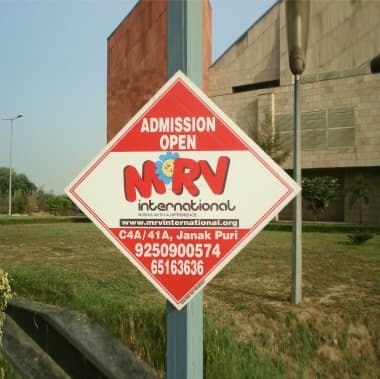
No Parking Board Advertising vs Hoardings: Which Wins for One Locality in 2026?
A hoarding looks like the premium buy — but for dominating ONE locality, it usually loses to no parking gate boards. Here is the honest, side-by-side comparison on cost model, reach, exposure and targeting, plus a clear verdict and decision checklist.