

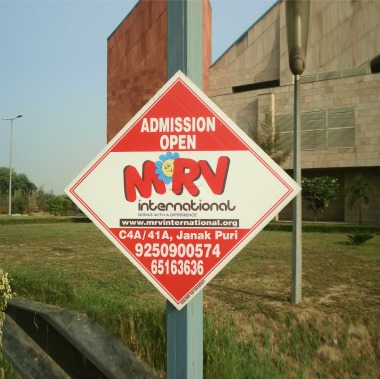
Here is the assumption almost everyone makes: a hoarding is the premium buy, and no parking boards are the cheap fallback. For owning a single locality in 2026, that assumption is usually backwards. A hoarding is one large surface at one fixed point — impressive to look at, but blind to every lane its road does not touch. A campaign of no parking gate boards is hundreds of small surfaces placed on the gates and society entrances across the whole neighbourhood. When your goal is to dominate one area rather than be seen by a city, spread and frequency beat a single big impression — and they usually cost less to get there.
This is not a case against hoardings. It is a case for matching the format to the job. Below is the honest, side-by-side comparison — cost model, reach type, exposure pattern, targeting, cost-per-day and best-for — followed by a clear verdict and a short decision checklist you can run before you spend a rupee.
How does each format actually work on the ground?
The hoarding model: one big impression, by volume
A hoarding is a single large display at a fixed roadside or rooftop site. Its strength is volume: a busy road carries thousands of vehicles past one big surface, so the same creative is seen again and again by anyone using that route. You rent the site, usually month on month, and the cost continues for as long as the campaign runs. The catch for locality work is geography — a hoarding only reaches people who pass its exact spot. Residents who enter and leave the colony by another road, or who rarely drive past that junction, may never see it at all.
The gate board model: many small impressions, by spread
A no parking board is a 1ft×1.5ft Sunpack sheet — rigid, lightweight and weatherproof — installed on the gates of independent houses and at housing-society entry gates. The clever part is that it is a genuine dual-purpose object: a real 'No Parking' notice stays visible while the main visual area carries your brand. Because residents and RWAs actually want that notice, the board stays up rather than being pulled down like a flyer. Reach comes from spread: place boards across every lane and entrance in the target area and your message sits at the doorstep, on repeat, for the people who live there. You can read the full format details on the no parking board advertising service page.
How do gate boards and hoardings compare side by side?
No parking gate boards vs hoardings for a single locality
| Factor | No Parking Gate Boards | Hoarding | |
|---|---|---|---|
| Cost model | One-time, all-inclusive (board + print + transport + install). No monthly rental. | Recurring monthly site rental, plus print and mounting. | |
| Reach type | Spread — many small surfaces across the whole locality. | Volume — one large surface seen by passing traffic. | |
| Exposure pattern | High frequency at the doorstep; repeated daily for residents. | High visibility at one point; depends on who uses that road. | |
| Targeting precision | Lane-, society- and gate-level — you pick exactly where boards go. | Site-level only — limited to wherever a hoarding is available. | |
| Cost-per-day of exposure | Falls over time — one-time cost spread across months of display. | Stays fixed — rental recurs every month the hoarding is up. | |
| Best for | Owning a single locality, doorstep services, trust-led brands. | Highway and city-wide mass awareness, big-format brand moments. |
Both formats are out-of-home advertising — the right choice depends on whether your job is locality saturation or mass awareness.
How much does each cost, and what does ₹45 actually buy?
Hoardings and gate boards use different cost models, so comparing sticker prices is misleading. A hoarding rents a single site, usually month on month, so the cost keeps recurring. No parking boards are priced once, all-inclusive — the rate covers the board, printing (UV, Solvent, Eco-Solvent or Digital), transport and installation, with no monthly rental at all. As a worked example, 1,000 boards is roughly ₹45,000 as a one-time spend; 5,000 boards is about ₹1,75,000 at the bulk rate; 10,000 boards about ₹3,50,000. The 5,000-board mark is the break-even where the rate drops.
No parking board pricing — all-inclusive, no monthly rental
Standard
All-inclusive: board + printing + transport + installation. Ideal for one or two localities.
- 1ft×1.5ft weatherproof Sunpack board
- Dual-purpose: real No Parking notice + your brand
- UV / Solvent / Eco-Solvent / Digital printing
- Owner / RWA permission + gate installation
- Geo-tagged proof-of-delivery report
- No monthly rental — one-time cost
Bulk
Bulk rate from the 5,000-board break-even. Built for saturating multiple localities or a whole ward.
- Everything in Standard
- Lower per-board rate at 5,000+ units
- Example: 5,000 ≈ ₹1,75,000; 10,000 ≈ ₹3,50,000
- Best cost-per-locality for wide coverage
- Locality coverage map planning
- No monthly rental — one-time cost
Notice what the cost-per-day row in the table was pointing at: a hoarding's monthly rental never goes away, while a one-time gate-board spend gets cheaper per day the longer the boards stay up. For a fuller breakdown of specs, printing methods and use-cases, see the complete 2026 guide to no parking board advertising.
So which one actually wins for a single locality?
Verdict: For owning one locality, no parking gate boards win. For highway traffic and city-wide mass reach, hoardings win. They are not competitors so much as tools for two different jobs.
When the job is to make a neighbourhood feel like your brand owns it — a new clinic, a coaching centre, a real-estate launch, a home-services business, a ward-level political push — gate boards do something a hoarding structurally cannot. They put your message on the gate of nearly every house and every society entrance, so residents see it daily, from multiple directions, on their own street. That repeated, doorstep frequency builds the familiarity that trust-led local services live on. A hoarding gives you one impressive impression; gate boards give you the locality.
There is also an accountability difference. A gate-board campaign ends with a geo-tagged proof-of-delivery report listing every gate and society where a board went up, so the spend is auditable lane by lane. Planning starts from a locality coverage map, so you choose exactly which colonies and entry gates carry your message before a single board is printed.
When does a hoarding still beat gate boards?
Plenty of times — and it is worth being honest about them. If your audience is highway or arterial-road traffic rather than residents, a hoarding's volume model is exactly right. If you want a single, large, high-impact brand statement at a landmark junction, no number of small boards matches that scale. And if your goal is broad city-wide awareness rather than locality saturation, a few well-placed hoardings cover ground that gate boards are not designed to chase. The mistake is using a hoarding to try to 'own' a residential colony, or using gate boards to chase highway reach — each is being asked to do the other's job.
Which should you choose? Run this decision checklist
Answer these before you spend. If most answers point to the locality, choose gate boards; if most point to mass traffic, choose a hoarding.
- Is my real audience the residents of a specific area, or people passing on a main road?
- Do I need repeated, doorstep frequency, or one large one-off impression?
- Can I name the exact colonies, lanes and society gates I want to cover?
- Do I prefer a one-time cost or am I fine with a recurring monthly rental?
- Does my business depend on local trust and familiarity (clinic, coaching, home services, real estate)?
- Do I want auditable, lane-by-lane proof of where my money went?
- Is my budget better spent saturating one area or buying a single premium site?
Can you use both hoardings and gate boards together?
Often the smartest answer is yes. Use a hoarding on the arterial road for top-of-funnel awareness — the big, memorable brand moment — and back it with gate boards inside the target colonies to convert that awareness into doorstep familiarity. The hoarding makes people recognise the name; the gate boards make them feel the brand is part of their own street. You can extend the same locality logic with moving formats too: auto branding advertising and mobile van branding add route-based reach across the same neighbourhoods. To plan a coverage map or compare costs for your area, request a free quote.
Frequently asked questions
Are no parking gate boards legal to install on house and society gates?
Installation happens only with the owner's or RWA's permission — securing that consent is a built-in step of the process before any board goes up. Because each board is also a genuine No Parking notice, residents and societies usually welcome it. Always plan with the property owner and RWA rather than placing boards without consent.
How long does a Sunpack no parking board last outdoors?
The board is a rigid, lightweight, weatherproof Sunpack (sunboard) sheet built to survive sun and rain. Print durability depends on method: UV is the most fade- and scratch-resistant (premium), eco-solvent is the clean, weatherproof sweet spot, and digital is the cheapest for big volume or a short window. Choosing UV or eco-solvent gives the longest visible life at the gate.
How many gate boards do I need to cover one locality?
It depends on how many houses and society gates fall inside your target area. We start from an internal locality coverage map, mark every lane and entry gate you want to reach, and size the order to saturate it. For a single residential colony many campaigns sit well under the 5,000-board mark at ₹45 each; covering several localities or a whole ward is where the ₹35 bulk rate kicks in.
Which industries get the most from gate boards over hoardings?
Trust-led, locally-served businesses: real estate and builders, hospitals, clinics and diagnostics, coaching and schools, banks and NBFCs, jewellery and retail, restaurants and cloud kitchens, and home services like plumbing, pest control, solar and water purifiers. Ward-level political and election campaigns also fit well, because gate boards reach voters at home street by street rather than only on the main road.
Do I get proof of where my boards were installed?
Yes. Every campaign ends with a geo-tagged proof-of-delivery report listing each gate and society where a board went up, so your locality spend is auditable lane by lane. That level of placement evidence is one of the things a single hoarding rarely gives you, and it is built into how we run gate-board campaigns.
Tags
Quick Answers
No parking boards vs hoardings: which is better for a single locality?
For owning one locality, no parking gate boards generally win. A hoarding gives a single large impression from one fixed roadside point, so residents who never pass that road may never see it. Gate boards at ₹45 each (₹35 at 5,000+) install on house gates and society entrances across the whole colony, putting your brand at the doorstep on repeat. Hoardings still beat gate boards for highway traffic and city-wide mass reach, but for saturating a neighbourhood, the spread and frequency of gate boards usually convert better.
Is a hoarding more expensive than no parking board advertising?
They use different cost models, so a flat comparison misleads. A hoarding typically carries a recurring monthly rental for one site, which keeps costing every month it stays up. No parking boards are a one-time, all-inclusive ₹45 per board (₹35 above 5,000) covering board, printing, transport and installation, with no monthly rental. So 1,000 boards is roughly ₹45,000 once. The honest way to compare is cost-per-locality and cost-per-day of exposure, not headline price — which is exactly what the tables below do.
Can no parking boards give the same reach as a hoarding?
Not the same kind of reach. A hoarding delivers reach by volume — thousands of passing vehicles see one big surface. Gate boards deliver reach by spread — hundreds of small surfaces placed across every lane and entry gate in a target area. For a single locality the spread model usually covers more of your actual audience, because it reaches residents at home rather than only those who happen to drive past one billboard. For city-wide or highway reach, the hoarding's volume model wins.
Why do gate boards stay up longer than other local ads?
Because each board is a genuine No Parking notice, not just an advertisement. The 1ft×1.5ft Sunpack board keeps a real 'No Parking' message visible while the main visual carries your brand. Residents and RWAs want that notice in place, so they leave the board up instead of tearing it down the way they would a pure flyer or sticker. The Sunpack sheet is rigid, lightweight and weatherproof, so it survives sun and rain — giving your brand steady, repeated exposure at the gate over time.
Looking for professional No Parking Board Advertising services?
The Mediaverse runs end-to-end no parking board advertising campaigns across India with geo-tagged delivery and transparent, all-inclusive pricing.
Explore our No Parking Board Advertising solutionsSummarize this guide with AI
Open this article in your favourite AI assistant
Related Guides
Written by

The Mediaverse Team
India's Leading Outdoor Advertising Agency
The Mediaverse is a national-level outdoor advertising and integrated marketing organization that provides complete OOH, ATL, BTL, retail, and transit media solutions across India. With years of experience executing high-performance campaigns for brands in FMCG, Real Estate, E-commerce, EdTech, Automotive, Healthcare, and Retail, The Mediaverse combines creativity, data-driven media planning, and flawless on-ground execution. As a full-stack outdoor advertising provider, The Mediaverse offers Auto Branding, Mobile Van Branding, Newspaper Insertion Advertising, Shop Name Board Branding, In-Store Branding, Hoardings, Transit Media, Kiosks, Mall Media, Activations, and all forms of Below-The-Line marketing. Known for its pan-India network, strategic route planning, premium print quality, and Cheqmate™ GPS-based verification, The Mediaverse ensures 100% transparent and result-oriented campaign delivery. The Mediaverse’s editorial team produces deeply researched, SEO-optimized, and generative-engine-friendly content to help businesses understand the power of outdoor advertising and make informed decisions that maximize brand visibility and ROI across urban, suburban, and rural markets.
Related Articles
Gate-to-street saturation: no-parking boards plus auto hoods in one catchment, the worked plan (2026)
The entry ticket for one catchment covered from gate to street is ₹2,83,200 landed: 1,000 gate boards plus 300 auto hoods. Seven steps, the timings for both formats, three priced plans and the honest list of what the rate card leaves out.
Outdoor advertising for clinics, pharmacies and diagnostic centres: formats, compliance and catchment (2026)
A pharmacy plan of 1,000 gate boards plus a glow sign board is ₹56,168 landed; a clinic plan of 2,000 boards plus 50,000 A5 inserts is ₹1,79,950; a diagnostic centre plan with 300 auto hoods is ₹5,36,900. Plus the rules on what a medical board may say and how far each facility's catchment reaches.
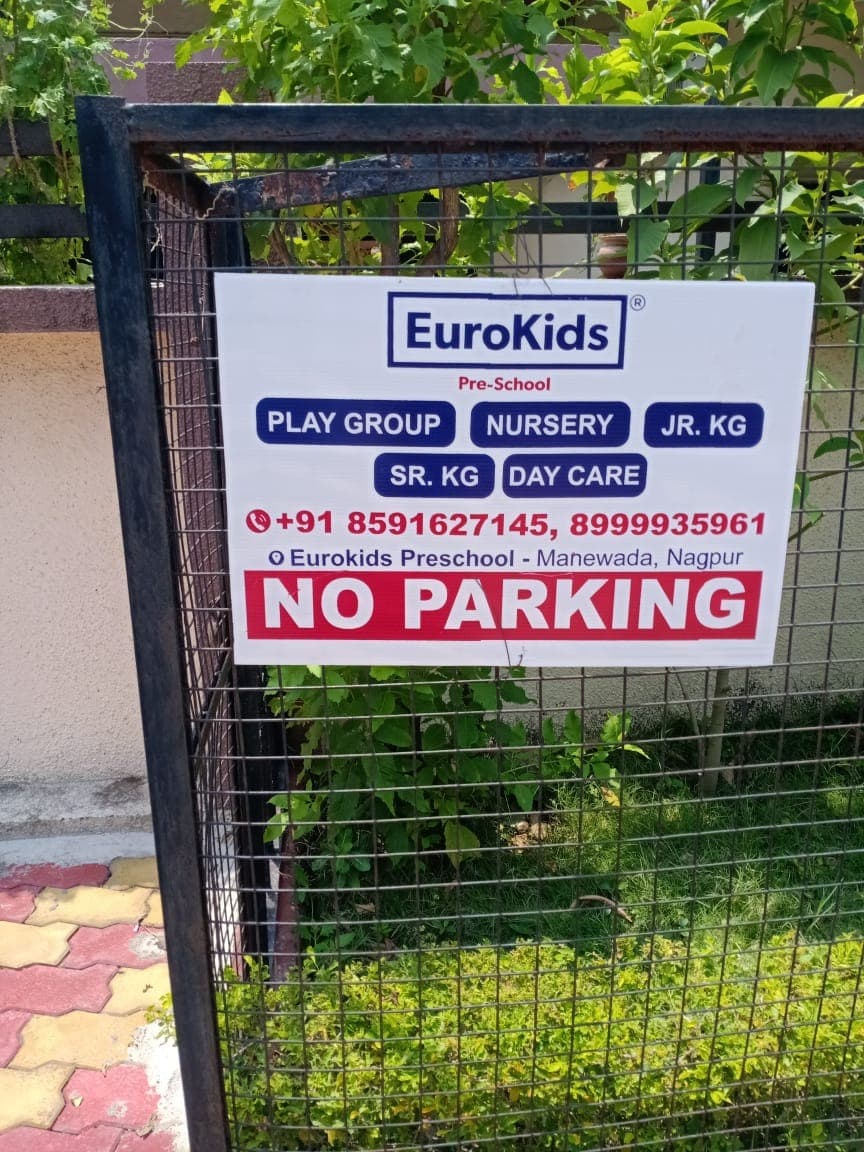
No Parking Boards vs Auto Rickshaw Branding (2026): Stationary Reach vs Moving Reach
No Parking boards give you a one-time ₹45/₹35 fixed footprint at chosen house and society gates; auto rickshaw branding gives moving, city-wide reach on a recurring monthly model. Here is exactly when each wins — and why most local campaigns run both.