

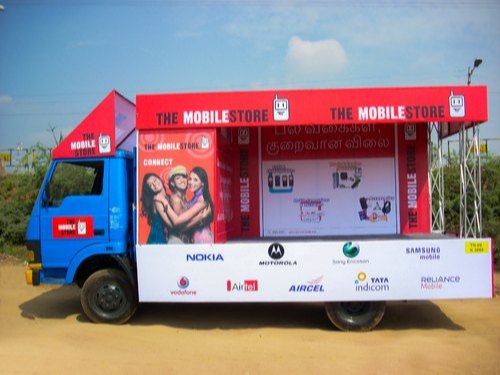
Why does a mobile van campaign that worked perfectly in Bangalore deliver 30 percent lower impressions in Hyderabad on the same routes? Three reasons explain almost all the variance: Cyberabad Police operates the HITEC City IT corridor as a separate jurisdiction from Hyderabad City Police, Hussain Sagar's central-lake geography creates bottleneck traffic patterns that no other Indian metro has, and the April-June peak heat window adds 14 percent operational overhead that vendors quietly absorb into their rate cards. This guide unpacks all three plus the route, rate, and regulatory specifics for 2026.
The GHMC, Cyberabad, and Secunderabad three-regulator reality
Hyderabad mobile van advertising operates under three permit authorities depending on route. The Greater Hyderabad Municipal Corporation (GHMC) governs core city advertising regulations across 150 wards in 30 circles, from Charminar through Begumpet, Banjara Hills, and Hussain Sagar. Cyberabad Police governs the IT corridor (HITEC City, Madhapur, Gachibowli, Kondapur, Financial District, and parts of Manikonda) as a separate police commissionerate independent of Hyderabad City Police. Secunderabad Cantonment Board governs Tarnaka, Bowenpally, Trimulgherry, and parts of Alwal with distinct commercial advertising restrictions tied to the military zone.
Operational implication. A campaign routing across HITEC City and Banjara Hills requires both Cyberabad and Hyderabad City Police clearance plus the GHMC commercial permit. Cyberabad permits take 3 to 5 working days for first-time advertisers, 1 to 2 days for vendors with active operating history. Cross-jurisdiction Mumbai-style routing therefore adds roughly 8 to 12 percent to landed cost compared to single-jurisdiction operations. Most campaigns absorb this without realising the dual-permit nature, which is why an IT-corridor brief that looks identical to a Mumbai brief delivers different effective economics here.
What do Hyderabad's van pricing zones actually cost?
Zone A: HITEC City IT corridor (500081, 500032, 500084, Financial District)
HITEC City, Madhapur, Gachibowli, Kondapur, Financial District, Nanakramguda, Manikonda professional belts. Per-piece rates run 8 to 12 percent above the city average due to dual-jurisdiction permit premium plus higher-quality professional household density. ₹3,200 to ₹3,400 per day for T-Shape, ₹3,800 for L-Shape, ₹5,800 for Canter, ₹10,000 for LED. The corridor reaches Hyderabad's IT workforce: TCS, Infosys, Wipro, Microsoft, Google, Amazon, Deloitte, and the major MNC campuses. For B2B SaaS, EdTech targeting working professionals, premium real estate, finance, and corporate brand campaigns, this corridor delivers 3 times the relevant-impression conversion versus mass-market alternatives.
Zone B: Banjara Hills-Jubilee Hills HNI loop (500034, 500033, 500016)
Banjara Hills, Jubilee Hills, Begumpet, Somajiguda, Punjagutta. Per-piece rates run 10 to 14 percent above the city average for HNI route density. ₹3,300 per day for T-Shape, ₹3,800 for L-Shape, ₹5,800 for Canter, ₹10,200 for LED. The corridor reaches Hyderabad's old-money plus film-industry HNI: Telugu film personalities, established Nizami-era business families, premium-real-estate residents. For luxury automotive, jewellery, premium retail, fine dining, and high-ticket finance, this corridor delivers 4 to 5 times the luxury-category conversion versus mass-market alternatives.
Zone C: ORR mass-market and outer suburbs
The Outer Ring Road plus Kukatpally, Miyapur, LB Nagar, Uppal, and the outer-suburb residential belts. Per-piece rates track the city average within 4 to 6 percent: ₹3,000 T-Shape, ₹3,500 L-Shape, ₹5,500 Canter, ₹9,000 LED. The 158 km ORR loop is the longest single mobile van corridor in any Indian metro, with daily impression count per T-Shape van measured at 17.2 lakh per Mediaverse data during cool-season days. Best for mass-market FMCG, retail launches, OTT campaigns, telco offers, and city-wide brand awareness. The dominant choice for 55 to 65 percent of Hyderabad mobile van campaigns.
Hyderabad mobile van zone rates (2026)
| Zone | T-Shape | L-Shape | Canter | LED van | |
|---|---|---|---|---|---|
| Zone A: HITEC City IT corridor | ₹3,200 to ₹3,400 | ₹3,800 | ₹5,800 | ₹10,000 | |
| Zone B: Banjara Hills-Jubilee Hills HNI loop | ₹3,300 | ₹3,800 | ₹5,800 | ₹10,200 | |
| Zone C: ORR and outer suburbs | ₹3,000 | ₹3,500 | ₹5,500 | ₹9,000 |
Rates per van per day from the 2026 Mediaverse Hyderabad rate map.
HITEC City to Banjara Hills, route by route
The corridor from HITEC City through Madhapur, Jubilee Hills, Banjara Hills, and Begumpet carries roughly 55 percent of Hyderabad's high-value mobile van impression traffic. The Mediaverse 2026 rate map for the arc reads: HITEC City Cyber Towers (500081): ₹3,400 T-Shape per day. Madhapur (500081): ₹3,300 T-Shape. Kondapur (500084): ₹3,200 T-Shape. Gachibowli (500032): ₹3,400 T-Shape. Jubilee Hills (500033): ₹3,300 T-Shape. Banjara Hills (500034): ₹3,300 T-Shape. Begumpet (500016): ₹3,100 T-Shape. The arc maintains rate parity within 10 percent across roughly 14 kilometres because all zones share the high-value-audience characteristic that drives the premium.
Operationally, the arc has one quirk worth knowing. The HITEC City to Jubilee Hills route crosses the Cyberabad-Hyderabad City Police jurisdiction boundary at Madhapur Junction. Vans operating the full arc need both permits and must declare the crossing point on the permit application. Skipping the boundary declaration is a common first-time-advertiser mistake that triggers route stoppages mid-campaign.
Hussain Sagar bottleneck geography
Hussain Sagar lake (the central man-made lake separating Hyderabad from Secunderabad) creates a unique geographic bottleneck no other Indian metro replicates. The 4.4 square kilometre lake forces north-south Hyderabad mobile van traffic onto three arterial roads: Tank Bund Road along the western shore, NTR Marg along the eastern shore, and Necklace Road around the south. Combined these three carry roughly 65 percent of cross-Hyderabad traffic. Peak-hour stuck-traffic visibility on Tank Bund averages 12 to 15 lakh impressions per van during the 8 AM to 11 AM window, comparable to Mumbai's WEH but compressed across a smaller geography.
Operational implication. Campaigns targeting cross-city reach should explicitly route through at least one of the three Hussain Sagar arterials per day, not avoid them. Vendors who plan routes that bypass Tank Bund and NTR Marg are missing the highest-density impression window in the city. Specify Hussain Sagar arterials on every cross-city brief.
Summer heat operations (April-June)
Hyderabad's April-June peak heat window pushes daytime temperatures into 38 to 42 degrees. This window does not affect impressions in the way Delhi smog does (visibility is fine, air quality is fine, traffic is normal), but it does affect operations. The Mediaverse summer audit (April-June 2025) measures driver fatigue increases, midday vehicle-cooling stops at 30-minute intervals, and route-time shifts to evening-only operations during the worst 14-day heat-wave weeks. The 14 percent operational cost premium funds these driver-rotation and cooling-stop costs.
Three operational responses work for summer windows. First, shift campaigns to October-March windows for the cleanest economics. Second, build evening-only operations into the contract (3 PM to 10 PM rather than 9 AM to 9 PM), which keeps fleet utilisation at 7 hours daily while avoiding the midday heat. Third, prefer LED van for summer campaigns because LED-display visibility holds steady at any temperature while printed creative on T-Shape vans can suffer minor heat-fade on multi-week campaigns.
The Hyderabad vendor ecosystem
Three vendor types operate in Hyderabad. The fleet owner-operators (4 to 18 vans each, often based in Jeedimetla, Balanagar, or Patancheru industrial belts) offer the cheapest per-day rate but require the advertiser to handle GHMC, Cyberabad, and Secunderabad Cantonment permits separately. The Hyderabad metro insertion specialists are the second category. They aggregate 100 to 350 vehicles, hold active permits across all three regulators, and provide GPS-tracked proof-of-execution. The Mediaverse covers 720 vehicles via partner agreements. Multi-vehicle multi-day campaigns above ₹1 lakh typically save 12 to 16 percent through specialist booking versus fleet-owner direct.
The third vendor type is the experiential-marketing combine that bundles mobile van with promoter activations, sampling product handling, and IT-corridor activation packages. Suitable for FMCG sampling at IT campuses, OTT activation at HITEC City corporate parks, and consumer brand activations targeting tech-corridor demographics specifically.
A 2026 Hyderabad mobile van campaign launch playbook
A premium SaaS company launching an enterprise product targeting Hyderabad IT corridor decision-makers. ₹5 lakh all-in budget. Target: 28 to 45 year old senior tech professionals across HITEC City, Madhapur, Gachibowli, Kondapur, Banjara Hills (residential), Jubilee Hills. Goal: enterprise demo bookings in 21 days.
Step 1, budget. ₹5,00,000 minus 18 percent GST = ₹4,23,728 ex-GST. Reserve ₹35,000 for creative and ₹55,000 for permits (GHMC plus Cyberabad). Working media budget: ₹3,33,728.
Step 2, vehicle mix. 2 L-Shape vans for the corridor coverage (₹3,800 per day) plus 1 LED van for HITEC City evening stuck-traffic visibility (₹10,000 per day) across 21 days = ₹1,59,600 (L-Shape) + ₹2,10,000 (LED) = ₹3,69,600. Adjust to 2 L-Shape plus 1 LED with negotiated rate, fits budget with reserve for AQI-equivalent (summer-heat) contingency.
Step 3, route. The 2 L-Shape vans run the HITEC City-Gachibowli-Kondapur loop in morning hours and the Jubilee Hills-Banjara Hills loop in evening. The LED van stationary-stops at Cyber Towers, Mindspace, and Inorbit Mall for 90-minute windows during the 5 PM to 9 PM corporate departure flow. Daily impressions estimate: 3 vans times 13 lakh = 39 lakh, total 8.2 crore over 21 days, with 8 percent B2B unique-reach giving roughly 65 lakh unique B2B exposures.
Step 4, attribution. Unique QR per vehicle, B2B-demo-booking phone number, LinkedIn retargeting pool from campaign-period traffic, GPS-tracked daily routes with B2B-call-volume correlation. The Mediaverse contract includes daily geo-tagged photo reports plus IT-corridor-specific impression-quality metrics.
What makes a Hyderabad campaign work
Three disciplines explain campaign success in Hyderabad. First, jurisdiction-aware routing: campaigns operating only within one of (Cyberabad, GHMC core, Secunderabad Cantonment) launch faster and cost less in permits. Multi-jurisdiction routes should accept the 5-day permit overhead as real cost. Second, summer-aware scheduling: April-June campaigns absorb 14 percent operational premium, time-flexible campaigns should shift to October-March windows. Third, corridor-matched-to-audience: HITEC City for B2B and tech, Banjara-Jubilee for luxury and HNI, ORR for mass-market. Mismatch drops conversion by 35 to 55 percent regardless of vehicle quality. Brands that practice these three see 2 to 3 times per-rupee response of brands that treat Hyderabad as a generic South Indian metro.
Bottom line for a 2026 Hyderabad mobile van campaign
Pick your audience first (tech-corridor B2B, Banjara HNI luxury, ORR mass-market). Pick your corridor second (HITEC for tech, Banjara-Jubilee for premium, ORR for mass). Pick your vehicle mix third (L-Shape for direct-response, Canter for brand-world, LED for motion-critical or premium stationary visibility). Plan permits 7 working days ahead for cross-jurisdiction routes. Time campaigns to October-March windows where possible. Demand Hussain Sagar arterial coverage on cross-city briefs. With these five disciplines your Hyderabad mobile van campaign will outperform digital channels for IT-corridor B2B, luxury retail, and direct-response objectives by 2 to 4 times on landed cost-per-conversion.
Does Hyderabad have weekend traffic patterns different from weekday for mobile van campaigns?
Yes. Weekday peak hours (8-11 AM, 6-9 PM) are dominated by IT corridor commuting through HITEC, Gachibowli, Kondapur. Weekend traffic (Saturday afternoons and Sunday evenings) concentrates at Inorbit Mall, GVK One, Banjara Hills retail strip, and Jubilee Hills food belt. Brands targeting retail and lifestyle audiences should over-weight weekend afternoon-evening routes (50 to 60 percent weekend allocation) versus weekday-heavy IT-corridor campaigns. Most generic mobile van plans miss this and over-allocate weekday hours.
Can I run a mobile van campaign that includes Secunderabad as part of a Hyderabad campaign?
Yes, but Secunderabad routing requires Secunderabad Cantonment Board clearance for Tarnaka, Bowenpally, and Trimulgherry segments (military-zone proximity). The Cantonment clearance takes 5 to 8 working days for first-time advertisers, longer than GHMC or Cyberabad. For Secunderabad city core (Begumpet, Paradise, RP Road, Marredpally), no Cantonment clearance is needed. Specify in the brief whether the routing crosses Cantonment-Board pincodes (500003 partial, 500009, 500010) to avoid mid-campaign route stoppages.
What is the smallest Hyderabad mobile van campaign that still works?
2-vehicle 7-day single-corridor campaigns are the practical floor. Below 2 vehicles, unique-reach for any corridor drops below 35 percent which falls below the conversion threshold for most B2B and retail campaigns. Below 7 days, brand-recall frequency does not build sufficiently. For pilots smaller than these floors, the Mediaverse recommends auto branding in the same pincode catchment at ₹170 per auto per month, which delivers comparable B2B-corridor impressions at one-fifth the daily-rate commitment.
Tags
Quick Answers
How much does mobile van branding cost in Hyderabad in 2026?
Per-day per-van rates: T-Shape ₹3,000, L-Shape ₹3,500, Canter ₹5,000 to ₹6,000, LED van ₹9,000 to ₹10,000. HITEC City and Gachibowli IT corridor pincodes (500081, 500032, 500084) operate under Cyberabad Police jurisdiction with separate permit requirements; add 8 to 12 percent for inter-jurisdiction routing. Summer-window operations (April-June peak heat) add 10 to 15 percent for additional driver-rotation and vehicle-cooling overhead. A 30-day campaign with 4 T-Shape vans covering HITEC City to Banjara Hills lands at roughly ₹4.4 lakh all-inclusive.
Which Hyderabad routes are best for mobile van branding?
Three corridors dominate. The Outer Ring Road (ORR) carries the highest mass-market reach (16 to 19 lakh impressions per van per day). The HITEC City-Gachibowli-Kondapur-Financial District IT corridor reaches the highest-value tech professional audience. The Banjara Hills-Jubilee Hills-Begumpet HNI loop captures Hyderabad's premium retail, jewellery, and luxury car audience. For mass-market FMCG, ORR. For B2B SaaS and tech-corridor brands, HITEC corridor. For luxury and premium retail, Banjara-Jubilee.
Does Cyberabad jurisdiction affect mobile van campaign permits in Hyderabad?
Yes, materially. The HITEC City, Gachibowli, Madhapur, Kondapur, and Financial District zones fall under Cyberabad Police rather than Hyderabad City Police. Any campaign routing across both jurisdictions requires permits from both police commissionerates plus the standard GHMC permit. Cyberabad permits take 3 to 5 working days for first-time advertisers, faster than NDMC Delhi but slower than standard GHMC. Plan briefs at least 7 working days ahead for any IT-corridor-spanning campaign.
Looking for professional Mobile Van Branding services?
The Mediaverse runs end-to-end mobile van branding campaigns across India with geo-tagged delivery and transparent, all-inclusive pricing.
Explore our Mobile Van Branding solutionsSummarize this guide with AI
Open this article in your favourite AI assistant
Related Guides
- mobile van advertising in Hyderabad
- mobile van advertising hub
- mobile van branding in Mumbai
- mobile van branding in Delhi NCR
- newspaper insertion in Hyderabad
- auto rickshaw advertising in Hyderabad
- shop name boards in Hyderabad
- shop name boards street by street in Hyderabad
- the 2026 Hyderabad van format and booking length guide
Written by

The Mediaverse Team
India's Leading Outdoor Advertising Agency
The Mediaverse is a national-level outdoor advertising and integrated marketing organization that provides complete OOH, ATL, BTL, retail, and transit media solutions across India. With years of experience executing high-performance campaigns for brands in FMCG, Real Estate, E-commerce, EdTech, Automotive, Healthcare, and Retail, The Mediaverse combines creativity, data-driven media planning, and flawless on-ground execution. As a full-stack outdoor advertising provider, The Mediaverse offers Auto Branding, Mobile Van Branding, Newspaper Insertion Advertising, Shop Name Board Branding, In-Store Branding, Hoardings, Transit Media, Kiosks, Mall Media, Activations, and all forms of Below-The-Line marketing. Known for its pan-India network, strategic route planning, premium print quality, and Cheqmate™ GPS-based verification, The Mediaverse ensures 100% transparent and result-oriented campaign delivery. The Mediaverse’s editorial team produces deeply researched, SEO-optimized, and generative-engine-friendly content to help businesses understand the power of outdoor advertising and make informed decisions that maximize brand visibility and ROI across urban, suburban, and rural markets.
Related Articles
Mobile Van Branding in Hyderabad (2026): Which Format, How Many Days, and How Far Ahead to Book
The live Hyderabad van card, what the 10 percent HITEC City and Banjara Hills premium adds by booking length, why the Old City and the IT arc need different vans, how many days BioAsia really needs, and the booking windows from 5 days to 21.
Mobile Van Branding in Ahmedabad (2026): Why Ten Days Can Cost Less Than Nine, and What Navratri Costs
On the Ahmedabad van card, ten L-Shape days cost Rs.1,500 less than nine and a tenth LED night after Navratri costs Rs.2,500. The live rates day by day, the three published scenarios landed with GST, the three-van starter fleet for a month, and what the card leaves unpriced.
Mobile Van Branding in Lucknow (2026): Rates, Routes and the E-Rickshaw Question
Lucknow van branding is fabrication plus a day rate: Rs.11,000 buys a single T-Shape day. The full 2026 card, why the LED truck is the cheap option for a one-day booking, what the published three-van and four-van budgets land at after GST, and how the format compares with a Lucknow auto on cost per view.