

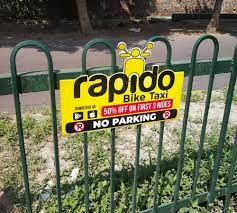
No parking board advertising is legal in India when it is done with permission — and that single word, permission, is the whole story. A branded no-parking board is a private-property format. It is a small 1ft × 1.5ft Sunpack sheet fixed to the gate or compound wall of an independent house, or at a housing-society entrance, only after the owner or the society agrees. Because it lives on private property with the property-holder's consent, it sits in a completely different legal category from posters slapped on public poles and from giant roadside hoardings. This guide explains where that line is, what consent you need, and how to stay on the right side of it. It is general information, not legal advice.
Is no parking board advertising legal in India?
The short answer is yes, when the board is installed with permission on private property. What makes a no-parking gate board legally clean is not a special exemption — it is the ordinary right of a property owner to put a notice and a brand message on their own gate, and to let someone else do so with their agreement. The board is dual-purpose by design: the 'No Parking' message stays visible and genuine, while the brand occupies the main visual area. A homeowner or society wants the notice anyway, so the consent is real, not a formality.
Contrast that with the two formats people often confuse it with. Unpermitted posters and bills pasted on public poles, electric boxes and government walls are placed on public property without consent — that is what defacement rules target. Large public hoardings on roadsides and rooftops are a licensed out-of-home (OOH) business that municipal corporations regulate and charge for. A gate board is neither: it is small, it is on private property, and it is there because the property-holder agreed. Get the consent right and you are operating in a fundamentally different lane.
What makes a gate board legal when a public poster is not?
Three things separate a compliant gate board from a problem poster. First, property type: the board goes on a private gate, compound wall or society entrance, never on public-facing civic structures. Second, consent: there is a named person or body — the owner or the RWA — who agreed in writing. Third, the notice is genuine: the board actually serves the no-parking purpose the resident wanted. Lose any one of those and you drift toward the public-poster problem. Keep all three and the format holds up because it is doing exactly what it claims to.
No-parking gate board vs pole/wall poster vs public hoarding
| No-parking gate board | Pole / wall poster | Public hoarding | |
|---|---|---|---|
| Property type | Private gate / compound wall / society entrance | Public poles, walls, civic structures | Roadside / rooftop public-facing structures |
| Permission / licence needed | Written consent from owner or RWA | None obtained (that is the problem) | Municipal OOH advertising licence |
| Who grants it | Property owner or society committee | No one — placed without authority | Municipal corporation / civic body |
| Typical longevity | Stays as long as consent holds; weatherproof Sunpack | Quickly removed / painted over | Fixed licensed term, often months |
Indicative comparison for planning, not legal advice. Municipal rules vary by city — confirm locally.
Do you need municipal permission for a no-parking gate board?
This is the question that worries most advertisers, and the honest answer is: it depends on your city, so confirm locally. A genuine no-parking notice fixed to a private gate with the owner's consent is a different thing from a commercial hoarding on public-facing structures, which typically needs a municipal OOH licence. The private-property consent is your foundation. On top of that, treat it as good practice to check whether your specific municipal corporation has any additional requirement for your particular case — rules and interpretations are not uniform across Delhi, Mumbai, Bangalore, Hyderabad, Chennai, Kolkata, Pune, Ahmedabad, Jaipur or Lucknow.
The practical sequence is simple: permission first, verification second. Never assume one city's position applies everywhere, and never substitute a municipal step for the property consent — they answer different questions. The owner or RWA consent settles whether you may use that gate. A local municipal check, where relevant, settles whether anything more is expected in that jurisdiction. If you are ever unsure for a large rollout, that is the moment to ask a local professional rather than guess.
Is permission from the society (RWA) enough?
For a board placed on a society's common areas — the main gate, boundary wall or entrance — consent must come from the managing committee or Resident Welfare Association, not from a single resident. Common areas belong to the society as a whole, so the body that governs them is the one whose permission counts. A friendly resident saying 'go ahead' does not authorise a board on a shared wall. For an independent house, by contrast, the owner's consent is the right and sufficient permission for that property's own gate.
Get that society consent in writing and make it specific: the board itself, the exact location, how long it stays, and who removes it at the end. That one document does double duty — it authorises the placement and it becomes your compliance record. Our step-by-step companion on securing society permission walks through how to approach a committee and what to put in the request, so the consent is clean and the relationship stays good for the next campaign.
How to keep your no-parking board campaign compliant
Get written consent from the owner or RWA
Action: secure clear written permission from the property owner (independent house) or the managing committee / RWA (society common areas) before any board goes up, noting the board, location, duration and who removes it. Why: written consent is the legal foundation of the whole format and your proof that the placement was authorised. Common mistake: relying on a single resident's verbal 'yes' for a society wall — common areas need the committee's approval, not one neighbour's.
Keep the no-parking message genuine and visible
Action: design the board so the 'No Parking' wording stays legible and serves its real purpose, with the brand in the main visual area. Why: the board is a genuine notice residents actually want — that is the honest basis for consent and for the format's standing. Common mistake: shrinking or faking the notice into pure advertising, which removes the very reason an owner or RWA agreed to it.
Install only on private property with permission
Action: fix boards strictly on private gates, compound walls and society entrances where you hold consent — never on public poles, civic walls or government structures. Why: placement on private property with permission is exactly what keeps the format clear of public-defacement rules. Common mistake: letting an installer take the convenient public pole next door 'just for one more board' — that single board can taint an otherwise clean campaign.
Follow ECI and local rules for political use
Action: for any political or election campaign, follow Election Commission of India guidelines and any local administration rules on placement and disclosures, and still obtain owner/RWA consent for every gate. Why: political messaging carries an extra regulatory layer on top of the standard private-property consent. Common mistake: treating an election board like an ordinary commercial one and skipping the ECI/local-rule check or the required disclosures.
Keep a geo-tagged record of every placement
Action: keep a geo-tagged proof-of-delivery record showing where each board was installed and under whose consent, handed over after the campaign. Why: a board-by-board record lets you demonstrate, quickly and credibly, that every placement was authorised and on private property. Common mistake: running a large rollout with no location record, so you cannot show after the fact which gate had consent and which did not.
Are political and election gate boards allowed?
Political and ward-level election use of gate boards is possible, but it sits on top of an extra layer of rules. The same private-property logic still applies — you need the owner's or RWA's consent for every gate — and in addition you should follow Election Commission of India guidelines and any local administration rules on where boards may go and what disclosures they must carry. The model is additive: consent as always, plus the electoral rules. Treat an election board with more care than a commercial one, not less.
Because election rules and local administration directions can change around a poll and differ by area, the safe practice is to confirm the current requirements with the relevant authority for your constituency before printing at scale. The format's strengths — quick, ward-level, all-inclusive placement — still apply; you are simply layering electoral compliance over the standard consent process. This remains general information, not legal advice.
What does a compliant rollout cost?
Staying compliant does not change the economics: pricing is all-inclusive, with no monthly rental, because each board is a one-time install on a consenting gate rather than a leased public site. You pay ₹45 per board for orders under 5,000 boards, and ₹35 per board at 5,000 boards and above — covering the Sunpack board, printing, transport and installation. As a feel for scale, 1,000 boards works out to roughly ₹45,000, 5,000 boards to about ₹1,75,000 at the bulk rate, and 10,000 boards to about ₹3,50,000; the 5,000-board mark is the break-even where the lower rate kicks in.
All-inclusive no parking board pricing (board + printing + transport + installation, no rental)
Standard
For campaigns under 5,000 boards — ideal for testing localities or a single-city rollout with full consent in place.
- 1ft × 1.5ft Sunpack board
- Printing included (UV / solvent / eco-solvent / digital)
- Transport + installation included
- Geo-tagged proof-of-delivery record
- No monthly rental
Bulk
For 5,000 boards and above — the break-even where the lower per-board rate applies across multi-city rollouts.
- Everything in Standard
- Lower per-board rate from 5,000 units
- Multi-city coverage planning
- Locality coverage map
- Board-by-board placement record
Planning a compliant rollout across one city or ten? Get a free, all-inclusive quote at themediaverse.in/contact, or message our team on WhatsApp at wa.me/9580088540 with questions about permissions in your area.
No parking board advertising legality: FAQs
Is it illegal to put a no-parking advertising board without the owner's permission?
Placing any board on someone's gate, wall or society entrance without the owner's or RWA's consent is exactly what you should avoid — consent is the foundation that makes the format legitimate. Without it, you lose the private-property footing that distinguishes a gate board from an unpermitted public poster. Always secure written permission first. This is general information, not legal advice.
Can I install a no-parking board on a public road, footpath or electric pole?
No. The format is specifically for private gates, compound walls and society entrances where you hold consent. Public poles, footpaths and civic walls are public property, and placing boards there without authority is the public-defacement problem the format deliberately avoids. Keep every board on consenting private property.
Does a small private gate board really avoid the hoarding licence?
A genuine 1ft × 1.5ft no-parking notice on a private gate with the owner's consent is a different category from a commercial public hoarding, which typically needs a municipal OOH licence. That said, municipal rules vary by city, so the honest approach is to rely on private-property consent and then confirm any local requirement for your specific situation before a big rollout.
If one flat owner agrees, can I put a board on the society's main gate?
No. The society's main gate and boundary wall are common areas owned by the society as a whole, so permission must come from the managing committee or RWA, not a single resident. One owner can only consent to their own independent property's gate. For shared structures, get the committee's written approval.
Is this article legal advice I can rely on?
No. This is general information to help you understand how the permission-based, private-property model works and why it differs from public posters and licensed hoardings. Rules and their interpretation vary by city and can change, especially for political and election use. For a large or sensitive rollout, confirm local requirements and, if needed, take advice from a local professional.
Tags
Quick Answers
Is no parking board advertising legal in India?
Yes, when it is done with permission. A no-parking gate board is a private-property format: a small 1ft × 1.5ft Sunpack board fixed to a private gate or compound wall, or at a housing-society entrance, only with the owner's or the society's written consent. Because it sits on private property with the property-holder's agreement, it is legally different from unpermitted posters stuck on public poles and walls, and from large public hoardings that need a municipal OOH licence. This is general information, not legal advice — confirm any local city requirements before a large rollout.
Who has to give permission for a no-parking gate board?
For an independent house, the property owner gives consent. For a gate, boundary wall or entrance that is part of a housing society's common area, permission comes from the managing committee or Resident Welfare Association (RWA), not a single resident, because common areas belong to the society as a whole. Best practice is one clear written consent — ideally noting the board, the exact location, how long it stays, and who removes it. Keeping that record is what lets you show, board by board, that every placement was authorised.
Does a no-parking gate board need a municipal advertising licence?
A genuine no-parking notice fixed to a private gate with the owner's consent is a different thing from a commercial hoarding on public-facing structures, which typically needs a municipal out-of-home (OOH) licence. Because rules vary city to city, the honest answer is to treat the private-property consent as your foundation and then confirm whether your specific municipal corporation has any additional requirement for your situation. Build the campaign on permission first, verify locally second — never assume one city's position applies everywhere.
Can the no-parking message be fake or just decorative?
No — keep the no-parking message genuine and visible. The format works precisely because it is a real, useful notice that residents want at their gate, with the brand occupying the main visual area. The 'No Parking' wording should stay legible and serve its actual purpose. A board that hides or fakes the notice loses the reason a homeowner or RWA agreed to it in the first place, and it weakens the honest, permission-based footing the whole format depends on.
Looking for professional No Parking Board Advertising services?
The Mediaverse runs end-to-end no parking board advertising campaigns across India with geo-tagged delivery and transparent, all-inclusive pricing.
Explore our No Parking Board Advertising solutionsSummarize this guide with AI
Open this article in your favourite AI assistant
Related Guides
Written by

The Mediaverse Team
India's Leading Outdoor Advertising Agency
The Mediaverse is a national-level outdoor advertising and integrated marketing organization that provides complete OOH, ATL, BTL, retail, and transit media solutions across India. With years of experience executing high-performance campaigns for brands in FMCG, Real Estate, E-commerce, EdTech, Automotive, Healthcare, and Retail, The Mediaverse combines creativity, data-driven media planning, and flawless on-ground execution. As a full-stack outdoor advertising provider, The Mediaverse offers Auto Branding, Mobile Van Branding, Newspaper Insertion Advertising, Shop Name Board Branding, In-Store Branding, Hoardings, Transit Media, Kiosks, Mall Media, Activations, and all forms of Below-The-Line marketing. Known for its pan-India network, strategic route planning, premium print quality, and Cheqmate™ GPS-based verification, The Mediaverse ensures 100% transparent and result-oriented campaign delivery. The Mediaverse’s editorial team produces deeply researched, SEO-optimized, and generative-engine-friendly content to help businesses understand the power of outdoor advertising and make informed decisions that maximize brand visibility and ROI across urban, suburban, and rural markets.
Related Articles
Gate-to-street saturation: no-parking boards plus auto hoods in one catchment, the worked plan (2026)
The entry ticket for one catchment covered from gate to street is ₹2,83,200 landed: 1,000 gate boards plus 300 auto hoods. Seven steps, the timings for both formats, three priced plans and the honest list of what the rate card leaves out.
Outdoor advertising for clinics, pharmacies and diagnostic centres: formats, compliance and catchment (2026)
A pharmacy plan of 1,000 gate boards plus a glow sign board is ₹56,168 landed; a clinic plan of 2,000 boards plus 50,000 A5 inserts is ₹1,79,950; a diagnostic centre plan with 300 auto hoods is ₹5,36,900. Plus the rules on what a medical board may say and how far each facility's catchment reaches.
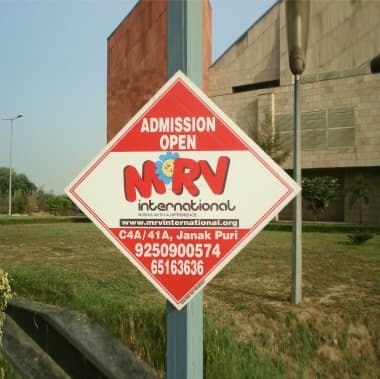
No Parking Board Advertising vs Hoardings: Which Wins for One Locality in 2026?
A hoarding looks like the premium buy — but for dominating ONE locality, it usually loses to no parking gate boards. Here is the honest, side-by-side comparison on cost model, reach, exposure and targeting, plus a clear verdict and decision checklist.