

A jewellery retailer on Bhowanipore Road, October 2025, three days before Mahalaya. She stops the Mediaverse account manager mid-presentation and asks why we have not put 70 percent of the budget into Anandabazar Patrika. Our model said 45 percent. She points out, calmly, that her father reads Anandabazar, her husband reads Anandabazar, her mother-in-law reads Anandabazar, her tenants read Anandabazar, and she has never met a Kolkata customer over 40 who does not. We rebuilt the campaign at 65 percent Anandabazar that afternoon. Twelve weeks of retail data later, walk-in attribution put Anandabazar at 71 percent of total store traffic for the Puja window. The model was wrong. The retailer knew her city.
Newspaper insertion in Kolkata operates by different rules than any other Indian metro. Bengali dailies outsell every English daily in the city combined by roughly 3 to 1. Anandabazar Patrika alone reaches 23.1 lakh average issue readers, more than TOI Kolkata, Hindustan Times Kolkata, and The Telegraph put together. That single fact restructures the rate card, the vendor ecosystem, and the campaign-design discipline. This guide unpacks every part of that ecosystem for advertisers planning a 2026 Kolkata campaign.
Kolkata's newspaper landscape, by daily and by reader
Seven dailies carry roughly 92 percent of Kolkata's newspaper readership. Three Bengali dailies dominate by absolute reach. Anandabazar Patrika (Bengali, morning) at 23.1 lakh average issue readership per IRS Q1 2026 data. Bartaman (Bengali, morning) at 9.4 lakh. Aajkaal (Bengali, morning) at 7.2 lakh. Sangbad Pratidin (Bengali, morning) at 4.4 lakh. The four Bengali dailies together reach roughly 44 lakh readers daily, the deepest concentration of vernacular newspaper readership in any Indian metro.
Three English dailies serve specific segments. The Telegraph (English, morning, ABP Group) at 8.6 lakh skews to professional, premium retail, and the city's intellectual class. The Times of India Kolkata at 6.1 lakh covers corporate and IT-corridor readers. Hindustan Times Kolkata at 3.8 lakh skews younger professional. The three English dailies together reach roughly 18 lakh readers, less than Anandabazar alone, but with the higher household-income skew that some advertisers genuinely need.
Operational implication: any Kolkata campaign that goes English-only undershoots reach by roughly 60 percent. Any campaign that goes Bengali-only undershoots reach for the IT corridor by roughly 35 percent. The correct media plan in Kolkata is almost always a Bengali-plus-English mix, with the mix ratio determined by the target audience's pincode rather than a generic city-wide assumption.
How do Kolkata's insertion rate zones price out?
Zone A: South Kolkata HNI corridor (pincodes 700016 to 700027)
Park Street (700016), Bhowanipore (700020), Ballygunge (700019), Alipore (700027), Lake Gardens (700045), Tollygunge (700033). Per-piece rates run 18 to 22 percent above the city average. ₹1.55 for A5, ₹1.92 for A4, ₹2.45 for A2 on standard paper. The premium reflects lower household density (fewer households per pincode means agents charge more per piece to keep routes economic), and higher-quality households (Marwari and Bengali bhadralok HNI density, premium-brand affinity, low ad-blocker exposure). For luxury, premium retail, fine dining, financial services, and high-ticket health, this zone delivers 3 to 4 times the response per rupee of mass-market alternatives.
Zone B: Salt Lake and New Town IT corridor (pincodes 700064, 700091, 700156)
Salt Lake Sectors I through V, Bidhannagar, New Town Action Area I-III, Rajarhat. Per-piece rates track the city average within 4 to 6 percent. ₹1.32 for A5, ₹1.65 for A4, ₹2.10 for A2. The corridor's distinctive feature is the English daily over-index: Salt Lake households consume English dailies at roughly 1.7 times the city-average ratio, driven by IT-corridor workforce composition. For B2B SaaS, EdTech, finance product launches, premium real estate, and corporate hiring, an English-heavy mix (TOI plus Telegraph) outperforms a Bengali-heavy mix in this zone by roughly 1.5 to 2 times on cost-per-relevant-impression. New Town pincodes specifically benefit from the BSNL Office complex and IT corridor mid-day commuter density.
Zone C: Mass-market and outer suburbs (pincodes 700060 to 700105, plus Howrah 711101)
Behala, Jadavpur, Garia, Dum Dum, Lake Town, Baguiati, Sodepur, and Howrah across the bridge. Per-piece rates run 7 to 11 percent below the city average. ₹1.18 for A5, ₹1.45 for A4, ₹1.85 for A2. The discount reflects very high household density (more pieces per route makes the agent cost smaller per piece), and the family-household composition that makes Bengali dailies disproportionately effective for retail, school admissions, FMCG, and household-decision categories. For mass-market campaigns this zone is Kolkata's best CPM by a clear margin. Howrah specifically runs on a separate distribution sub-network anchored in the Howrah Municipal Corporation, and quoting it bundled with KMC pincodes is a common spec error.
Kolkata's three insertion rate zones (2026)
| A5 rate | A4 rate | A2 rate | Best for | |
|---|---|---|---|---|
| Zone A: South Kolkata HNI (Park Street-Alipore) | ₹1.55 | ₹1.92 | ₹2.45 | Luxury, premium retail, fine dining, financial services |
| Zone B: Salt Lake-New Town IT corridor | ₹1.32 | ₹1.65 | ₹2.10 | B2B SaaS, EdTech, premium real estate, corporate hiring |
| Zone C: Mass-market suburbs and Howrah | ₹1.18 | ₹1.45 | ₹1.85 | Retail, school admissions, FMCG, household categories |
Rates per piece on standard paper; KMC ward-level targeting adds ₹0.18-0.32 per piece over pincode-level.
The Park-Street-to-New-Town arc, pincode by pincode
The Metro Line corridor from Park Street through Esplanade, Sealdah, Salt Lake to New Town carries roughly 55 percent of all Kolkata newspaper insertion volume because the Metro stations anchor the door-to-door distribution beat lists and the corridor combines high household income with high household density. The Mediaverse 2026 rate map for the arc reads as follows. Park Street (700016): ₹1.58 A5, ₹1.95 A4. Bhowanipore (700020): ₹1.55 A5, ₹1.92 A4. Ballygunge (700019): ₹1.52 A5, ₹1.88 A4. Lake Gardens (700045): ₹1.45 A5, ₹1.80 A4. Tollygunge (700033): ₹1.40 A5, ₹1.75 A4. Jadavpur (700032): ₹1.30 A5, ₹1.62 A4. Salt Lake Sector III (700064): ₹1.34 A5, ₹1.68 A4. Salt Lake Sector V (700091): ₹1.32 A5, ₹1.65 A4. New Town Action Area I (700156): ₹1.28 A5, ₹1.60 A4. The arc shows a 19 percent rate spread between its premium end (Park Street) and its mass-market end (New Town), reflecting household-income-tier and route-economic factors.
Operationally, the arc has one quirk worth knowing. Salt Lake Sectors I-II versus Sectors III-V have different distribution sub-routes despite sharing the 700064 pincode. Sectors I-II skew residential and Bengali-heavy; Sectors III-V skew corporate and English-heavy. A brief that says 700064 without specifying the sector receives a blended distribution that overpays for the corporate-targeting brief or under-delivers for the residential brief. Specify Sector explicitly on every Salt Lake brief.
KMC and Howrah Municipal Corporation: the two-body distribution reality
Kolkata's distribution architecture spans two separate municipal bodies. Kolkata Municipal Corporation (KMC) covers 144 wards across 16 boroughs from Tollygunge in the south to Dum Dum in the north. Howrah Municipal Corporation covers 50 wards across the Hooghly River. The two are five kilometres apart but operationally distinct: KMC distribution agents do not cross the bridge, and Howrah agents do not enter Kolkata. Campaigns that target both Kolkata and Howrah pay for two separate distribution networks, which is real cost rather than vendor inflation.
KMC ward-level targeting is feasible for any campaign above 25,000 pieces and adds ₹0.18 to ₹0.32 per piece over pincode-level targeting. Ward-level is recommended when a brand needs to reach specific neighbourhoods within a pincode (for example, the western half of Ward 79 versus the eastern half, where household income varies sharply). For most retail and FMCG campaigns, pincode-level targeting is enough. For real estate, finance, and luxury, ward-level is worth the premium.
Three KMC compliance points apply to inserted artwork. First, no political content within 14 days of any election held under WBEC or KMC jurisdiction. Second, no Bengali-language claims that violate ASCI guidelines for the regional language: the standard is the same as English but enforcement on Bengali claims is more rigorous because KMC zonal officers handle the complaints directly. Third, no commercial speech that violates the West Bengal Shops and Establishments Act for advertised hours, holidays, or labour terms.
The Bengali-language vendor ecosystem
Kolkata newspaper insertion runs through three vendor types. The newspaper agencies themselves handle direct booking for the dailies they own. Anandabazar Patrika's parent ABP Group handles ABP Group bookings directly through their advertising arm. Times Internet handles TOI Kolkata. Bartaman has its own booking desk. These direct channels rarely offer multi-daily discounts but do offer the best per-daily rates if you only need one paper.
The Kolkata metro insertion specialists are the second category. They bundle Bengali plus English multi-daily campaigns, handle the day-of-week and edition-specific targeting that newspaper agencies do not, and translate briefs into Bengali for the Bengali-daily pre-screening process. The Mediaverse falls into this category. Multi-daily campaigns above ₹50,000 typically save 8 to 14 percent through specialist booking versus direct-to-newspaper booking.
The third vendor type is the printer-distributor combine, often a Sealdah or Salt Lake-based facility that handles both printing and beat-list distribution. They quote the cheapest per-piece rate but rarely offer the Bengali-language translation rigor, the reconciliation reports, or the proof-of-distribution documentation that serious campaigns demand. For first-time advertisers in Kolkata, the language barrier alone justifies going through a metro specialist that handles the Bengali-language artwork pre-screening.
Monsoon and Durga Puja: the two seasonal cycles
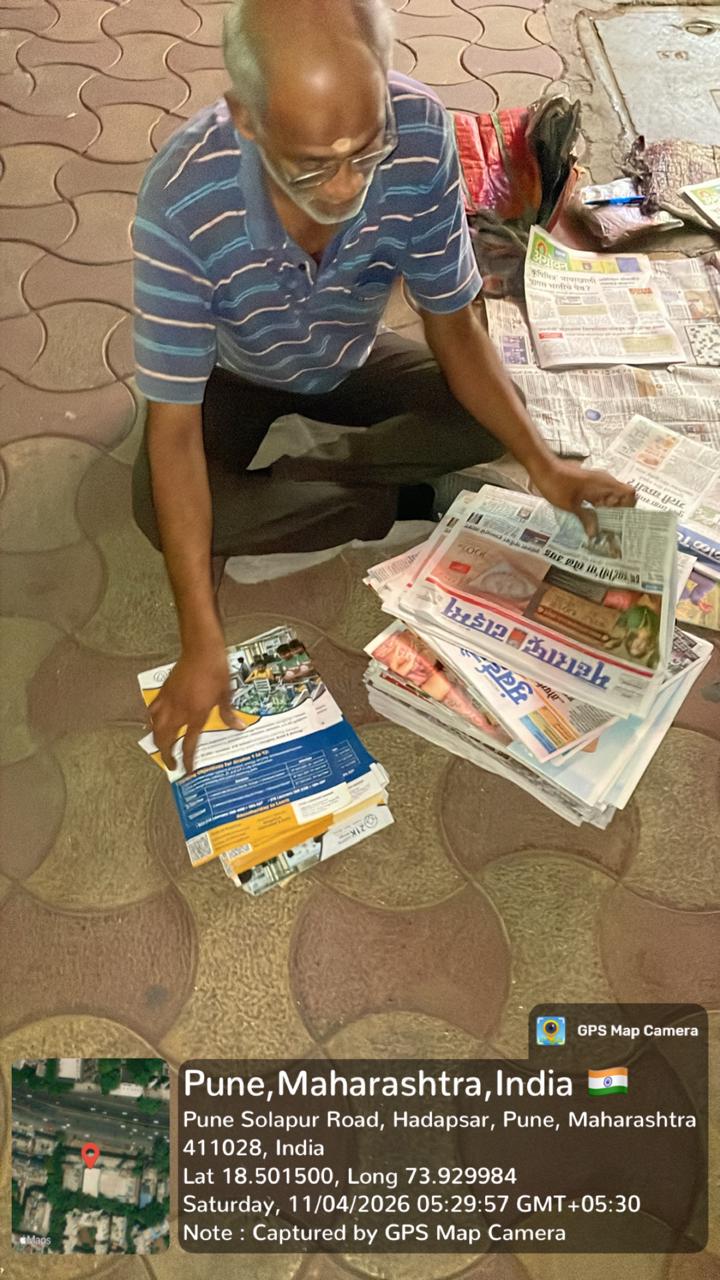
Kolkata has two seasonal cycles that affect newspaper insertion economics. The Mediaverse field audits across 64 Kolkata campaigns measure July-September monsoon dropout at 12.1 percent versus the non-monsoon 4.4 percent. Bundled newspapers delivered by motorcycle in heavy monsoon rain see physical detachment from wet bundles, and Howrah Bridge crossings extend in heavy rain to 90 minutes versus the dry-season 35 minutes. Three operational responses work: 90 GSM with single fold and poly-overwrap on bundles (adds ₹0.18 to ₹0.28 per piece, recovers 6 to 8 dropout points), 8 to 12 percent over-print, and morning-only edition scheduling.
The Durga Puja cycle is Kolkata's economic peak. September through October sees newspaper circulation spike 35 to 50 percent as Bengali households add daily subscriptions for puja-themed supplements. Anandabazar Patrika prints special Mahalaya, Sashthi, Saptami, Ashtami, Navami, and Dashami editions, each with dedicated supplements and 25 to 35 percent higher reader dwell time per edition. Insertion rates climb 30 to 45 percent during the peak Mahalaya to Dashami window. The Mediaverse field data across 28 Puja campaigns shows redemption rates climb 2.4 to 3.8 times over non-Puja windows for retail, jewellery, clothing, and food categories. The premium pays for itself for any brand that competes for the Puja spending wallet, but the same premium is wasted on B2B, finance, automotive, and industrial brands that have no Puja-budget allocation. Time those campaigns to August (pre-Puja) or November (post-Puja) for cleaner economics.
A 2026 Kolkata campaign launch playbook
Walk through a real campaign brief. A premium home appliance brand launching a flagship store on Park Street. ₹5 lakh all-in budget. Target audience: 30 to 55 year old Bengali and Marwari HNI households across Park Street, Ballygunge, Bhowanipore, and Alipore. Goal: store walk-ins in the launch fortnight, with a secondary KPI of online order capture.
Step 1, working budget. ₹5,00,000 minus 18 percent GST = ₹4,23,728 ex-GST. Reserve ₹30,000 for design and Bengali-English bilingual artwork preparation. Reserve ₹50,000 for printing setup and proof-of-distribution buffers. Working budget for media: ₹3,43,728.
Step 2, edition mix. Target audience reads Anandabazar Patrika and The Telegraph at near-equal rates because the South Kolkata HNI segment is bilingual. TOI Kolkata adds incremental younger HNI reach. Mix: Anandabazar 45 percent of media spend, The Telegraph 35 percent, TOI Kolkata 20 percent.
Step 3, pincode targeting. Park Street (700016), Bhowanipore (700020), Ballygunge (700019), Alipore (700027), Lake Gardens (700045). Five pincodes, total target households roughly 2.2 lakh.
Step 4, campaign cadence. Two waves: launch Sunday Anandabazar with the Robbar pull-out (women-targeted, high engagement for home appliance category), then a Saturday Telegraph plus Sunday TOI combo for second-impression frequency in week two. A4 size, 90 GSM, bilingual Bengali-English, double-sided, no fold (single CTA: store address, opening offer, dates, Bengali QR code routing to a Bengali landing page).
Step 5, volume math. ₹1,54,678 for Sunday Anandabazar Robbar across South Kolkata pincodes at ₹1.55 average per piece (Sunday surcharge included): roughly 99,800 pieces. ₹1,20,305 for Saturday Telegraph at ₹1.95 per piece: roughly 61,700 pieces. ₹68,745 for Sunday TOI at ₹2.10 per piece: roughly 32,700 pieces. Total: 194,200 pieces across two weeks. With 2.3 readers-per-copy in Bengali daily readership and 2.6 in English daily readership, total reader exposure ~4.7 lakh impressions including frequency overlap.
Step 6, attribution. Print a unique missed-call number on the flyer for response tracking, a unique discount code valid only on launch fortnight redemptions, and a Bengali-language QR code routing to a separate landing page so that Bengali-daily-driven response can be measured separately from English-daily-driven response. Bengali QR-scan rate runs roughly 1.8 to 2.2 times the English QR-scan rate in this demographic, so the separate tracking matters.
What separates a Kolkata campaign that works from one that does not
Three disciplines explain almost all the variance between Kolkata campaigns that hit their KPIs and ones that do not. First, Bengali plus English daily mixing rather than English-only concentration. Kolkata's reader fragmentation makes English-only campaigns leave 60 percent of relevant reach on the table. Second, ward-aware pincode targeting in Salt Lake and New Town specifically, since the sector-level distribution sub-routes change the effective targeting accuracy. Third, season-aware scheduling: time festival categories to the Mahalaya-Dashami window, time everything else to August or November to avoid the Puja-premium overpay. Brands that practice these three disciplines see 2 to 3 times the per-rupee response of brands that book a single TOI Sunday across all of Kolkata.
Bottom line
Pick your zone first (South Kolkata HNI, Salt Lake-New Town IT, or mass-market suburbs and Howrah). Pick your edition mix second (Anandabazar plus one of Telegraph, TOI, or for Bengali-only reach Bartaman). Pick your pincodes and KMC wards third. Time the campaign around the Puja window if you sell into a Puja-budget category, away from it if you do not. Run two waves rather than one for frequency. Demand bilingual artwork pre-screening rather than templated translations. With those five disciplines, your Kolkata newspaper insertion campaign will outperform the same budget spent on any single digital channel for retail, real estate, and direct-response objectives by 2 to 4 times on landed cost-per-walk-in.
Is Anandabazar Patrika worth the premium over Bartaman or Aajkaal for a Kolkata campaign?
For most retail, FMCG, education, healthcare, and household-decision categories targeting the Bengali household, Anandabazar Patrika justifies its premium with reach that is 2 to 3 times Bartaman or Aajkaal in absolute terms. For specifically lower-middle-income households and outer-suburb-only campaigns where the brand fits a populist positioning, Bartaman delivers comparable response at a 25 to 30 percent rate discount. Aajkaal sits in between but skews academic and intellectual class, which matters for education, publishing, and cultural events specifically.
How do I run a newspaper insertion campaign that targets both Kolkata and Howrah?
Specify the two cities as separate distribution networks on your brief: KMC pincodes with their ward designations, and Howrah Municipal Corporation pincodes (711101 through 711109) separately. Vendors who bundle the two and quote a single rate are likely under-delivering on one side or the other because the distribution agents do not cross the bridge. Expect roughly 12 to 18 percent higher total cost for a dual-city campaign versus a Kolkata-only campaign of the same volume, reflecting the parallel distribution infrastructure.
What is the best newspaper insertion edition for Kolkata real estate launches?
For luxury and HNI projects in South Kolkata: Sunday Anandabazar Patrika with the Robbar pull-out, plus Saturday Telegraph for the bilingual HNI segment. For mid-market projects in Salt Lake-New Town: TOI Kolkata Sunday with the supplement, plus Wednesday Anandabazar Patrika weekly edition for the Bengali residential household segment. For mass-market projects in Behala, Jadavpur, or Howrah: Sunday Anandabazar Patrika and a midweek Bartaman edition deliver the household-decision-maker reach at the lowest landed CPM. Avoid English-only campaigns for any project below the ₹1 crore price point because the Bengali daily household is the actual decision-maker in the segment.
Tags
Quick Answers
How much does newspaper insertion in Kolkata cost in 2026?
Suburban rates: A5 ₹1.30, A4 ₹1.62, A2 ₹2.05 on 80-90 GSM paper, weekday English daily. South Kolkata premium pincodes (700016 to 700020, 700026, 700027): add 18 to 22 percent. Bengali dailies (Anandabazar, Bartaman, Aajkaal): subtract 22 to 28 percent for vernacular discount. Sunday adds 18 to 22 percent. Durga Puja special editions (September Mahalaya onwards) add 30 to 45 percent. A 50,000-piece A4 Sunday Anandabazar campaign across South Kolkata pincodes lands at roughly ₹85,000 all-inclusive.
Which Kolkata neighborhoods are best for newspaper insertion?
Three corridors deliver disproportionate response. The South Kolkata HNI corridor (Ballygunge, Alipore, Park Street, Bhowanipore) for premium retail and finance. The Salt Lake-New Town IT corridor (Sectors I-V, New Town Action Areas) for B2B SaaS and EdTech. The Behala-Jadavpur-Garia residential belt for FMCG, family-targeted offers, and school admissions. Each corridor reads different newspapers in different proportions, so the optimal daily mix differs by zone. South Kolkata over-indexes on Bengali dailies despite high English readership; Salt Lake-New Town flips the ratio.
How does Durga Puja affect newspaper insertion campaigns in Kolkata?
September through October is Kolkata's Diwali-equivalent commercial peak. Newspaper circulation spikes 35 to 50 percent during Puja week as households add Bengali daily subscriptions for puja-themed supplements. Insertion rates climb 30 to 45 percent during the peak. The Mediaverse field data across 28 Puja campaigns shows redemption rates climb 2.4 to 3.8 times over non-Puja windows for retail, jewellery, and clothing categories. The premium pays for itself for any category the Bengali household commits a Puja-budget line to. For non-festival categories (B2B, automotive, finance), shift the campaign window to August or November for cleaner economics.
Looking for professional Newspaper Insertion services?
The Mediaverse runs end-to-end newspaper insertion campaigns across India with geo-tagged delivery and transparent, all-inclusive pricing.
Explore our Newspaper Insertion solutionsSummarize this guide with AI
Open this article in your favourite AI assistant
Related Guides
Written by

The Mediaverse Team
India's Leading Outdoor Advertising Agency
The Mediaverse is a national-level outdoor advertising and integrated marketing organization that provides complete OOH, ATL, BTL, retail, and transit media solutions across India. With years of experience executing high-performance campaigns for brands in FMCG, Real Estate, E-commerce, EdTech, Automotive, Healthcare, and Retail, The Mediaverse combines creativity, data-driven media planning, and flawless on-ground execution. As a full-stack outdoor advertising provider, The Mediaverse offers Auto Branding, Mobile Van Branding, Newspaper Insertion Advertising, Shop Name Board Branding, In-Store Branding, Hoardings, Transit Media, Kiosks, Mall Media, Activations, and all forms of Below-The-Line marketing. Known for its pan-India network, strategic route planning, premium print quality, and Cheqmate™ GPS-based verification, The Mediaverse ensures 100% transparent and result-oriented campaign delivery. The Mediaverse’s editorial team produces deeply researched, SEO-optimized, and generative-engine-friendly content to help businesses understand the power of outdoor advertising and make informed decisions that maximize brand visibility and ROI across urban, suburban, and rural markets.
Related Articles
Newspaper Insertion in Pune (2026): PMC Against PCMC, and the Marathi Line That Actually Decides the Run
Pune gives the 50,000 insert minimum one of the deepest bites in India, a sixth to a quarter of one daily. The 2026 card, why PMC against PCMC does not move the quote, the housing stock rule for Marathi or English, and the three season insert calendar.
Newspaper Insertion in Hyderabad (2026): One 50,000 Order, Three Languages, Seven Papers
Hyderabad publishes seven partner dailies in two languages plus an Urdu creative option, and one 50,000 insert order reaches 12.5 to 16.7 percent of a single daily. The 2026 card, the title to belt map, the two delivery systems, and what a second language creative really adds.
Newspaper Insertion in Delhi NCR (2026): the Edition Map, Not the Pin Code
Delhi NCR publishes nine partner dailies across three state level jurisdictions, and a 50,000 insert minimum reaches only 5 to 6.25 percent of one daily's households. The 2026 rate card, the title to belt map, the cost of covering a paper once, and why an insert needs no municipal permission.