

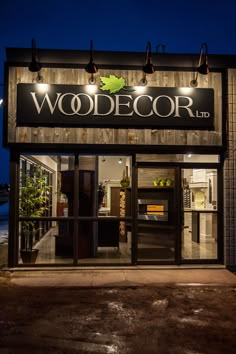
I have spent more time than I care to admit standing in BBMP ward offices waiting for shop name board approvals to clear. About one in seven gets rejected on the first filing. The single biggest reason, by a wide margin, is the 60 percent Kannada area rule. The rule is not new. It is not obscure. It has been on the Karnataka Local Authorities books for years. And yet retail chains, F&B brands, and first-time shopkeepers keep filing boards that fall short, lose two to three weeks to refiling, and burn fabricator goodwill in the process.
This playbook walks through what the rule actually says, the three rejection patterns I see at BBMP counters most often, and the design fixes that close compliance on the first filing. If you are about to fabricate a Bangalore shop name board, read this before you cut the GSB or ACP.
Who does the Kannada signage rule apply to?
First-time shopkeepers in any of the 198 BBMP wards. Retail chains rolling out new Bangalore stores. Restaurant operators who designed brand identity outside Karnataka and now need to localise. Anyone who has received a BBMP removal notice and needs to redesign for compliance.
What you'll learn
- The exact area calculation BBMP applies to your design
- Three design patterns that get rejected, with photo-style descriptions of each
- Three design patterns that pass on first filing
- The Kannada designer brief you should hand the fabricator
- What to do if your existing board is non-compliant and you have already received a notice
Prerequisites
You need three things on the table: the draft board design (any format, even a hand sketch), the dimensions in feet or inches, and the brand wordmark in both Kannada and English. If you do not have a Kannada wordmark, you need a Kannada designer or a fabricator who has Kannada lettering capability. Do not let the fabricator transliterate your English brand name into Kannada without a Kannada designer review; the result is often grammatically wrong or stylistically off.
How BBMP calculates the 60 percent area
The area calculation in practice is the bounding box of the Kannada text divided by the bounding box of all signage text on the board. Empty backgrounds count toward neither side. So an 8 ft x 4 ft board with Kannada occupying a 4 ft x 2 ft bounding box and English occupying a 4 ft x 1 ft bounding box has Kannada at 8 sq ft and English at 4 sq ft. Total text area: 12 sq ft. Kannada share: 67 percent. Compliant.
The same board with Kannada at 4 ft x 1 ft and English at 4 ft x 1.2 ft has Kannada at 4 sq ft and English at 4.8 sq ft, total 8.8 sq ft, Kannada share 45 percent. Non-compliant. The visual difference between these two designs is small. The compliance difference is large.
The three rejection patterns I see most often
Rejection pattern 1: equal Kannada and English on the same line
Most common. The brand uses one line with Kannada on the left and English on the right at the same font size. Visually balanced. Mathematically below the 60 percent threshold because Kannada and English occupy roughly equal area, putting Kannada at 50 percent. Rejection rate at BBMP filing: high. The fix is to enlarge the Kannada line or move it to a separate, larger top line.
Rejection pattern 2: Kannada used as a subtitle below English
Brands that designed the wordmark for pan-India use English as the primary visual element and add Kannada below in smaller font as a subtitle or transliteration aid. Visually elegant. Mathematically below 60 percent because Kannada is at 30-40 percent. The fix is structural: invert the hierarchy so Kannada is the primary line and English is the secondary line.
Rejection pattern 3: font-weight imbalance
The Kannada bounding box is larger than 60 percent of total area but uses a thin, light font weight while English uses a heavy bold weight. BBMP officers in practice read this as Kannada being the visually subordinate element. The strict letter of the rule is about area, not weight, but enforcement discretion does factor in visual weight. The fix is to match Kannada and English at the same or higher font weight.
The three design patterns that pass on first filing
Pattern A: Kannada-dominant top line
Top line: Kannada wordmark at full board width, height around 65-70 percent of total signage height. Bottom line: English wordmark at smaller height, around 30-35 percent of total. Kannada area lands clearly above 60 percent. Visually communicates compliance to BBMP officers and traffic police at a glance.
Pattern B: Kannada main, English in inset box
Kannada wordmark spans the full board horizontally, occupying the centre two-thirds vertically. English wordmark sits in a smaller inset box at the corner or below at around 25 percent of board area. Common pattern for premium retail brands. Compliance margin: typically 70-75 percent Kannada area. Generous safety margin against enforcement discretion.
Pattern C: Kannada-only with optional supporting English elements
Pure Kannada wordmark with no English at all. Common for traditional grocery, neighbourhood retail, and family businesses. Compliance is automatic at 100 percent. The English equivalent can be communicated via Google Maps listing, business cards, and indoor signage where the rule does not apply.
The Kannada designer brief that gets it right
When you hand the brief to your fabricator or Kannada designer, the brief should specify five things in writing.
- Final board dimensions in feet or inches.
- Brand name in Kannada (with phonetic spellcheck by a native speaker).
- Kannada area target as a percentage of total signage text area; specify a target above 60 percent (we suggest 65-70 percent for safety margin).
- Font weight pairing rule: Kannada font weight must match or exceed English.
- Layout intent: Kannada-top-dominant or Kannada-only or hybrid.
Get a digital mock-up before fabrication. Run a tape measure on the print preview to confirm the Kannada bounding box exceeds 60 percent of total text area. If it does not, redesign before the GSB or ACP gets cut.
If you have already received a BBMP removal notice
Standard removal notices give a 7 to 14 day window to comply. Three options.
- Option A: redesign and refabricate the full board. Cost: full board cost again (₹8,000-25,000 depending on material). Timeline: 7-12 days for fabrication and re-install.
- Option B: vinyl overlay on the existing board to enlarge the Kannada area. Cost: ₹1,500-4,500 depending on overlay area. Timeline: 2-4 days. Works for boards that are structurally fine but need Kannada area boost.
- Option C: file an appeal with the ward-level enforcement officer if you believe the calculation is wrong. Rare to win but free to attempt. Document with photo and bounding-box measurements.
Most clients pick Option B if the existing board is in good condition. Option A is the right call if the existing board is over 4 years old anyway and due for a refresh. Option C rarely succeeds but is worth attempting if the calculation is genuinely close to 60 percent.
Fixing a non-compliant board after a BBMP notice
| Cost | Timeline | Best when | |
|---|---|---|---|
| Option A: full redesign and refabrication | ₹8,000-25,000 | 7-12 days | Board over 4 years old and due a refresh |
| Option B: vinyl overlay to enlarge Kannada | ₹1,500-4,500 | 2-4 days | Board structurally fine, needs a Kannada area boost |
| Option C: appeal to the ward officer | Free | Within the 7-14 day notice window | Calculation genuinely close to 60 percent |
Most owners pick Option B when the existing board is in good condition.
Realistic timeline and cost
- Kannada designer / wordmark cost: ₹1,500-3,500 if outsourced, free if your fabricator has a Kannada designer in-house
- Mock-up turnaround: 2-3 working days
- Bounding-box measurement: 30 minutes when done with print preview at full scale
- Total compliance cost added to a standard board project: typically ₹1,500-5,000
Final compliance checklist
- Kannada bounding box at minimum 60 percent of total signage text area (target 65-70 for safety margin)
- Kannada font weight equal to or heavier than English
- Kannada placed as the visually dominant element (top line larger or full-width)
- Native-speaker spell and grammar check on the Kannada wordmark
- Mock-up reviewed at full scale before fabrication
- Bounding-box measurement saved as a PDF for the BBMP filing record
If you would prefer not to manage the Kannada compliance design yourself, we bundle the Kannada wordmark, mock-up, and bounding-box measurement with our standard Bangalore shop name board fabrication and BBMP filing service.
Confirm board dimensions and Kannada brand wordmark
Lock the final board dimensions in feet or inches. Get the brand name in Kannada from a native-speaker designer with spellcheck and grammar review. Do not let the fabricator transliterate without designer review.
Set Kannada area target above 60 percent
Specify a target Kannada area of 65 to 70 percent of total signage text area in the design brief. The 5-10 percent safety margin protects against enforcement discretion at BBMP filing.
Match Kannada font weight to or above English
Brief the designer to match Kannada and English font weights, or use heavier weight on Kannada. Light Kannada plus heavy English visually shrinks Kannada below the area threshold even when the bounding box says otherwise.
Position Kannada as the dominant line
Place Kannada as the top dominant line at 65-70 percent of total signage height, with English below at 30-35 percent. Avoid same-line equal-area Kannada and English; this is the most common rejection pattern.
Mock up and measure the bounding boxes
Generate a digital mock-up at full scale. Measure the Kannada and total text bounding boxes with a tape measure on the print preview. Confirm Kannada area is above 60 percent before authorising fabrication.
Save measurement record for BBMP filing
Save the bounding-box measurement as a PDF and include it in the BBMP filing pack. The measurement document protects you against subjective enforcement discretion at the ward office.
Does the 60 percent Kannada rule apply to interior shop signage?
The rule primarily applies to exterior signage visible from public spaces. Interior shop signage (inside the shop, behind glass, on counter displays) is generally exempt because it is not considered commercial signage in the public domain. However, if your shop has a glass shopfront where exterior visibility of interior signage is significant, BBMP officers may apply the rule on enforcement discretion. Safest approach: comply on all consumer-facing signage.
Can I use Hindi or English-only signage if my brand is pan-India?
No. The 60 percent Kannada area rule applies to commercial signage in Karnataka regardless of brand origin. Pan-India brands operating Bangalore shops must adapt the local-store signage to comply. The brand identity remains intact (English wordmark, logo, colours) and gains a Kannada primary line. Most pan-India brands now have a Kannada wordmark in the brand book for Karnataka stores.
How is the rule enforced for restaurants with menu boards visible from outside?
Outdoor menu boards facing the street are typically treated as commercial signage and need to comply with the 60 percent Kannada rule on the menu name plate at minimum. Item-level descriptions in English are usually permitted as long as the menu board headline and shop name comply. F&B brands often display Kannada-dominant outdoor signage and use English-led inside menus, which is compliant in practice.
What if my landlord refuses to allow a Kannada-dominant shop board?
Tenant-landlord disputes on signage compliance should be settled by reference to the lease agreement. Most modern Bangalore commercial leases place compliance responsibility on the tenant and explicitly require local-law compliant signage. If the landlord refuses, the legal liability for non-compliance still typically rests with the tenant or shop owner. Push back politely with reference to the rule and the potential BBMP penalty exposure for both parties.
Tags
Quick Answers
What does the 60 percent Kannada signage rule mean for a Bangalore shop board?
Karnataka's signage provisions require commercial shop signage to display Kannada text in an area that is at least 60 percent of the total signage area, not just the total text area. This means font height, character width, line spacing, and visual weight all count toward the area calculation. A board where Kannada and English use the same font size on the same line is typically below the 60 percent threshold and triggers BBMP rejection.
Is Kannada required to be at the top of the shop board?
There is no statutory requirement for top-of-board Kannada placement, but in practice BBMP officers and traffic police read top-positioned Kannada with larger font as the strongest visual signal of compliance. The safest design pattern places Kannada as the dominant first line at roughly 70 percent height of the board, with English as the secondary line below at roughly 30 percent. This visually communicates compliance and reduces enforcement-discretion risk.
What are the penalties for non-compliant Bangalore shop signage?
BBMP can issue a removal notice with a 7-day window to comply or replace the board. Repeat or willful non-compliance after notice can attract fines under municipal byelaw schedules and forced removal at owner cost. Traffic police can also issue notices on resident or BBMP complaints. The cost of forced removal plus refabrication typically runs 5 to 12 times the cost of designing the board correctly the first time.
Looking for professional Shop Name Board services?
The Mediaverse runs end-to-end shop name board campaigns across India with geo-tagged delivery and transparent, all-inclusive pricing.
Explore our Shop Name Board solutionsSummarize this guide with AI
Open this article in your favourite AI assistant
Related Guides
Written by

The Mediaverse Team
India's Leading Outdoor Advertising Agency
The Mediaverse is a national-level outdoor advertising and integrated marketing organization that provides complete OOH, ATL, BTL, retail, and transit media solutions across India. With years of experience executing high-performance campaigns for brands in FMCG, Real Estate, E-commerce, EdTech, Automotive, Healthcare, and Retail, The Mediaverse combines creativity, data-driven media planning, and flawless on-ground execution. As a full-stack outdoor advertising provider, The Mediaverse offers Auto Branding, Mobile Van Branding, Newspaper Insertion Advertising, Shop Name Board Branding, In-Store Branding, Hoardings, Transit Media, Kiosks, Mall Media, Activations, and all forms of Below-The-Line marketing. Known for its pan-India network, strategic route planning, premium print quality, and Cheqmate™ GPS-based verification, The Mediaverse ensures 100% transparent and result-oriented campaign delivery. The Mediaverse’s editorial team produces deeply researched, SEO-optimized, and generative-engine-friendly content to help businesses understand the power of outdoor advertising and make informed decisions that maximize brand visibility and ROI across urban, suburban, and rural markets.
Related Articles
Who Are the Best Shop Name Board Manufacturers in Bangalore and How Much Do They Cost in 2026?
Looking for reliable shop name board manufacturers in Bangalore? This in-depth guide explains pricing, materials, BBMP rules, installation timelines, and ROI insights based on real execution experience from The Mediaverse.
How to choose a shop name board in India: the 2026 decision guide
How much does a shop name board cost, what material lasts, do you need permission, and which board should you choose? The complete 2026 guide to shop name boards in India.
ACP or LED shop board: a decision guide by shop type and budget for 2026
ACP board or LED sign board for your shop? A 2026 decision guide with costs, an apples-to-apples spec table, when each wins, our recommendation, and a checklist.